
INDIAN DESTINATION WEDDING PHOTOGRAPHER IN PORTUGAL: WHAT YOU SHOULD KNOW
We are The Lopes Photography, an editorial wedding photography team based in Algarve, Portugal, with published work in British Vogue, Vogue Australia, Vogue Arabia, and Tatler. We work with a maximum of ten couples each year and photograph exclusively international celebrations. Finding the right indian destination wedding photographer in portugal means finding someone who understands the scale, the culture, and the multi-day complexity of a South Asian wedding, on top of knowing how to work with Portugal's light and its extraordinary venues.
This article covers what Indian couples and families planning a destination wedding in Portugal most need to know, from venue considerations to ceremony photography to what the working relationship with a photographer in this context actually looks like.
What Portugal Offers for Indian Destination Weddings
Portugal has become a serious destination for Indian couples in the diaspora, particularly those based in the UK, United States, Canada, and Australia. The appeal is specific: a mild Atlantic climate, architectural diversity that ranges from Moorish palaces to Baroque quintas to cliffside fortresses, and a hospitality infrastructure sophisticated enough to accommodate multi-day celebrations with international guest lists.
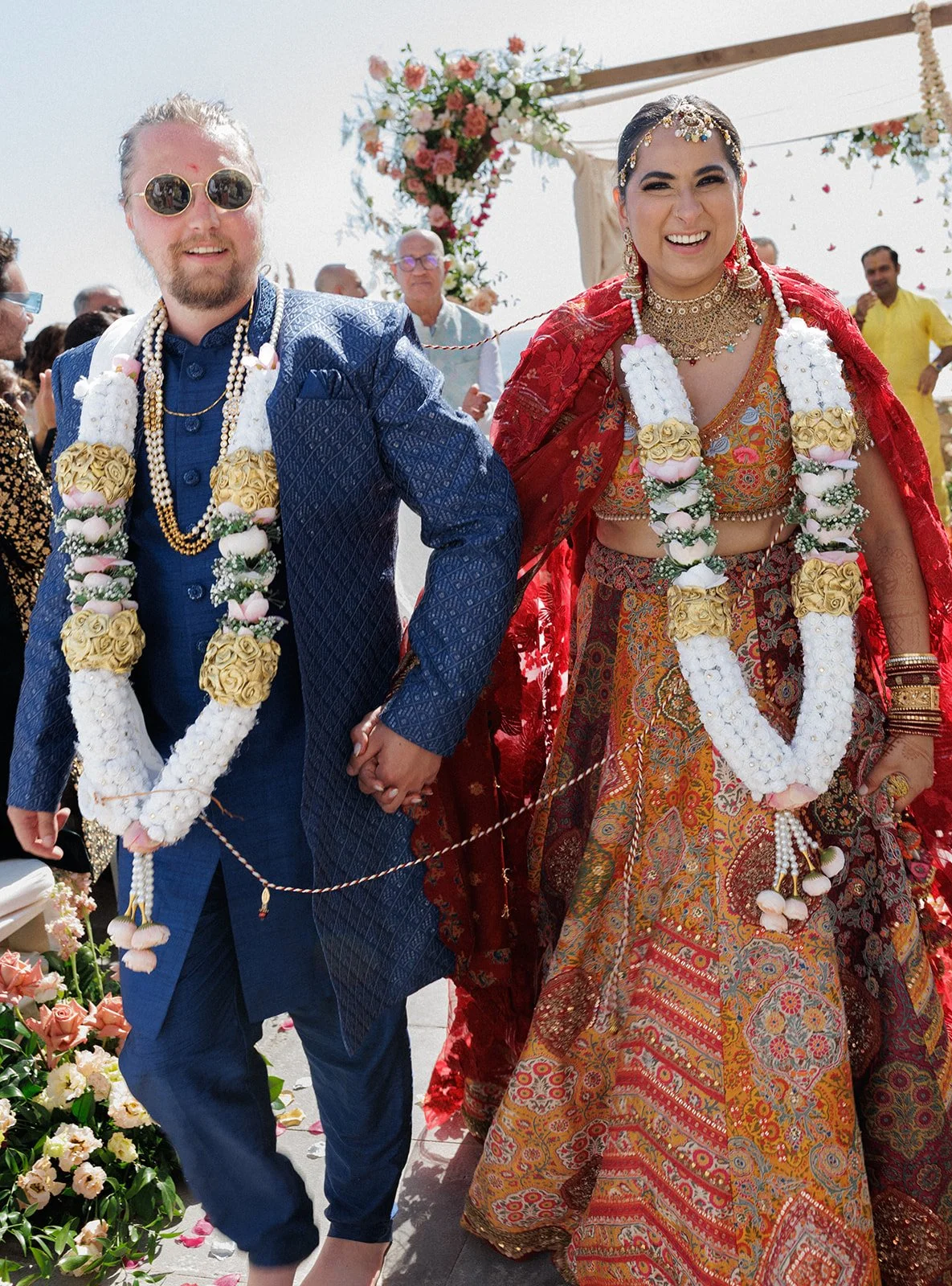
A Hindu ceremony on a terrace above the Atlantic, a mehendi under stone arches, a reception in a hall with coffered ceilings and Michelin-starred catering. Portugal can hold all of it. What it cannot do is replace a photographer who has already photographed Indian weddings. The light shifts fast along the coast. Ceremony sequences inside a mandap move at their own pace. The garland exchange, the pheras, the saptapadi. These are not details you explain to someone on the day.
We have photographed Indian destination weddings in Portugal, including multi-day celebrations at Fortaleza do Guincho in Cascais. We know how these days run, and we know what to anticipate before it happens.
Multi-Day Weddings: Documenting Every Ceremony
An Indian destination wedding in Portugal is rarely a single day. Most of the couples we work with schedule three to five days of celebrations, with a different energy at each.
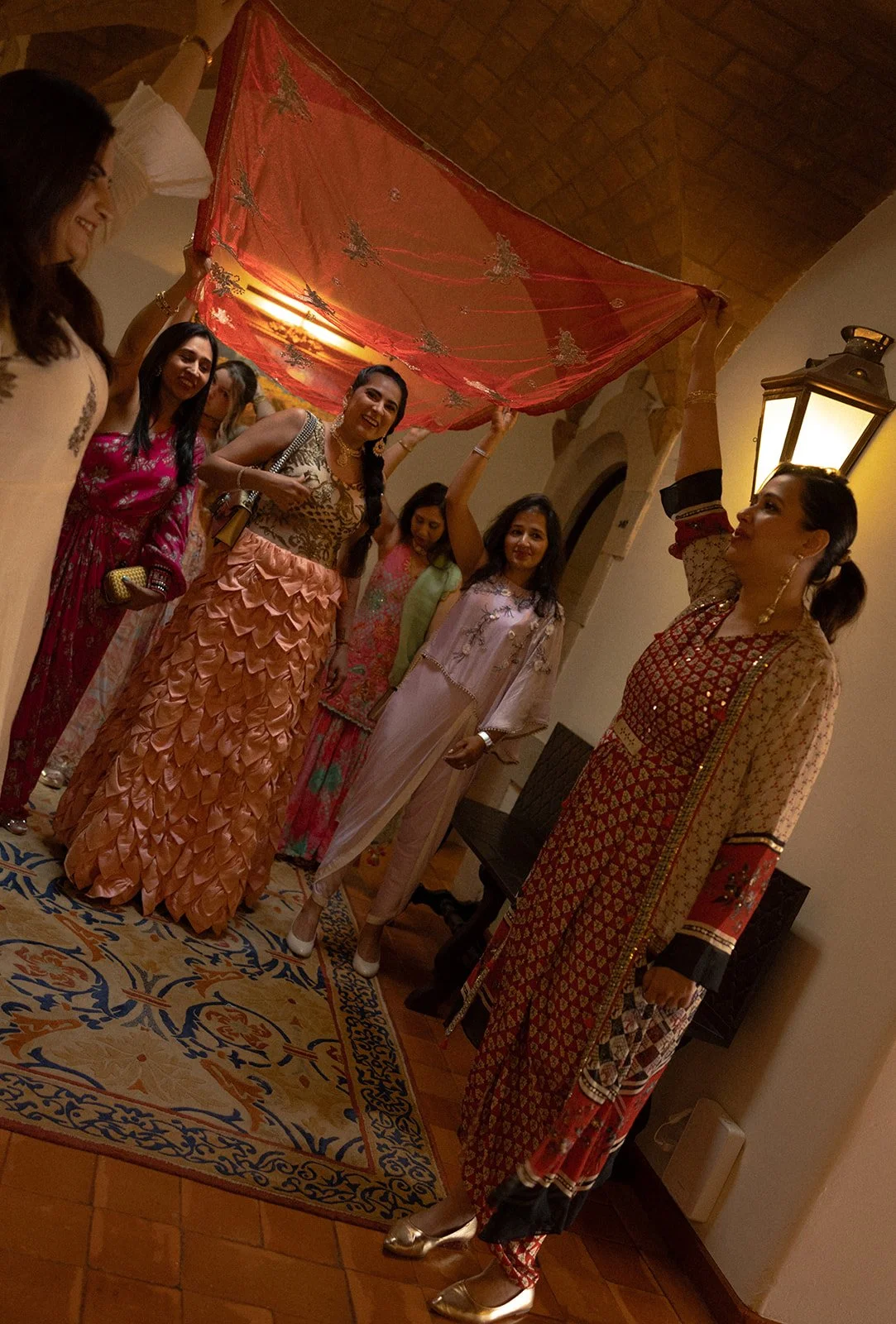
The mehendi is typically the first major event. It happens indoors or in a courtyard, with elaborate henna application, music, and a gathering of close family. The photography at this stage is observational: watching the patterns form on hands, catching guests in conversation, documenting the outfits and the textures. Portugal's historic venues offer natural settings for this. Stone archways, azulejo corridors, interior gardens lit by afternoon light.
The welcome event tends to be more kinetic. Guests arriving from multiple countries, outdoor settings, movement, color. If the venue has a pool terrace or formal garden, this is often where the tone of the whole celebration is set.
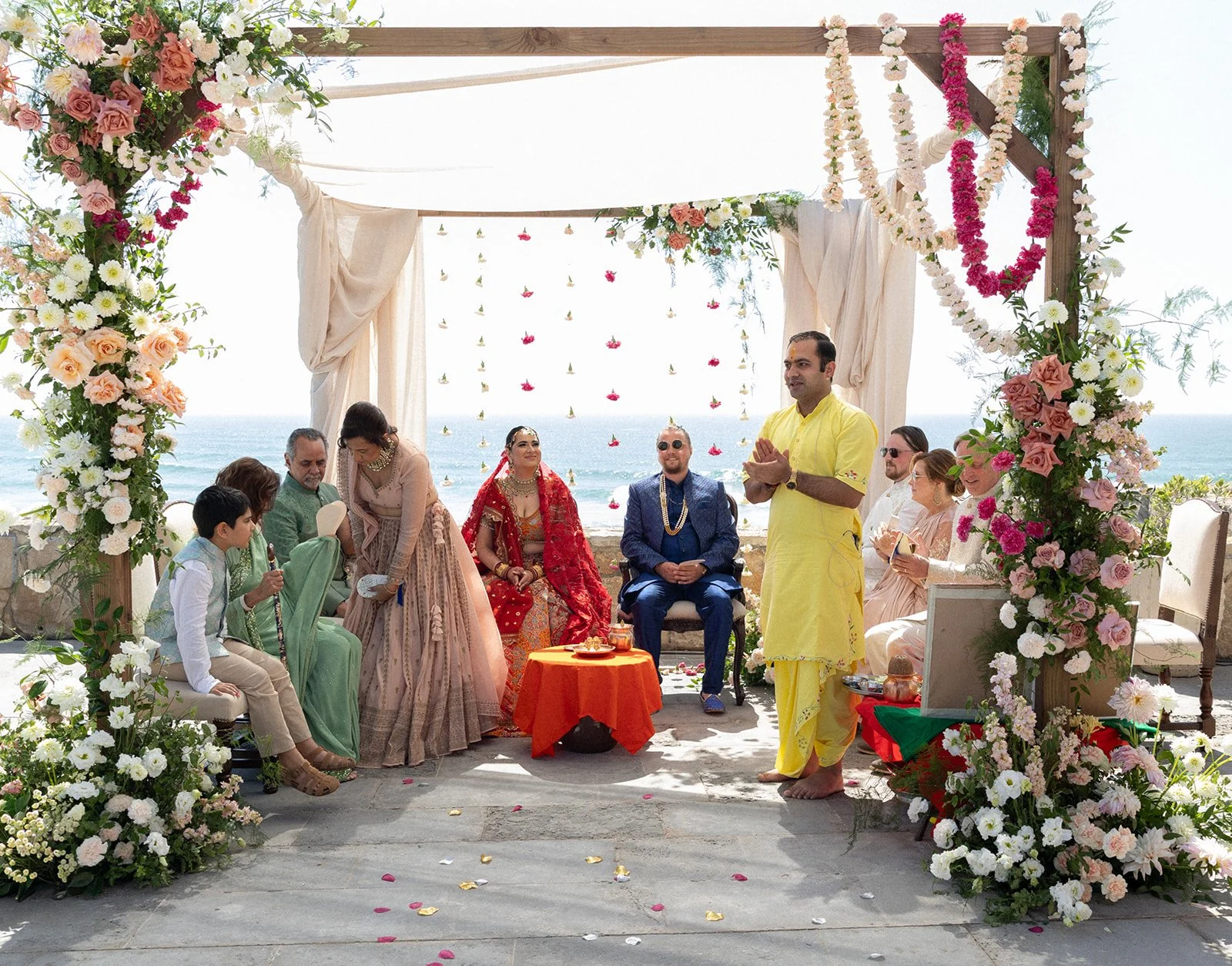
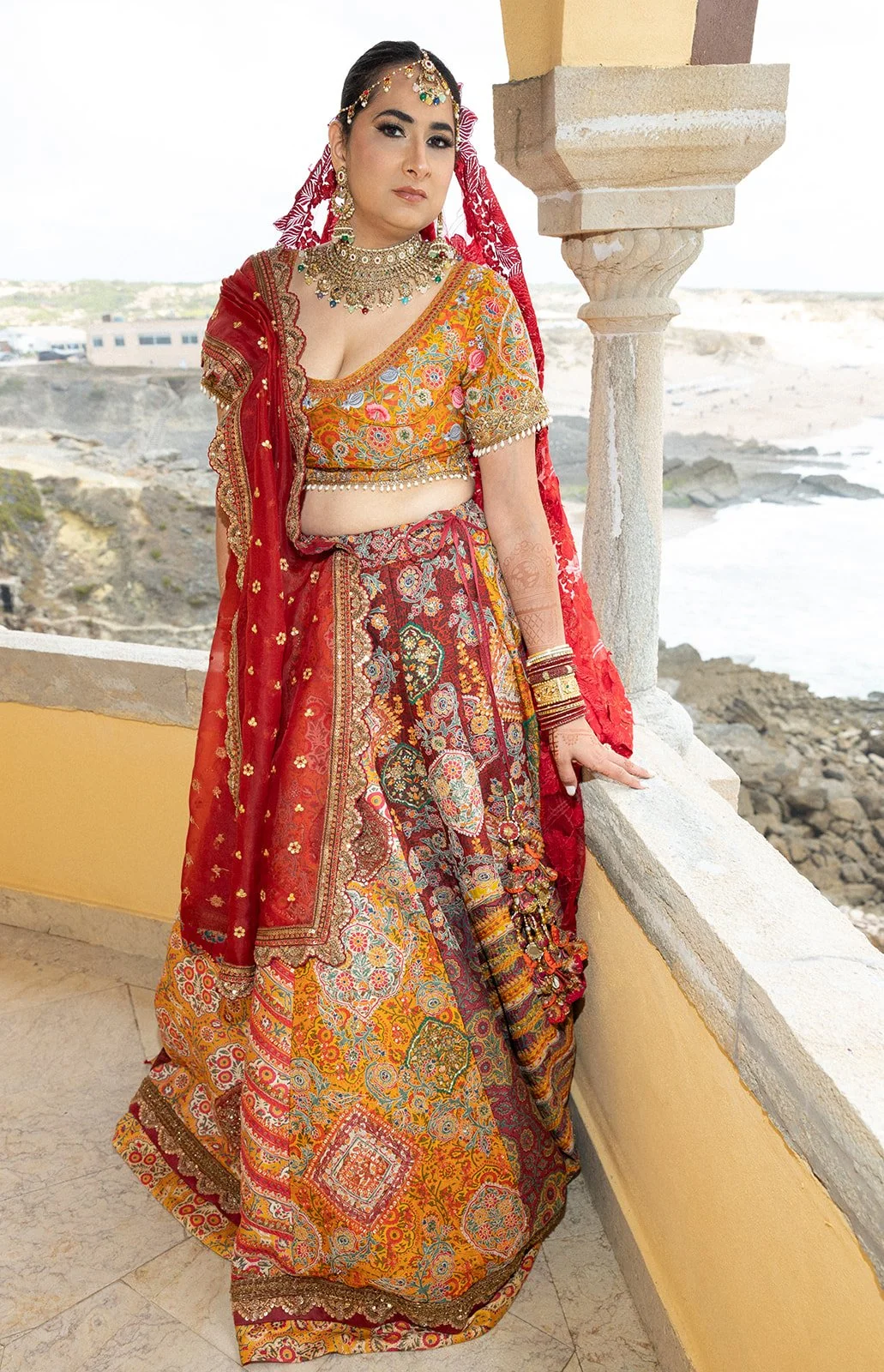
The ceremony itself, whether a Hindu ceremony with a pandit-conducted mandap or an interfaith civil ceremony, tends to be the most photographically demanding part of the week. We photograph the full sequence, from the groom's arrival to the final rituals. At Fortaleza do Guincho, Ekta and Ryan held their ceremony on a terrace above the Atlantic, with the ocean visible through the floral arch and marigold garlands catching the coastal light. The ceremony ran with a pandit, in full traditional sequence, with the ring exchange and varmala folded in. We documented it without flash, in available light, across multiple angles and across the duration of the ritual.
The reception that follows is different again: formal dinner, speeches, dancing. The light is low. The guests wear different outfits than they did for the ceremony. It requires a completely different photographic approach.
Ekta and Ryan's Wedding at Fortaleza do Guincho, Cascais
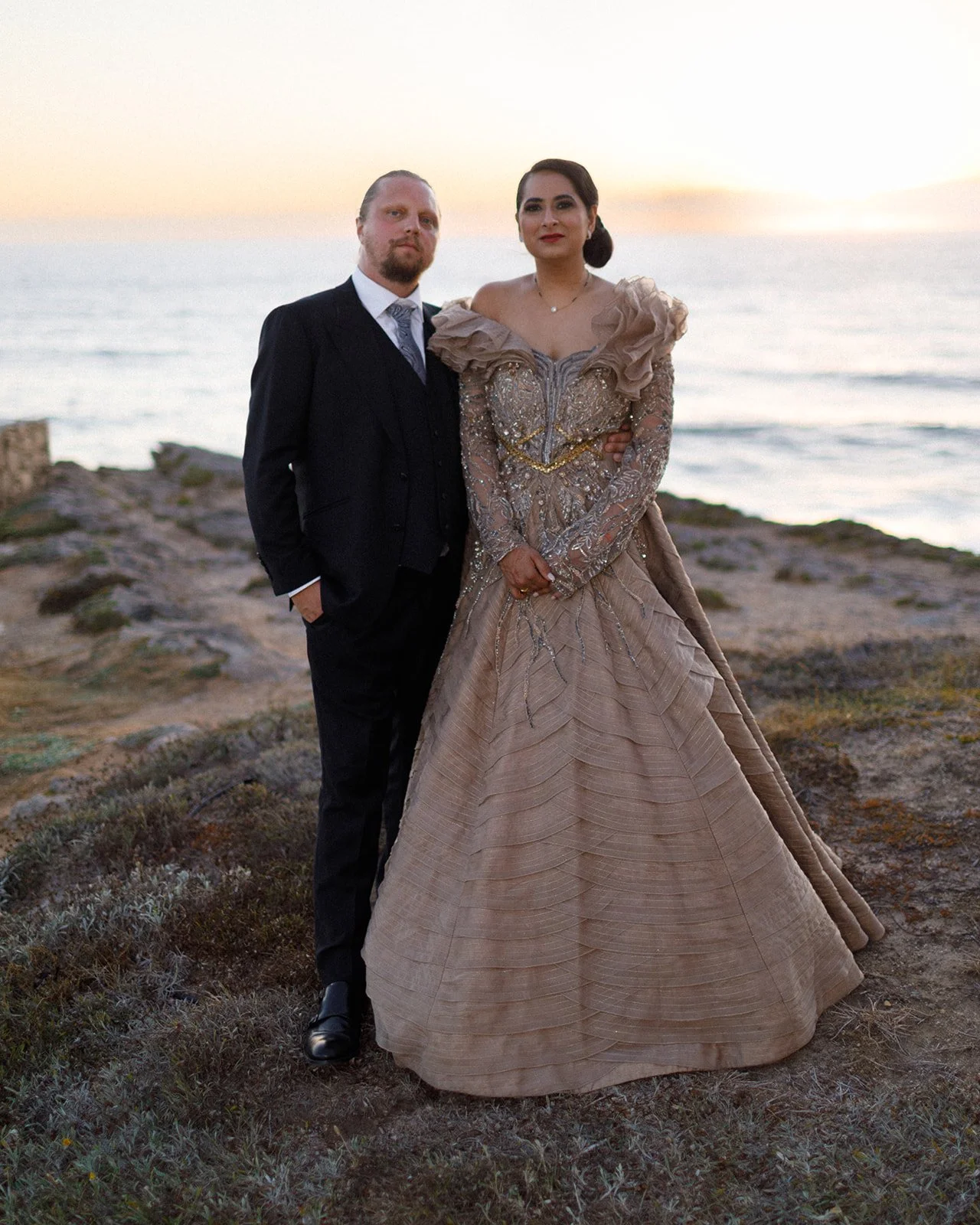
Fortaleza do Guincho is a five-star Relais & Chateaux hotel built into a 17th-century coastal fortress on the Sintra-Cascais Natural Park, approximately 30 kilometers west of Lisbon. The building sits on a rocky promontory above Guincho beach, one of the most exposed beaches on the Atlantic coast of Portugal. It has a Michelin-starred restaurant, a small number of rooms, and interiors that move between Moorish arches, painted tiles, and Atlantic-facing terraces. It is a national monument.
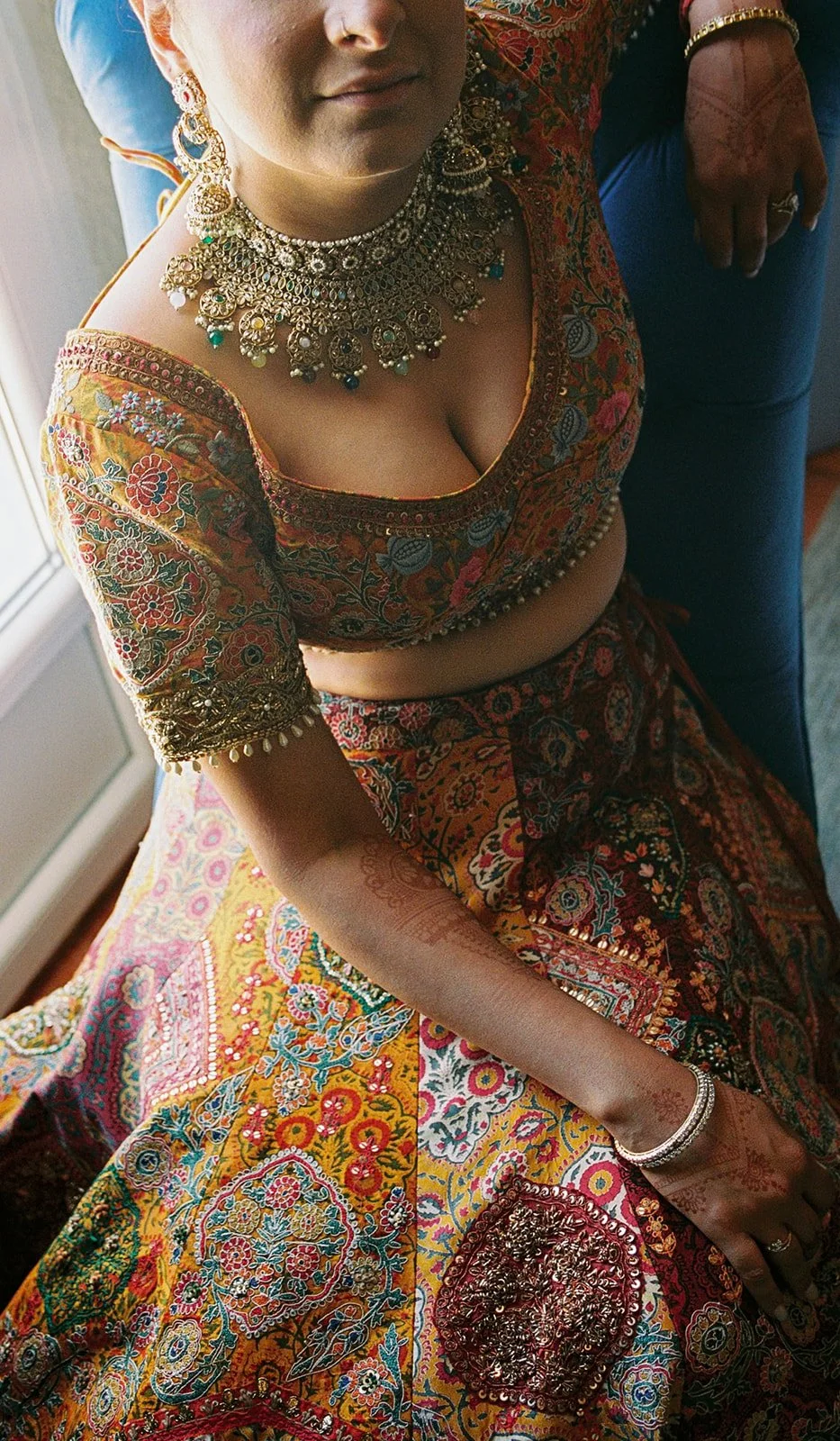
Ekta and Ryan chose it for a multi-day Indian celebration in 2025. The mehendi day brought family together in the courtyard. The ceremony took place on the ocean terrace, with a mandap built from wood and decorated with peach and cream flowers and marigold garlands. Guests wore traditional Asian attire throughout, from red and gold embroidered lehengas to navy sherwanis.
We photographed all of it across three days, including the mehendi, the welcome event at the villa pool, the getting-ready sequence, the first look in the corridors of the fortress, the outdoor ceremony, and the reception. The Atlantic was a constant backdrop, visible in almost every exterior frame.
Venues in Portugal That Work for Indian Destination Weddings
Not every venue in Portugal has the operational capacity for a large Indian wedding. The ones that do tend to have professional event coordinators, relationships with caterers willing to accommodate Indian menus, and physical space for the structural requirements of an outdoor mandap.
Fortaleza do Guincho works well because the team has experience with international luxury events, the terrace accommodates a ceremony structure with ocean views, and the interiors create natural photography settings at every turn.
Other venues in the Lisbon and Cascais corridor that have hosted Indian destination weddings include several quintas in the Sintra hills and palace properties along the Estoril coast. For celebrations with 150 or more guests, larger quinta properties offer more space. In the Algarve, private estate venues with grounds and Atlantic views can accommodate similar scale in a warmer southern setting.
The Douro Valley works well for smaller Indian celebrations, particularly second ceremonies or interfaith weddings where the guest count is more intimate, and the agricultural landscape is part of the appeal.
When choosing a venue, the logistical considerations for an Indian wedding are specific: catering access for Asian menus, space for a pandit and ceremony materials, accommodation for guests across multiple nights, and the flexibility to run a multi-day event across different configurations within the same property.
What to Look for in an Indian Destination Wedding Photographer in Portugal
When couples in the Indian diaspora ask us what they should look for, the answer is experience with both Indian ceremonies and destination photography in Portugal. These are not the same skill set, and finding a photographer who brings both to the same wedding is the core of the search.
An Indian wedding requires knowing what is about to happen before it happens. The varmala, the sindoor application, the saptapadi. If a photographer has not seen these rituals before, they will miss the moments that matter. This is not a question of cultural knowledge for its own sake. It is a practical issue of anticipation and positioning within the ceremony space.
Destination photography in Portugal requires knowing the light. The Atlantic coast has a quality of light that changes fast, particularly at Guincho, which is exposed to wind and ocean spray in a way that inland venues are not. The overcast days common on the coast produce a soft, even light that is actually excellent for photography, but only if you know how to work with it rather than against it.
Beyond credentials, couples should look at published work. Not just galleries on a website, but editorial publications. Work that has been selected and published by editors at Vogue or Tatler indicates a level of quality that matters in the long run, when you are looking at your images twenty years later.
Practical Considerations for Indian Destination Weddings in Portugal
Portugal requires a civil ceremony for a legally recognized marriage. This can take place at a registry office in the weeks before the celebration, or on the day itself, before or after religious rituals. Many couples combine a civil ceremony and an Indian ceremony across consecutive days, or fold the legal element into one of the celebration days with the pandit present for both.
The pandit, if traveling from the UK or another country, will need accommodation and may need to source specific ceremony materials locally. Lisbon has Indian specialty stores, and the hotel coordinators at established luxury venues have typically handled these logistics before.
July and August are peak months along the Cascais coast. The light in midsummer is harder than in shoulder months. May, June, September, and October offer softer Atlantic light and more venue availability. Our work at Fortaleza do Guincho with Ekta and Ryan was in 2025, and the coastal light across the three days produced the range of conditions that the Atlantic typically provides: clear mornings, soft midday cloud, and golden evening light on the rocks.
Frequently Asked Questions
Do you photograph Indian weddings in Portugal?
Yes. We are an editorial wedding photography team based in Portugal, and we photograph South Asian and Indian destination weddings, including multi-day celebrations. We have photographed Hindu ceremonies conducted by pandits at venues including Fortaleza do Guincho in Cascais, with full coverage across the mehendi, ceremony, and reception.
What venues in Portugal work best for Indian destination weddings?
Fortaleza do Guincho in Cascais is one of the strongest options for couples who want Atlantic coast views and a luxury boutique setting. For larger guest counts, quinta properties in the Sintra hills and palace hotels along the Estoril coast offer more capacity. In the Algarve, private estate venues with sea views work well for smaller or multi-day celebrations in a warmer southern setting.
How many days should we plan for an Indian destination wedding in Portugal?
Most couples we photograph plan three to five days. A typical structure includes a mehendi or henna event on day one, a welcome event on day two, the main ceremony and reception on day three, and optional day-after events. The specific sequence depends on your family traditions and the rituals your pandit will conduct.
Can you photograph all events across a multi-day Indian wedding?
Yes. We offer full multi-day coverage and are experienced with the photography requirements of each phase, from the mehendi and getting-ready sequence to the ceremony, reception, and candid moments throughout.
How far in advance should we book?
We photograph a maximum of ten weddings each year. For Indian destination weddings, which are typically scheduled across multiple days and require coordination with venue and pandit, most couples approach us 12 to 18 months in advance to confirm availability.
Will the photographs be submitted for publication?
We submit all weddings we photograph for publication consideration. Our work has been published in British Vogue, Vogue Australia, Vogue Arabia, and Tatler. We cannot guarantee publication, but we will submit your wedding if we feel it meets the editorial criteria of the publications we work with.
