
WHAT PHOTOGRAPHERS PUBLISHED IN A VOGUE LOOK FOR IN A WEDDING DAY
After photographing weddings at Palácio de Queluz (published in Vogue Arabia), Grémio Literário in Lisbon, and Fortaleza do Guincho on the Atlantic coast, we have developed a clear and specific set of criteria for what makes a venue genuinely photogenic. The Lopes Photography photographs a maximum of ten weddings per year, published in British Vogue, Vogue Arabia, and Tatler. That restraint means every venue we work in receives our full attention, before, during, and after the day. What we look for is specific. And it is rarely what couples expect when they first ask the question.
What Vogue-Published Photographers Look for in a Wedding Venue
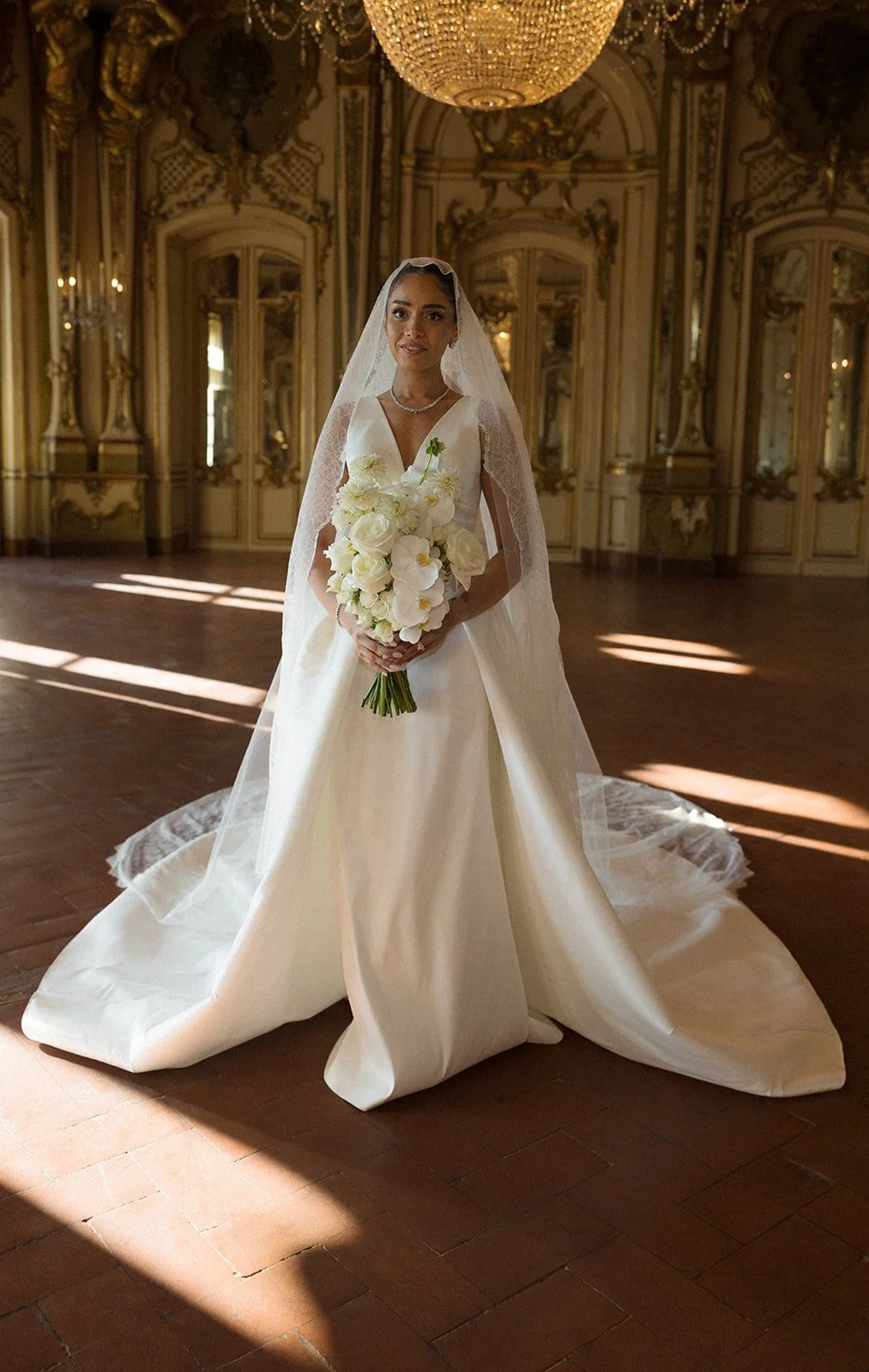
The single most important quality in any venue is the direction of its natural light. Not the view. Not the florals. The light. At Palácio de Queluz, the ballroom windows face west, which means that from five in the afternoon onward, the interior fills with a warm, directional glow that creates depth and shadow without any artificial input. No bounced flash. No reflectors. The photographs from Hessah and Ali's wedding, featured in Vogue Arabia, are almost entirely lit by that one set of windows.
See the full gallery: Hessah and Ali at Palácio de Queluz.
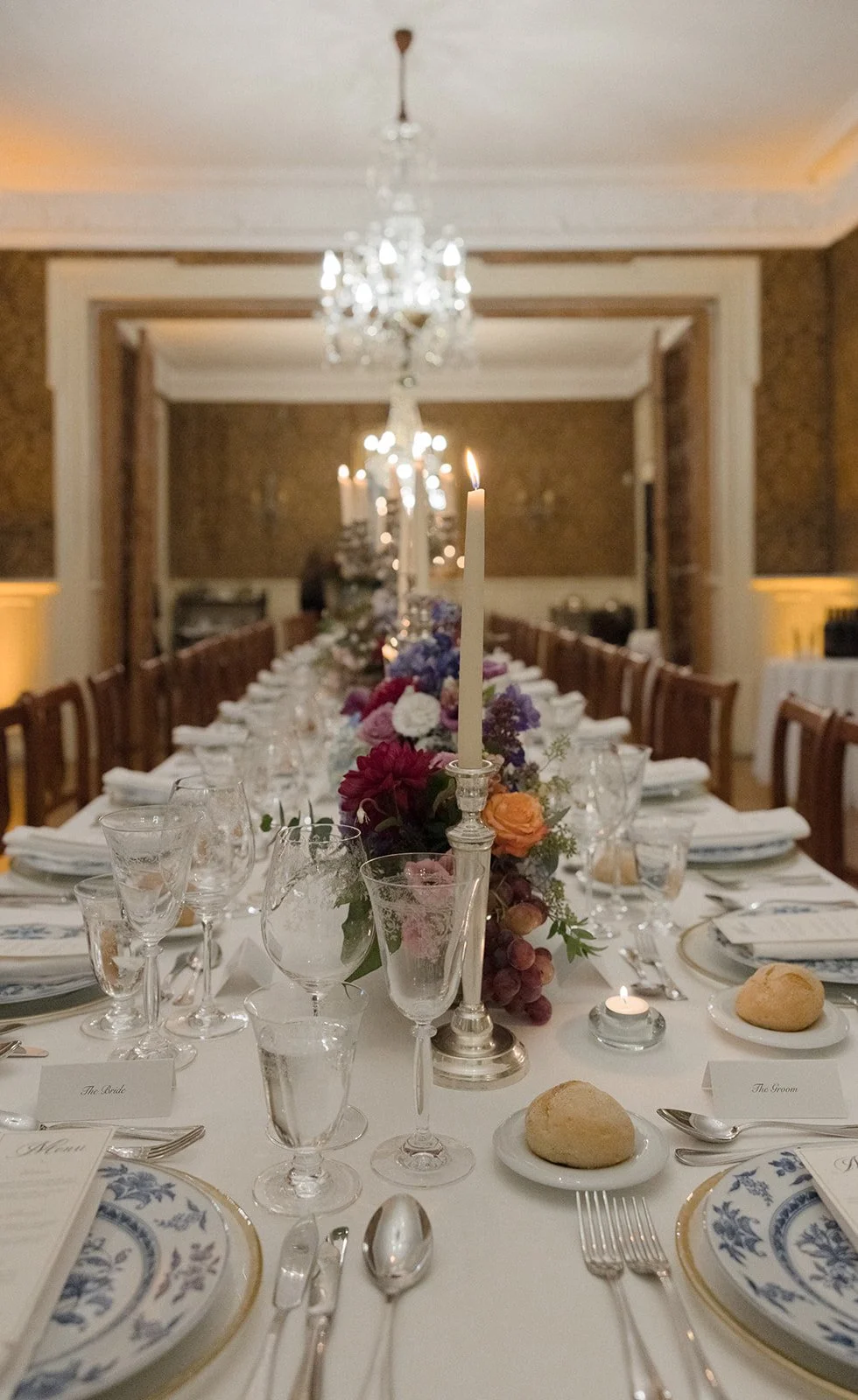
At Grémio Literário in Lisbon, the light behaves differently: the interior rooms have high ceilings and layered sources (chandeliers, wall sconces, candlelight) that produce a warmth the camera reads as clean and dimensional. The difference between a venue where light works for you and a venue where you spend the entire day fighting it cannot be overstated. It is the difference between photographs that feel alive and photographs that feel competent.
How Light Changes Throughout the Day at a Wedding Venue
A venue with strong photographic potential has at least three distinct lighting conditions across a single wedding day. Early afternoon in the getting-ready rooms gives one a quality of light. The ceremony hour, typically between four and six in the evening, gives another. The dinner terrace or reception space after sunset gives a third. The best venues in Portugal, including Queluz, Fortaleza do Guincho, and Palácio de Seteais, offer all three in a sequence that builds visually from the opening of the day to the close.
The morning rooms are private and soft. The ceremony space opens to the late-afternoon sun at an angle that adds warmth without flattening shadow. The dinner setting, lit from within by candle and warm electric light, produces a completely different mood. Each phase of the day has its own visual register. Venues that work in only one lighting condition tend to produce photographs that all look the same. Couples often do not notice this until they receive their gallery. We notice it during the venue visit, usually within the first ten minutes.
We have also returned to Palácio de Seteais for a dedicated pre-wedding photoshoot. See the full gallery: Xuan and Neil's pre-wedding photoshoot at Palácio de Seteais.
Why Architectural Variety Matters More Than a Single Beautiful Backdrop
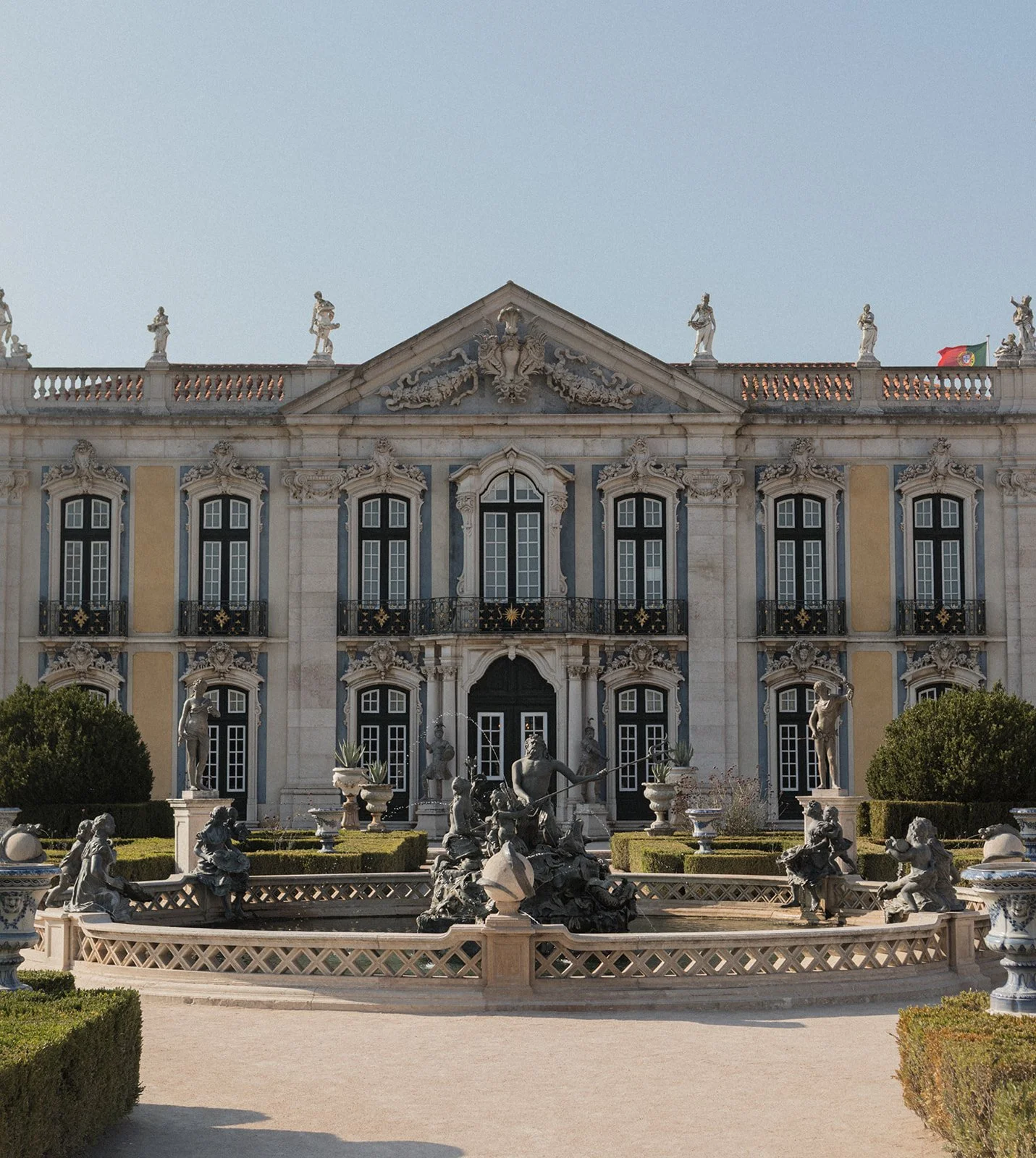
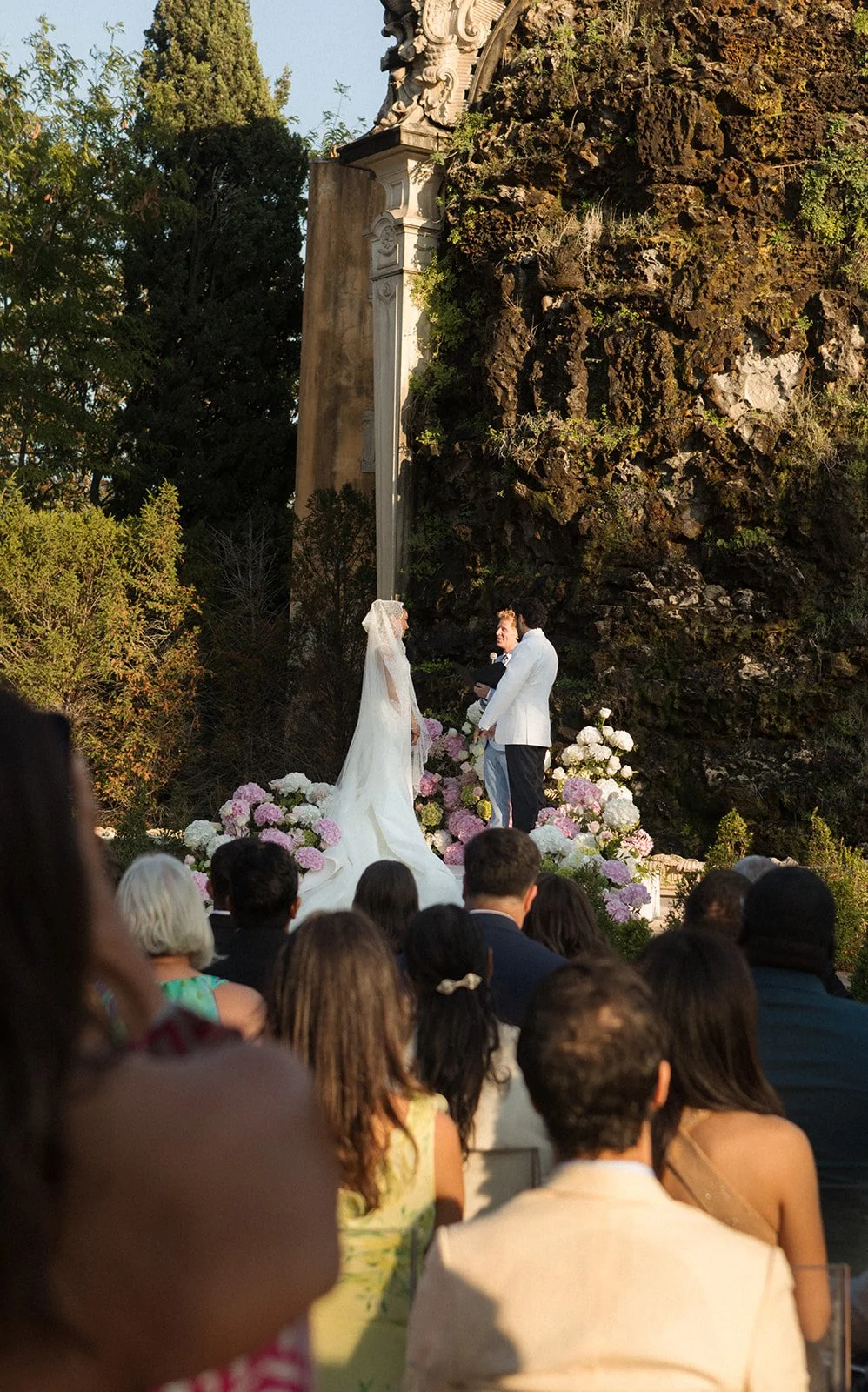
A venue with architectural variety gives us the ability to create images that feel like they belong to different locations, while never leaving the property. At Queluz, we can move between the gilded ballroom interior, the formal boxwood gardens, the ornate stone monument that frames the ceremony space, and the illuminated facade at night. Those are four distinct visual environments within a single property. The album from a Queluz wedding reads like it was photographed across multiple destinations.
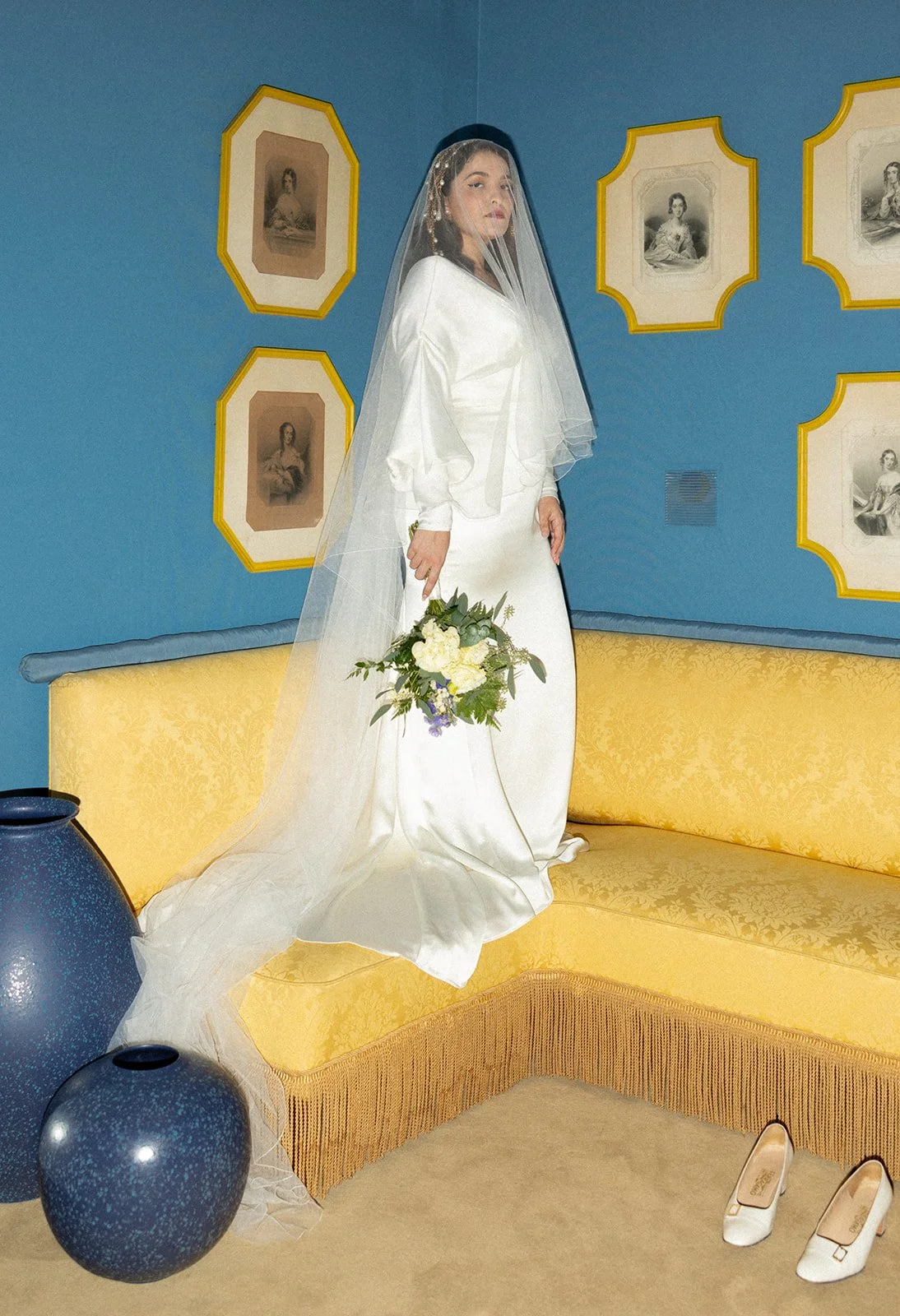
At Grémio Literário, the variety is even more pronounced. The reception rooms include deep-blue walls and yellow velvet furniture that produce portraits unlike anything we have made elsewhere in Portugal. The stone fountain courtyard, the candlelit dining room, the pink exterior staircase: each space operates on a completely different visual register. A couple who books Grémio receives an album that is genuinely hard to make look repetitive.
See the full gallery: Catherine and Theodore at Grémio Literário.
Venues that have a single, unified aesthetic - all white marble, all open garden, all rustic quinta - are excellent spaces for many reasons. They are not always the most interesting venues to photograph. The photographs tend to be beautiful in the same way throughout the entire day.
What We Assess During a Venue Visit
Before we agree to photograph a wedding, we review the venue in detail, either through a physical visit or through thorough documentation of every space at different hours. There are five things we assess directly.
The first is ceiling height and window placement. High ceilings allow light to travel. Low ceilings compress it. Windows that face the afternoon sun are worth more than panoramic views that face into the morning.
The second is transition spaces: corridors, staircases, doorways, and arches. These are the spaces that produce photographs couples rarely anticipate requesting. At Grémio Literário, the interior staircase alone is responsible for some of the most remembered images from Catherine and Theodore's wedding. Those moments are only possible because the space exists.
The third is the portrait location. At Fortaleza do Guincho, the cliffs and the Atlantic horizon produce a quality of a couple portrait that is impossible to manufacture anywhere else. The scale of the landscape, the late-September light, the salt wind: those three elements together create images with a specificity that no studio can replicate. That kind of irreplaceable setting is what we look for.
See the full gallery: Ekta and Ryan at Fortaleza do Guincho.
The fourth is the transition to night. We check how the venue is lit after dark, how the exterior is used, and whether dinner is set inside or under open sky. The night portraits at Queluz, with the facade lit in deep pink and the reception tables arranged on the terrace, are only possible because the production team understands how the building reads in artificial light.
The fifth is where the couple will have fifteen minutes alone during the day, and what that location looks like. This is often an afterthought in venue planning. For us, it is one of the non-negotiable parts of a strong wedding day.
What Couples Get Wrong When Choosing a Venue for Photography
Couples most often choose a venue based on what it looks like in another photographer's work. That is a reasonable starting point, but it has one significant limitation: different photographers extract very different images from the same space. A venue that photographs well in a bright, airy editorial style may be challenging for a darker, film-based aesthetic. The inverse is equally true.
The better question is not "did this venue photograph well before?" but "does this venue match how our photographer works?" We photograph toward contrast, depth, and natural light. A venue primarily designed for wide, open, white spaces will not give us what we need. A venue with layered light sources, architectural texture, and distinct interior zones will.
The second most common mistake is choosing a venue for its ceremony backdrop and giving little thought to where portraits happen, where dinner is held, or what the space looks like after dark. The ceremony is forty to sixty minutes. The rest of the day, eight to ten hours, is everything else.
For couples early in their venue search, our guide to wedding venues across Portugal offers a regional overview. You can also read about specific spaces in our Algarve venue guide and Alentejo venue guide.
Frequently Asked Questions
What makes a wedding venue good for photography?
Three qualities define a venue that photographs well: directional natural light in at least two distinct spaces, architectural variety that allows different types of images across the day, and a portrait location specific to that property. Venues with all three tend to produce albums that read as genuinely editorial rather than as a collection of generically beautiful images from a single setting.
How much does The Lopes Photography charge for a destination wedding?
Our collections start from €10,000 and cover up to ten hours of photography, with analog film and digital delivery. We photograph a maximum of ten weddings per year. We recommend reaching out twelve to eighteen months before your wedding date, particularly for peak-season dates between April and October, which fill earliest.
What separates The Lopes Photography from other editorial photographers in Portugal?
We have been published in British Vogue, Vogue Arabia, and Tatler, and we limit our calendar to ten weddings per year. That limitation is intentional: it means we are never photographing back-to-back bookings, and every wedding we accept is approached as a singular editorial project. We also work across three formats: digital, medium-format analog film, and Super 8, which gives each couple a collection with genuine visual range.
How far in advance should we book a wedding photographer in Portugal?
Twelve months is the minimum we recommend. For venues with limited availability, such as Palácio de Queluz, Fortaleza do Guincho, and Grémio Literário in Lisbon, requests arrive eighteen to twenty-four months in advance for peak dates. The earlier the conversation begins, the more time we have to prepare specifically for your venue, your couple, and the specific light conditions of your day.
Do you visit venues before the wedding?
Yes. For every wedding we photograph, we review the venue in detail before the day, either through a physical visit or through a thorough review of space documentation from every angle and at different hours. Venue preparation is not optional. It is how we ensure the images we make on the day are specific to that place rather than interchangeable with any other property.
If you are in the early stages of choosing a venue, or you have already chosen and want to understand how we would approach your specific space, we would be glad to have that conversation. The Lopes Photography photographs a maximum of ten weddings per year, and the venues we choose to work in are a significant part of how our published work is made. You can reach us directly through our contact page or read more about our process on the about page.
