
ALENTEJO WEDDING PHOTOGRAPHY GUIDE FOR DESTINATION COUPLES
After photographing weddings across Portugal for almost a decade, and with work published in British Vogue, Vogue Arabia, and Tatler, we have covered venues from the Atlantic cliffs of the Algarve to the palaces of Sintra. The Alentejo is different from all of them. The landscape is open, unhurried, and completely its own. For couples considering it as a destination, this guide covers what wedding photography in the Alentejo actually looks like: the light, the terrain, the seasons, and the logistics.
What Makes Alentejo Different for Wedding Photography
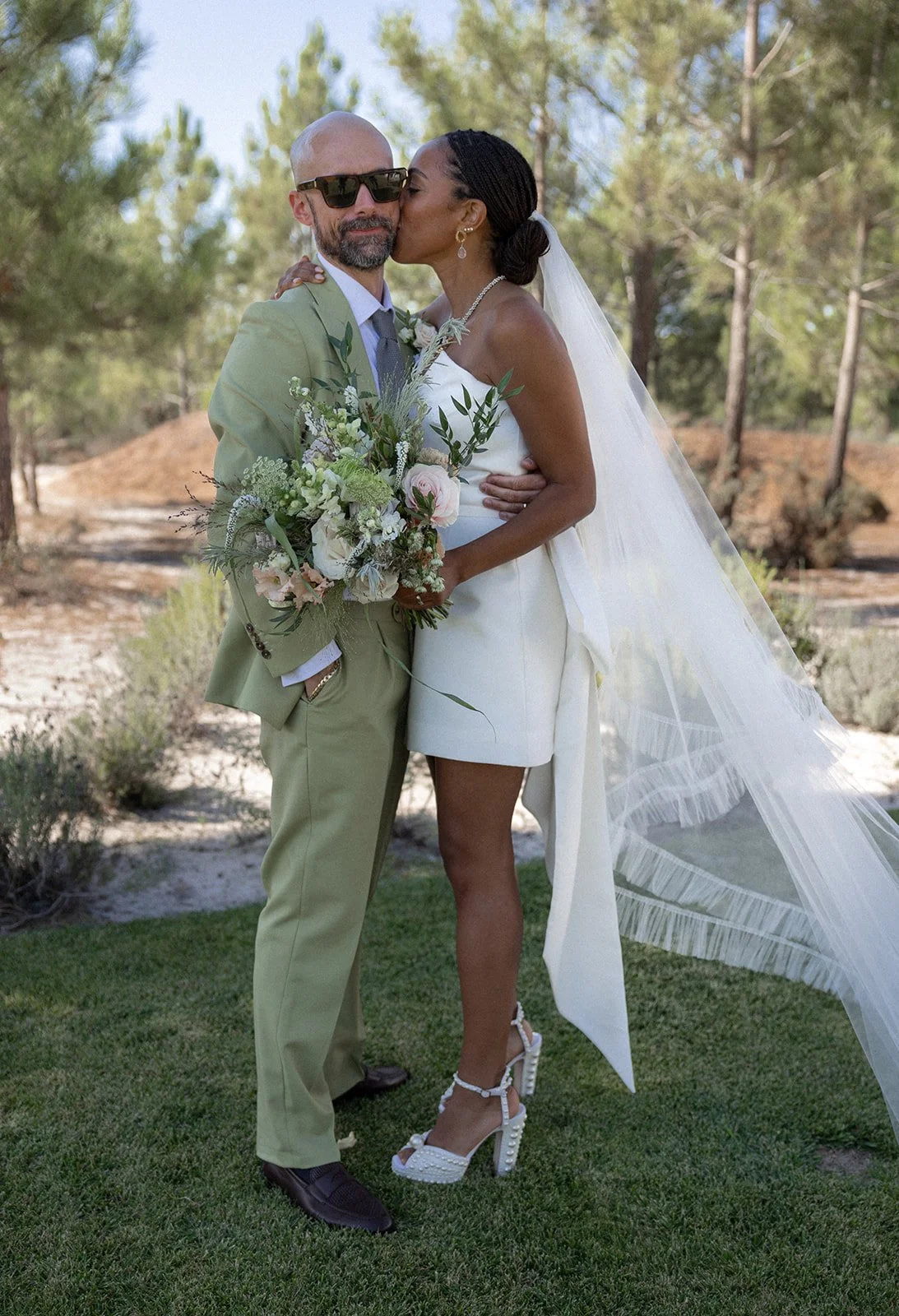
The Alentejo covers roughly one-third of Portugal's land area and contains almost none of its tourist crowds. That ratio defines the photography experience. There are no tall buildings to interrupt the horizon. The plains extend to a distance that makes golden hour last longer and glow more dramatically than almost anywhere else in Portugal. Cork oak trees, olive groves, and vineyards create a texture in the landscape that reads beautifully in photographs even in harsh midday light. Hilltop villages like Monsaraz sit at elevations that offer 360-degree views across the Alqueva reservoir, the largest artificial lake in Western Europe.
What this produces photographically is images with a quality of spaciousness that is hard to find in more popular European destinations. Couples and their guests have room to move through a landscape rather than being contained within it. That distinction changes everything about how a day unfolds.
The Best Seasons for Photography in the Alentejo
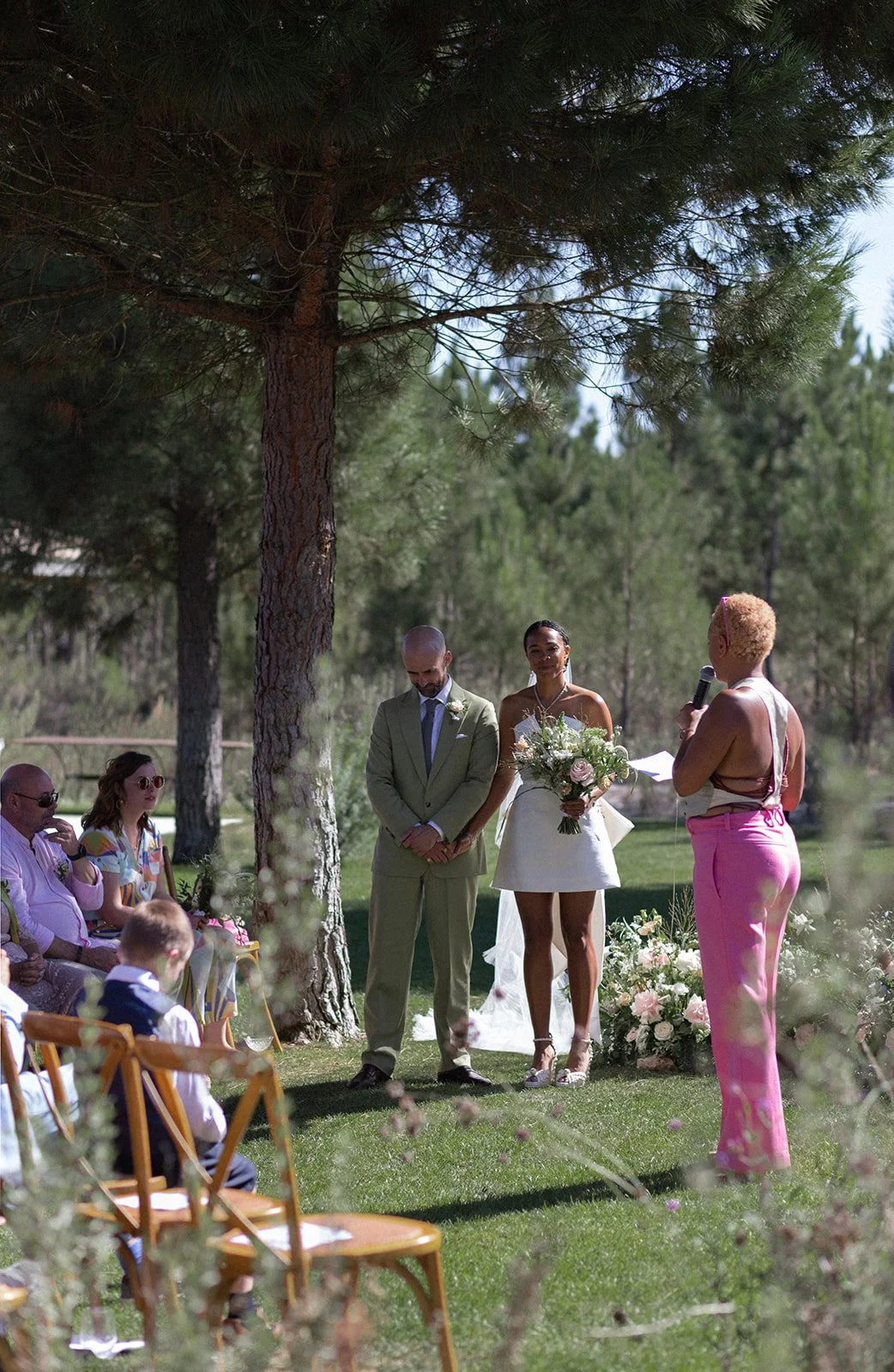
September and October are the best months for wedding photography in the Alentejo. The summer heat has passed, the vineyards are in harvest, the light sits low and warm from mid-afternoon, and temperatures are consistently comfortable for outdoor celebrations. The landscape in early autumn has a color palette of amber, terracotta, and gold that is almost impossible to replicate elsewhere in Europe at this time of year.
April and May are the second-best option. The plains are green from winter rains, wildflowers appear across the fields, and the temperatures are mild. Golden hour in May arrives late enough to allow a ceremony and portraits before the light changes, which is one of the most useful practical facts for planning an Alentejo spring wedding.
Summer, from late June through August, brings the Alentejo's most extreme conditions. Temperatures regularly exceed 40°C inland, which makes extended outdoor photography challenging for couples and guests alike. If a summer date is fixed, we plan the portrait session for the hour before sunset and design the rest of the day around shade and interior spaces. See our seasonal guide for Portugal for a full breakdown by month.
Winter weddings in the Alentejo are uncommon but not without appeal. The light in January and February has a sharpness and stillness that produces striking images. The risk of rain is real, and a covered venue space becomes essential for planning purposes.
Venue Types and Where They Are Located
The Alentejo's wedding venues fall into two broad categories: historic estates and wine properties. These categories sometimes overlap, as many of the region's most significant properties were historically both.
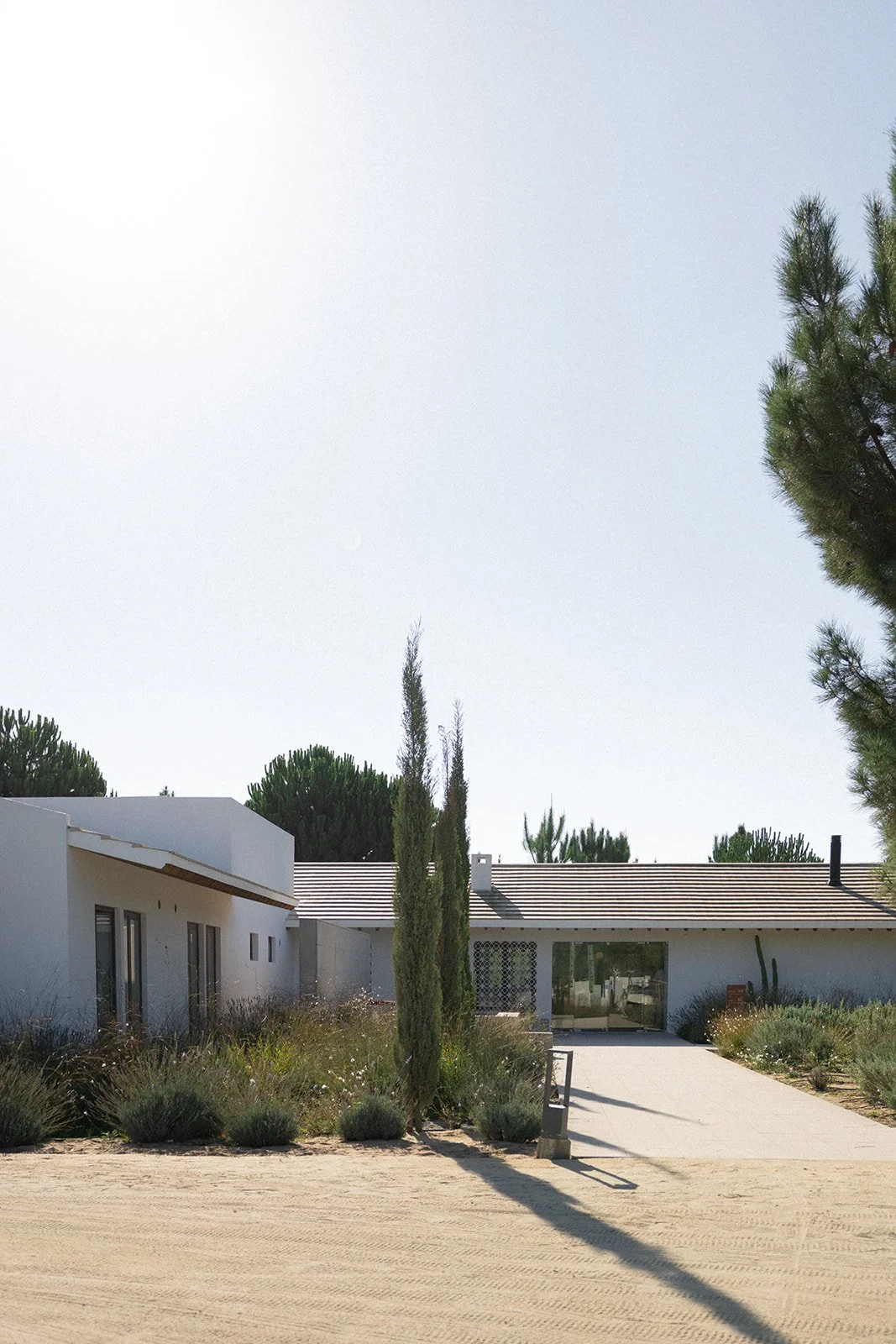
Herdades (farming estates): The defining venue type of the Alentejo, herdades are large rural properties that combine working agriculture with private grounds for events. They range from simple farmhouses to fully restored complexes with guest accommodation, swimming pools, and event spaces. The photography potential is consistent across most of them: wide exteriors, stone walls and terracotta tile, light that enters through deep-set windows, and landscapes that open immediately beyond the property boundary.
Historic convents and palaces: Evora, the Alentejo's UNESCO World Heritage city, is surrounded by properties with significant architectural heritage. Convento do Espinheiro, a former fifteenth-century convent now operating as a luxury hotel on the outskirts of the city, combines stone cloisters, vaulted ceilings, and formal gardens with the practical infrastructure of a contemporary event venue. The architecture provides interior photography opportunities that are unusual within the region.
Wine estates with accommodation: Properties like Torre de Palma Wine Hotel in Monforte and Herdade da Malhadinha Nova near Beja function as working wine estates with guest rooms and event facilities. The vineyard rows, the winery buildings, and the estate grounds each offer a distinct visual register within a single property.
Design properties: L'AND Vineyards near Montemor-o-Novo, between Lisbon and Évora, represents a different approach: contemporary architecture and interior design within a wine estate. For couples whose visual sensibility is more architectural than historic, it offers a contrast to the stone-and-cork-oak aesthetic more commonly associated with the region.
For a detailed breakdown of venues by area, see our Alentejo wedding venues guide.
The Areas of the Alentejo Worth Knowing
Évora and surroundings: The most accessible part of the region from Lisbon, approximately ninety minutes by car. The UNESCO-listed city center, the Roman temple, and the surrounding countryside make this the most logistically straightforward Alentejo base for destination couples whose guests are flying into Lisbon.
Monsaraz and the Alqueva area: A medieval hilltop village in the east of the region, near the Spanish border. The Alqueva reservoir surrounds the village on three sides and creates water views from the hilltop that are unlike anything else in mainland Portugal. Couples who want dramatic, singular imagery and are willing to accept a longer drive from Lisbon (approximately two hours) will find this area consistently delivers.
Alto Alentejo (Monforte, Marvao, Elvas): The northern Alentejo is quieter in terms of wedding infrastructure but contains some of the region's most distinct properties. Monforte is home to Torre de Palma. Marvao, a fortified hilltop village on the Spanish border, is one of the most photographically striking locations in the entire country. Elvas is a UNESCO World Heritage fortified city with very limited wedding infrastructure but significant visual potential for portrait sessions.
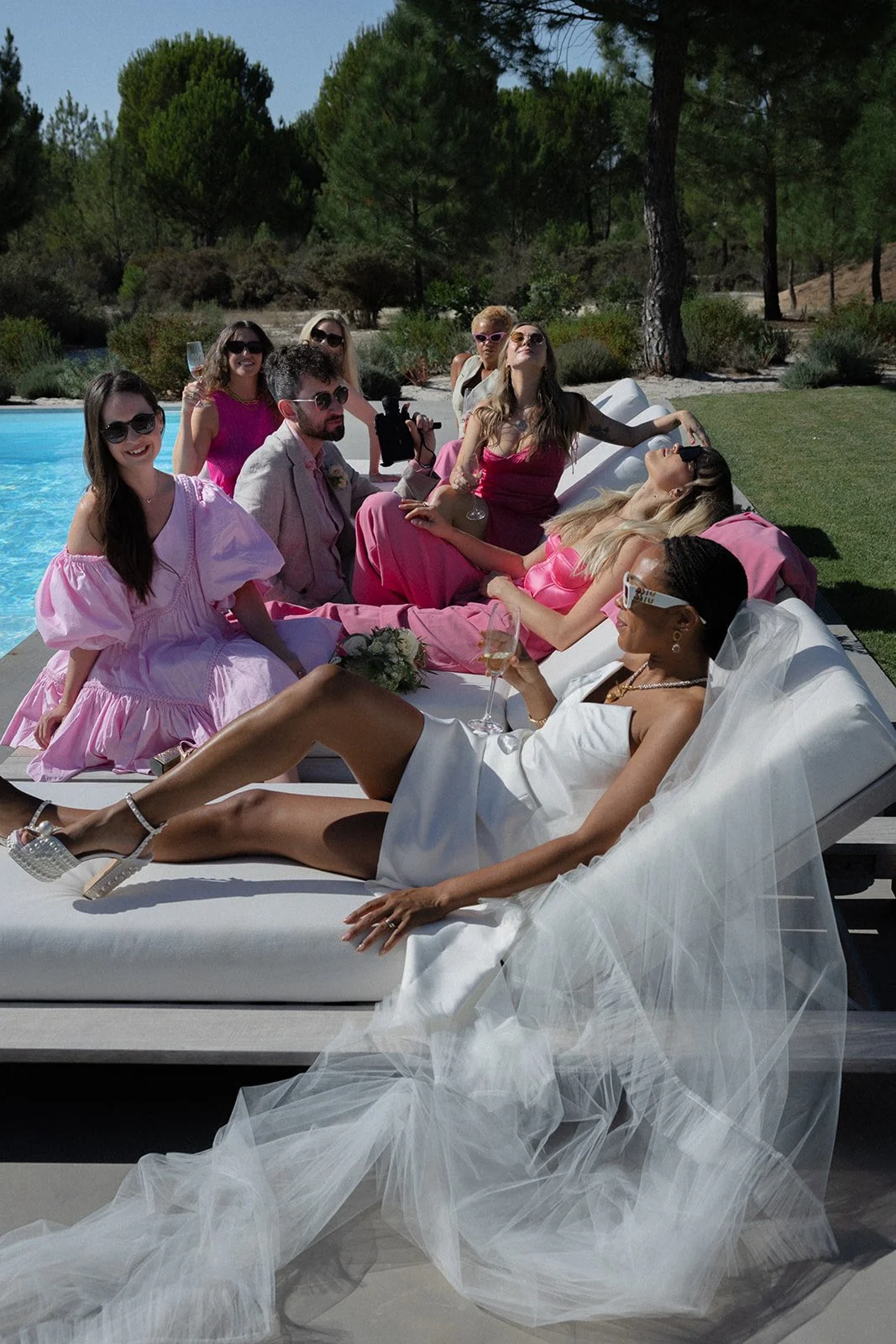
Alentejo Litoral (Comporta, Melides): The coastal strip of the Alentejo, including Comporta and Melides, represents a distinct sub-region. The landscape is pine forests, sand dunes, and rice paddies rather than the cork oak plains of the interior. Wedding photography in this area has a different tone: lighter, more coastal, more informal. We have photographed in this part of the region and found the afternoon light over the dunes to be among the most distinctive we have worked with in Portugal. See our guide to private estate venues in Portugal for properties in this area.
Logistics for Destination Couples
The Alentejo is approximately ninety minutes from Lisbon by car. From the Algarve, inland Alentejo is one and a half to two hours depending on the exact location. Évora is the only city in the region with a meaningful range of hotels for guests. For weddings at rural properties, guest accommodation is typically either on-site at the venue or coordinated across a small number of local rural hotels. We always ask couples to share a guest list breakdown before planning the schedule, as properties vary considerably in how many guests can stay on-site.
Photography-wise, the Alentejo benefits from long shooting days in late spring and autumn. Sunset in September in the Alentejo falls between 19:45 and 20:15 depending on the exact date, which allows for a ceremony at 16:00 and two full hours of golden-hour portraits without compressing the day. That time buffer is one of the practical arguments for the Alentejo as a photography destination.
Frequently Asked Questions
How much does wedding photography in the Alentejo cost?
Wedding photography in the Alentejo with The Lopes Photography starts from 10,000 euros for a full day of coverage. That investment covers a single photographer team, full-resolution delivery, and our standard editorial approach. The Alentejo does not require travel supplements for couples based in Portugal, as we cover the entire country from our base in the Algarve.
How far in advance should we book a wedding photographer for the Alentejo?
Twelve to eighteen months in advance is the standard lead time for destination weddings in Portugal, including the Alentejo. September and October, the most popular months for Alentejo weddings, tend to fill earliest. If your date is in spring, April and May also book quickly. Enquiring at least a year before your date gives the best chance of availability.
What makes the Alentejo different from other parts of Portugal for wedding photography?
The defining characteristic is space. The open plains, wide skies, and absence of urban density mean that golden hour light travels without interruption, producing photographs with a sense of scale and quietness that is hard to replicate in Lisbon or the Algarve. The region also has a distinct visual identity: cork oak trees, terracotta rooflines, and vineyard landscapes that look unlike any other part of the country.
What is the best time of day for portraits at an Alentejo venue?
The hour before sunset, which falls between 19:30 and 20:15 in September and October. In the Alentejo, that window produces warm directional light across flat terrain, which is among the most consistently useful portrait light we encounter anywhere in Portugal. We recommend scheduling the ceremony no later than 16:00 to ensure enough time for both family portraits and couple portraits before the light changes.
We photograph a maximum of ten weddings per year, with work published in British Vogue, Vogue Arabia, and Tatler. We cover the Alentejo as part of our Portugal coverage, based in the Algarve and available across Europe. If you are planning a wedding or elopement in this region and want to discuss the specifics, visit our contact page to get in touch.
