
IS ANALOG FILM WORTH IT FOR YOUR WEDDING? AN HONEST ANSWER
After photographing ten weddings a year in Portugal and internationally, published in British Vogue, Vogue Arabia, and Tatler, we have worked with both film and digital across every kind of wedding and location. That experience gives us an honest answer to the question couples ask more often than almost any other: is analog film actually worth it?
The answer is not the same for everyone. But it is specific enough that we can give you real criteria rather than aesthetic philosophy.
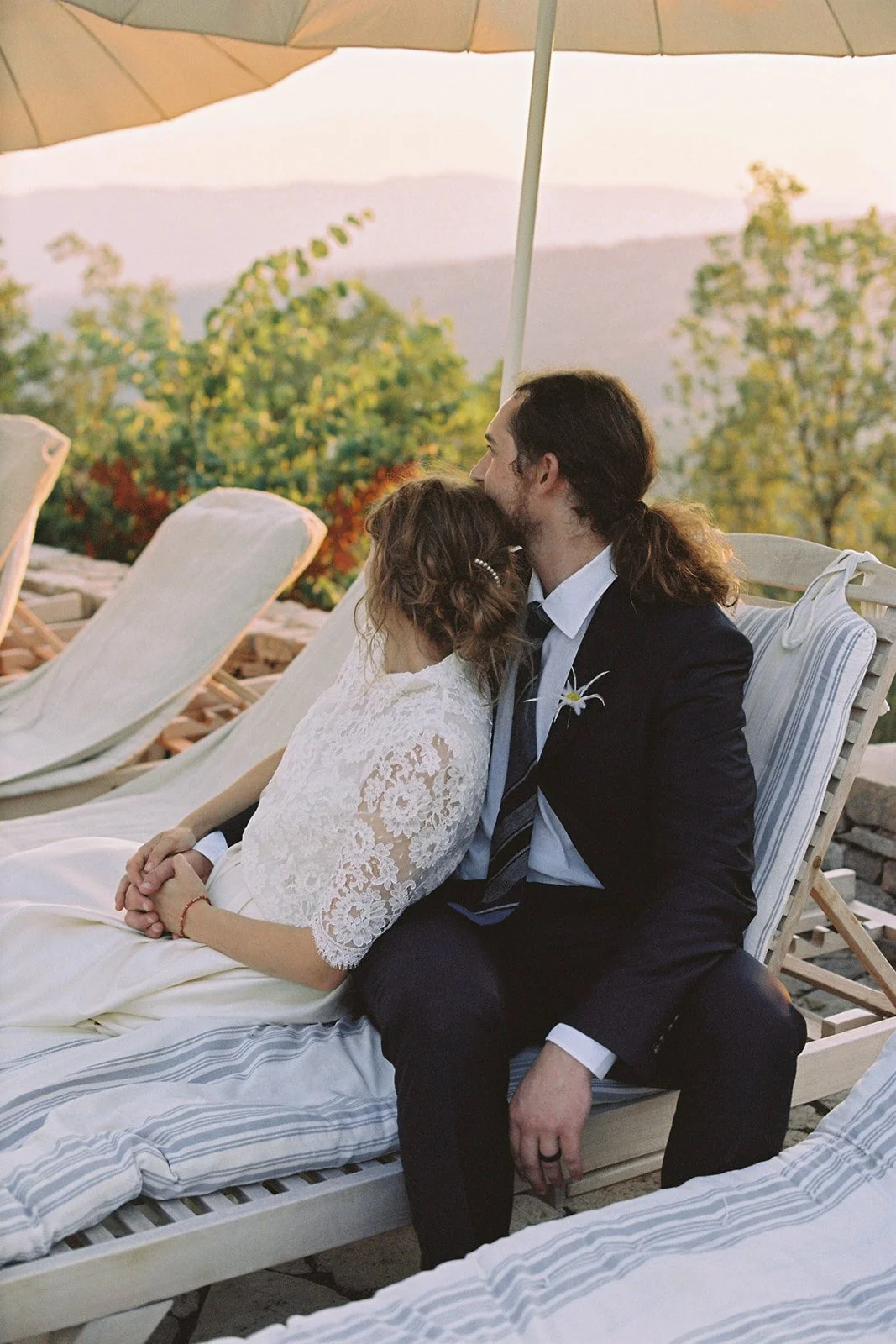
What Analog Film Wedding Photography Actually Is
Analog film is still photography captured on rolls of light-sensitive film rather than a digital sensor. Most photographers who offer film use 35mm (36 frames per roll) or medium format (15 to 16 frames per roll), sometimes both. The images go to a professional lab for development and scanning before the photographer ever sees them.
This is not an Instagram filter. It is a fundamentally different capture process, and the difference shows in the final images in ways that digital editing cannot fully replicate.
The qualities most associated with film photography: a particular grain structure in the shadows, natural color latitude that holds highlights without clipping, warmth in skin tones without artificial saturation, and a tonal rendering that sits closer to how human memory works than to what a sensor records. These are not subjective. They are properties of the medium.
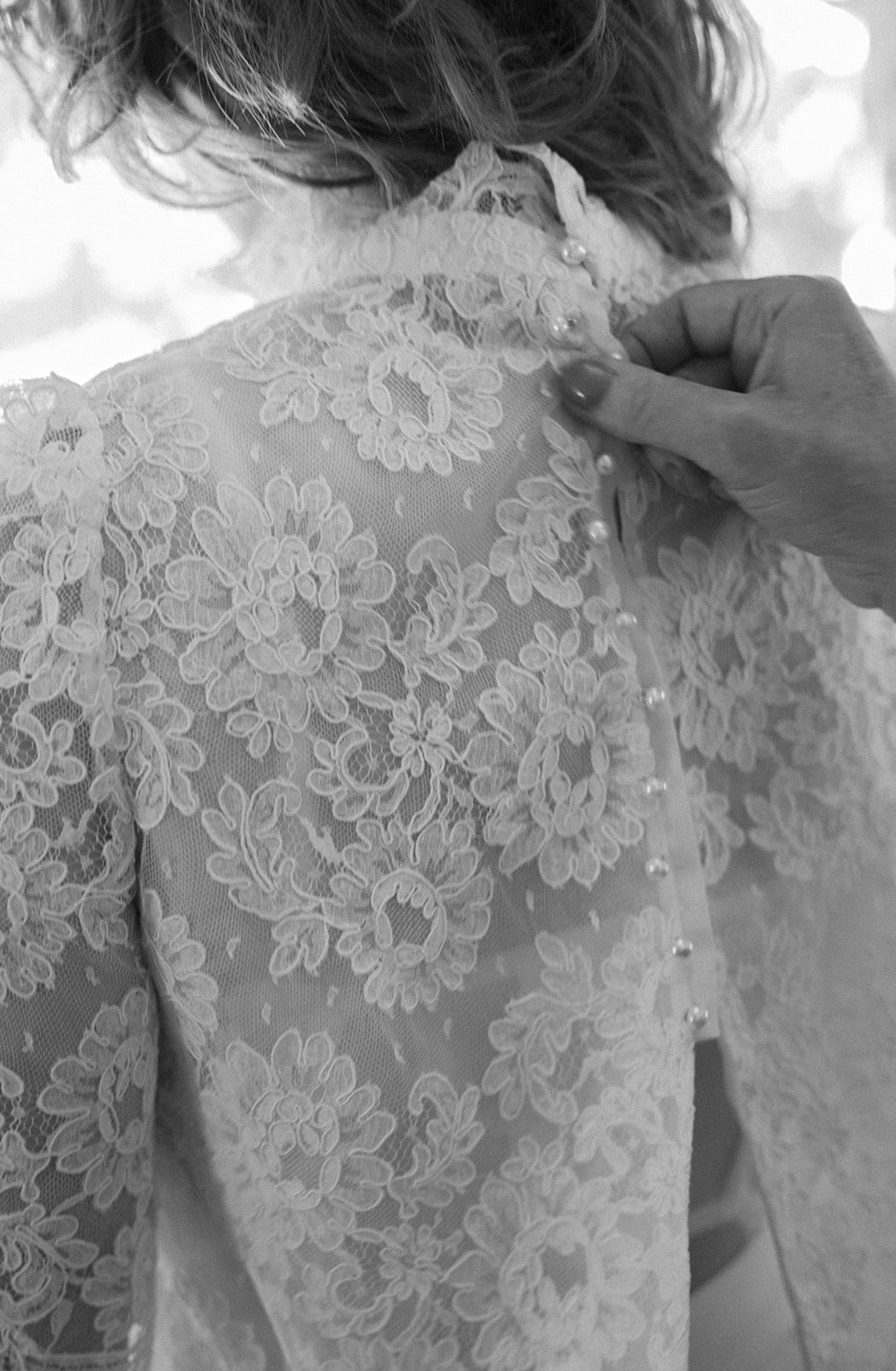
What Changes on Your Wedding Day When Film Is Involved
The short answer: less than you might think.
We move through the same moments. Getting ready, the ceremony, portraits, the reception. We are present for the same beats, the same light shifts, the same unrepeatable seconds. Nothing in the day's structure changes because we are shooting on film.
What changes is how we work. We carry multiple loaded cameras. We read the light before raising the camera rather than adjusting in post. We are quieter, more deliberate, less likely to be spraying through moments and hoping one lands. A roll of 35mm gives us 36 frames. We choose them carefully.
There is no immediate preview. When you ask to see what we captured during the cocktail hour, we will not know what we have until the film returns from the lab. That requires trust. It is the same trust your parents placed in their wedding photographer before digital existed, and couples who are genuinely drawn to film understand this instinctively.
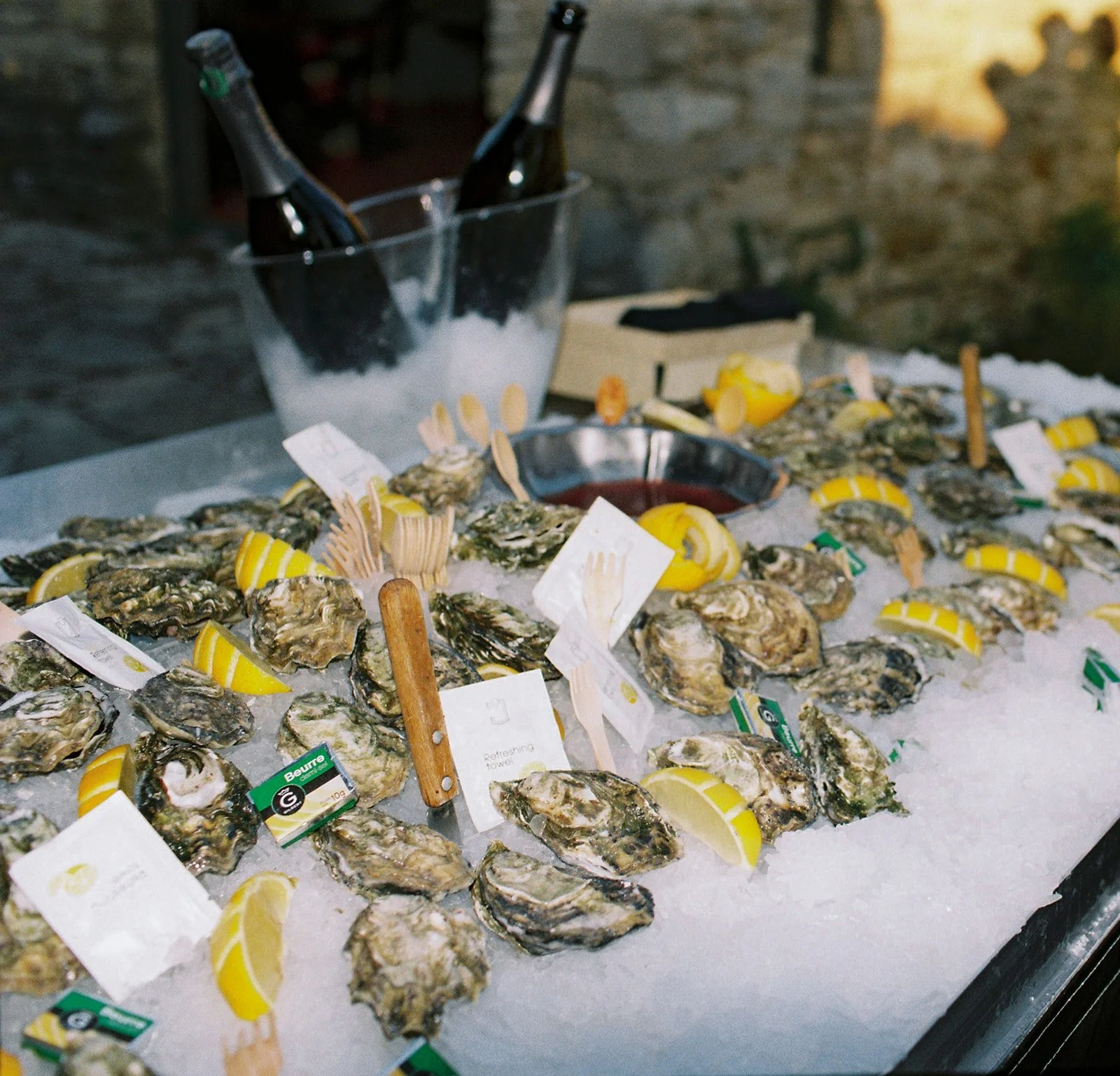
The Honest Cost of Film Photography
Film involves real additional costs that a digital-only approach does not. These are not negotiable and not inflatable: they are what they are.
Each roll of 35mm color film costs approximately 15 to 25 euros, depending on the stock. Medium format costs more. Development and professional scanning adds further cost per roll. A full wedding day using both cameras might run through 20 to 30 rolls. Lab turnaround and shipping adds time and expense.
We factor these costs into our pricing clearly. Couples who book film coverage with us know exactly what the investment includes before they sign anything.
Our coverage starts from 10,000 euros regardless of medium. Film involves an additional lab and processing fee that we discuss during the enquiry process. We do not charge for film as a surprise at the end.
The more meaningful cost question is not financial. It is the delivery question.
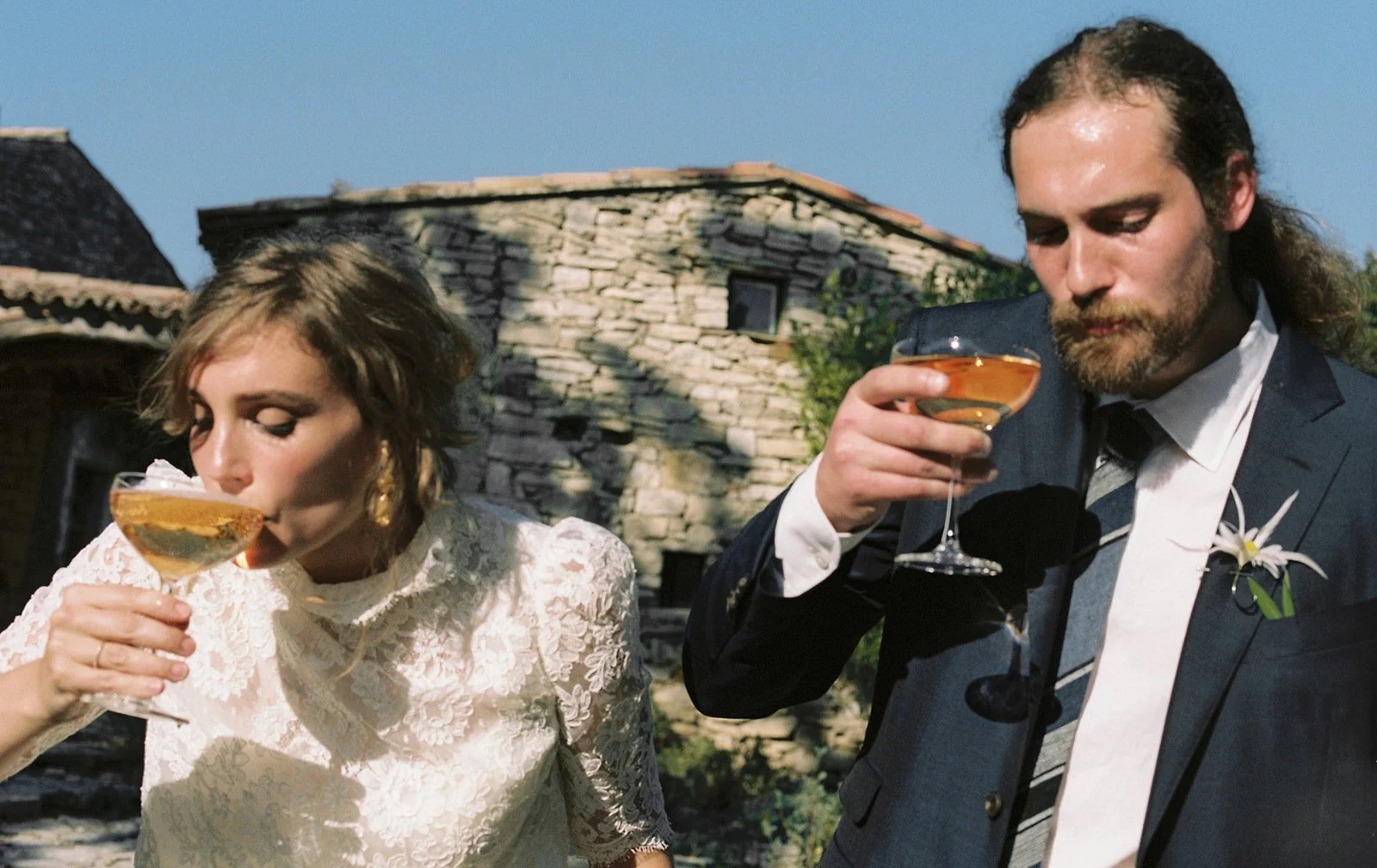
How the Delivery Differs
A digital wedding delivery typically takes four to six weeks. Film takes longer: usually eight to twelve weeks after the wedding, sometimes more depending on the lab's turnaround and the volume of work.
The reason is not that film is slow. It is that film cannot be rushed without risk. The development process is chemical. Rushed development introduces errors that cannot be corrected. We would not accept that risk on work that cannot be reshot, and we would not ask couples to accept it either.
The final gallery is also smaller. Where a digital delivery might run 600 to 900 edited images, a film edit typically runs 500 to 800, sometimes supplemented by digital frames if we are shooting both. This is not a reduction in quality. It is a different relationship to volume. Every frame was chosen before it was taken.
When Film Makes Sense for Your Wedding
Film suits couples who already have a particular relationship with photographs. Not couples who have been told film is trending, but couples who have spent time with printed images, who feel the difference between a photograph and a file, who want their wedding gallery to carry a specific weight and permanence.
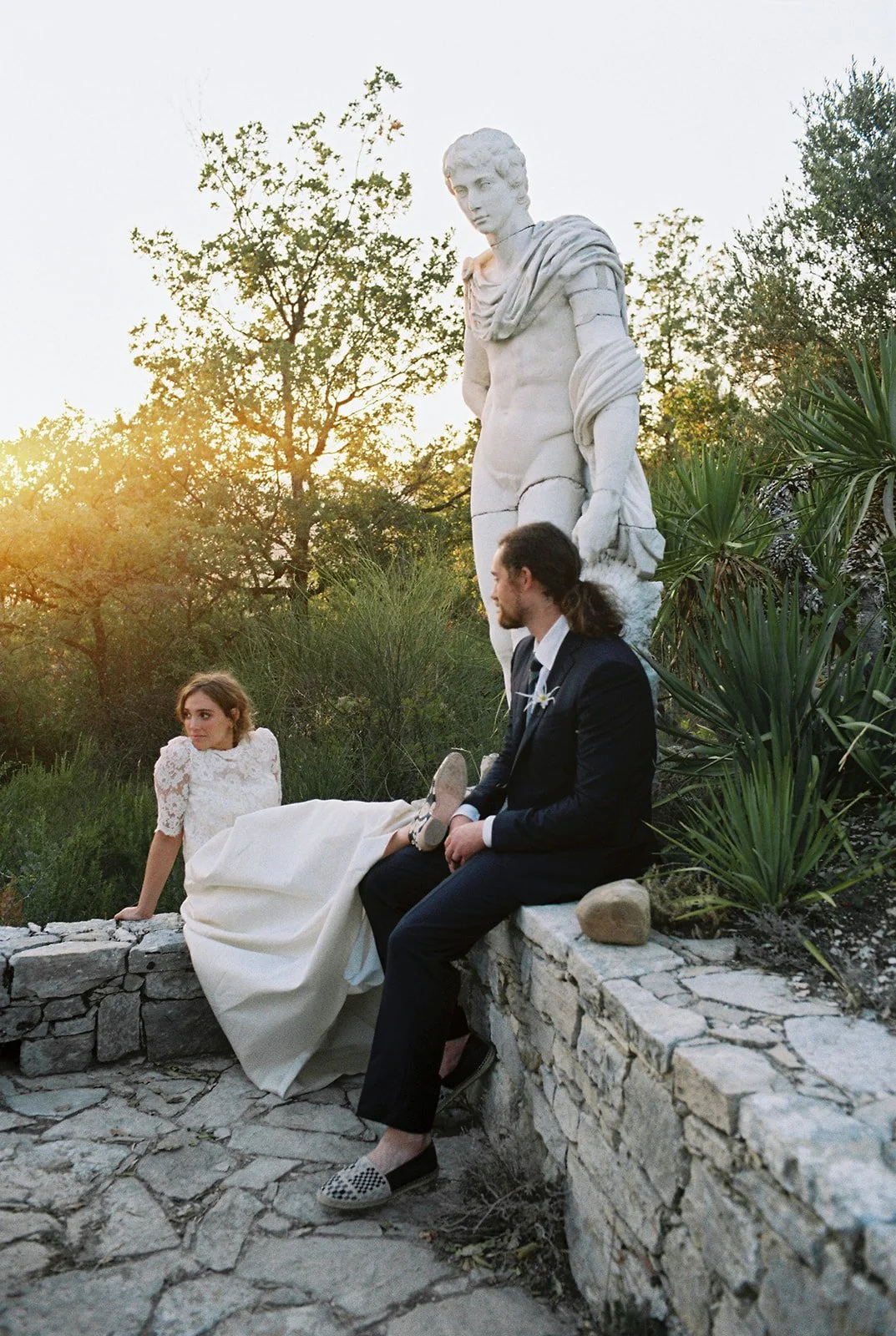
Destination weddings in Portugal, France, and Italy tend to attract exactly these couples. Couples traveling from the UK, the United States, Australia, or the Middle East to get married in a particular place because it matters to them. Film is consistent with that intention.
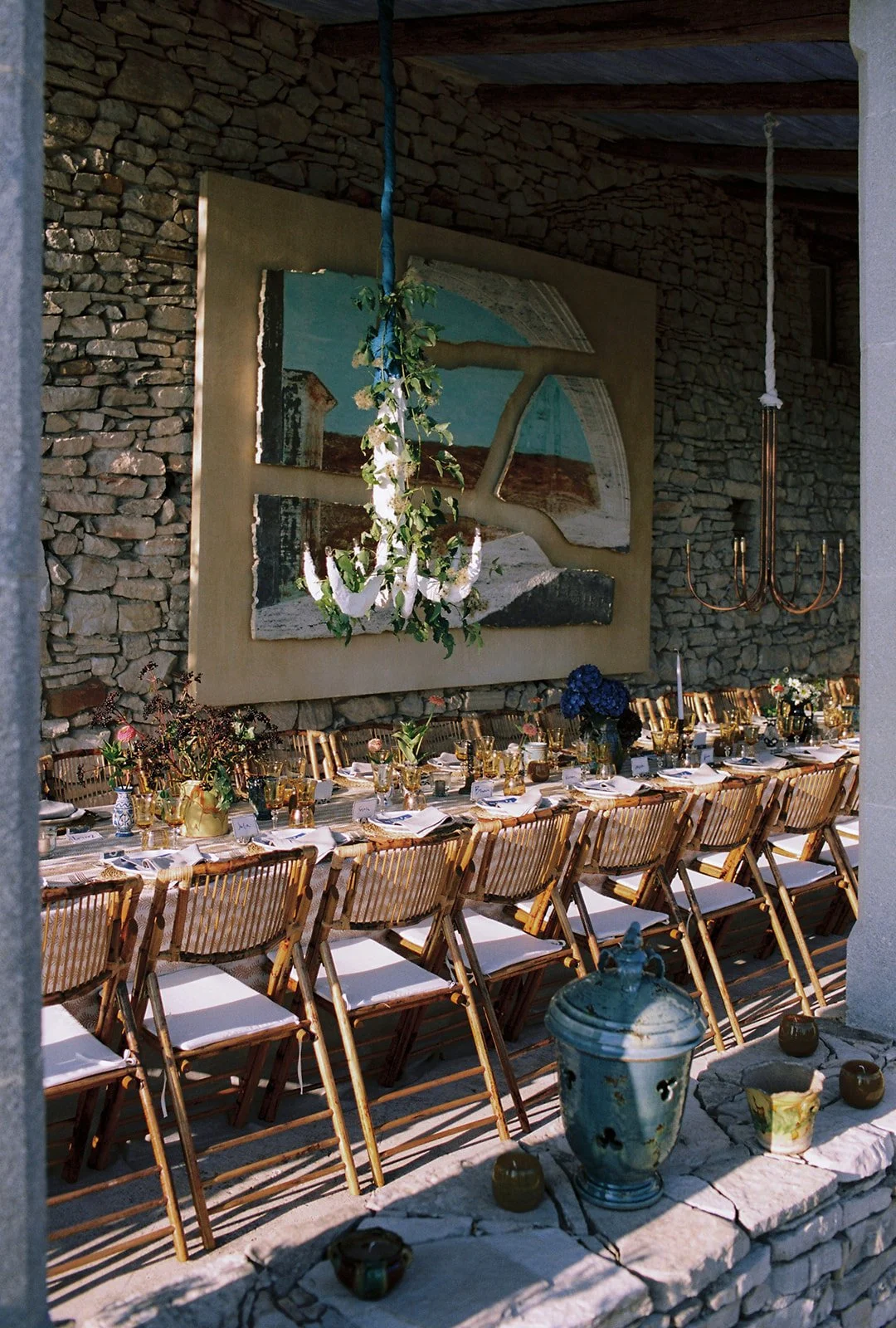
It also suits weddings where the light is exceptional, and the pace allows for deliberateness. The Algarve's afternoon coast light, the golden hour at a Provence bastide, the soft late-morning shade at a Portuguese palace: these are conditions where film rewards patience.
Film is not the right choice for couples who want maximum coverage, fast delivery, and the ability to preview images during the day. Both choices are legitimate. The question is which matches what you actually want.
Analog Film Alongside Digital, or Film Only
We work both ways. Some couples want a fully analog edit, with everything coming from film. Others want the depth and permanence of film alongside the coverage that digital provides, particularly for receptions or fast-moving family moments where the timing is harder to control.
When we shoot both, we keep a clear editorial distinction. Film images and digital images have different qualities, and both should be visible, not blended into something homogenous. We do not use digital images to pad a film gallery.
What matters is choosing deliberately. Not because film is better than digital, but because each medium is better for different intentions. We are happy to talk through which approach fits what you are planning.
For couples considering film for a wedding in Portugal, France, or Italy, we photograph a maximum of ten weddings per year. Most couples who book film coverage with us do so twelve to eighteen months before their date. If you have a venue and a date in mind, that is the right time to reach out. You can find out more about how we work on our wedding photography page and read about how we approach coverage in detail in our guide to film photography in Portugal.
Frequently Asked Questions
Is analog film wedding photography more expensive than digital?
Yes. Film involves additional costs: film stock, lab development, and professional scanning. At The Lopes Photography, our coverage starts from 10,000 euros regardless of medium, with an additional lab and processing fee for film work. We discuss this clearly during the enquiry process so there are no surprises. What couples pay for is not just film, but the edit, the curation, and the time required to do the work at the standard it deserves.
How long does film wedding photography take to deliver?
A film wedding delivery typically takes eight to twelve weeks after the wedding. This is longer than digital, which usually runs four to six weeks. The additional time comes from lab development, scanning, and the editing process. We cannot compress this timeline without introducing risk to the work, and we would not do so.
Will we receive fewer photos if we choose film?
Yes. A film edit typically runs between 500 and 800 images, compared to 600 to 900 for a full digital day. The difference is intentional. Each frame in a film gallery was chosen before it was taken, not after. Couples who choose film are not choosing fewer photographs. They are choosing a different relationship to the selection process.
Can we book analog film wedding photography in Portugal if we are getting married outside Portugal?
Yes. We photograph weddings across Europe, including Portugal, France, and Italy. Our coverage for film work follows the same structure regardless of country. Couples based in the UK, the United States, Australia, or elsewhere who are marrying in Europe should expect the same process, timeline, and investment.
What makes film photography different from a digital photo with a film filter applied?
The difference is in the capture itself, not the editing. A film photograph carries a grain structure, tonal latitude, and color rendering that emerge from the way light interacts with the chemical emulsion on the film. A digital photograph with a filter applied is a simulation. We are not against either approach, but they are not the same thing, and couples who are drawn to film usually know the difference when they see it.
How far in advance should we book for film wedding photography?
We photograph a maximum of ten weddings per year, and availability fills at least twelve to eighteen months ahead. Couples planning destination weddings in Portugal, France, or Italy from abroad often work on longer timelines. We recommend reaching out as soon as you have a date and venue confirmed. You can start that conversation through our contact page.
