
FILM WEDDING PHOTOGRAPHY IN PORTUGAL: WHAT ACTUALLY CHANGES
Most couples who ask about film photography have already seen the images somewhere. A friend's wedding, a magazine feature, a portfolio that made them stop scrolling. They know what it looks like. What they want to understand is what it actually means for their day.
We have photographed weddings in Portugal on analog film for several years, alongside digital. Sometimes one camera, sometimes the other, sometimes both. That combination has given us a clear sense of what changes when film enters the picture, and what stays exactly the same.
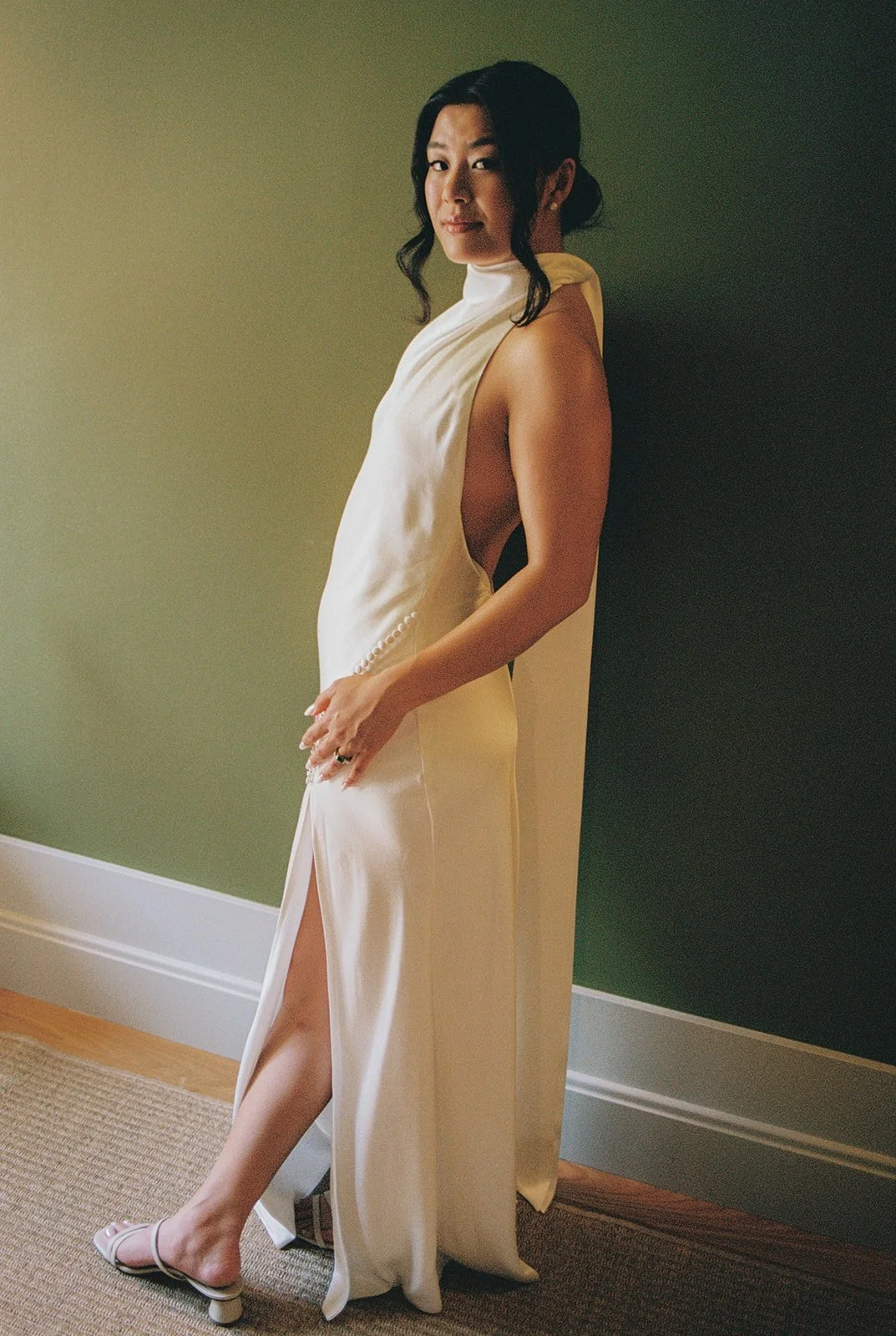
Film is a constraint, and that is its value
A roll of 35mm film gives us 36 frames. Medium format gives us 15 or 16, depending on the camera. That is not a limitation we work around. It is a discipline we work with.
When you know each frame costs something, and cannot be previewed, and cannot be deleted, you slow down. You read the light before you raise the camera. You wait for the moment instead of spraying through moments hoping one will land.
The photographs that result from that process carry a different quality of attention. It is not something we can fully manufacture in post-production, though many editors try. The care is visible in the image.
For couples, this means their photographs are not the product of volume and curation. They are the product of selection before the shutter. That is a different kind of trust, and it leads to a different kind of result.
What the light does on film
Portugal is not a simple country to photograph in. The Algarve in summer gives you hard midday sun that flattens faces and bleaches color. The Alentejo offers long golden hours but also deep shadows that digital sensors handle in ways that can feel clinical.
Film responds to that light differently. The latitude on a well-exposed roll of Kodak Portra or Fuji 400H allows the highlights to hold where a digital sensor might blow. The grain structure in the shadows gives texture rather than noise. The color rendition is not accurate in the way a sensor is accurate. It is warmer, or more muted, or more saturated depending on the stock, and that departure from accuracy is often exactly what makes the image feel true to the memory.
In the Algarve, where we are based, we have found that film handles the afternoon light at venues in and around the coast in a way that requires very little correction afterward. The images arrive from the lab already close to what we wanted.
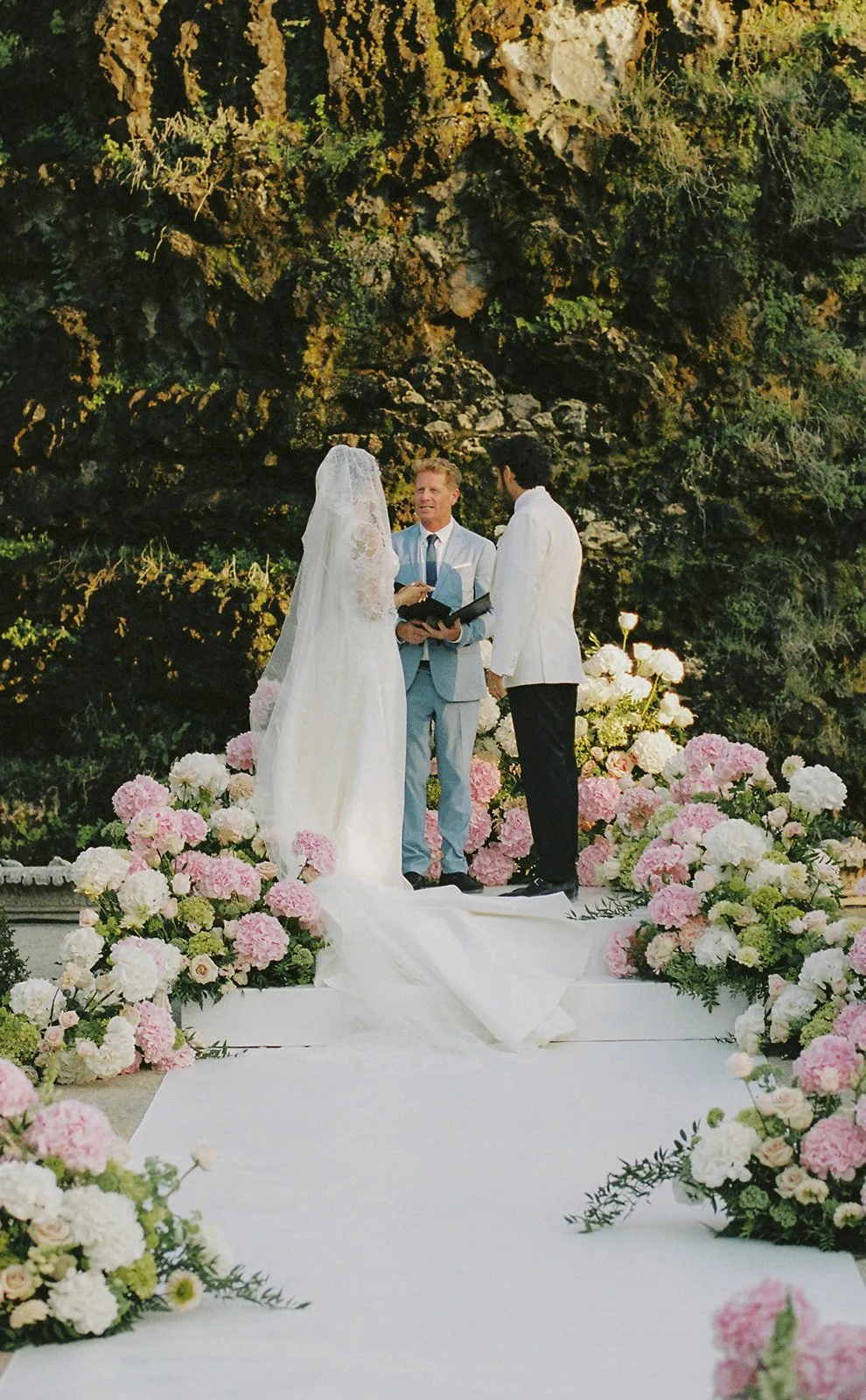
The practical side: what actually happens on the day
We are frequently asked whether shooting film means fewer images. Yes. A typical film wedding delivery is smaller than a digital one. Where a full digital day might yield 600 to 900 edited images, a film edit can have the same number of delivered images, sometimes supplemented by digital frames if we are shooting both.
That number is not a reduction. It is a refinement. Every frame in the final gallery was chosen before it was taken.
The day itself does not look or feel different from the couple's perspective. We move through the same moments. We are present for the same beats. The difference is in what we carry and how we work. Multiple loaded cameras. Extra rolls in our bag. A rhythm that is quieter and more deliberate than a camera set to burst mode.
One thing that does change: there is no immediate preview on a screen. When couples ask to see what we shot during a cocktail hour or after the ceremony, the honest answer is that we will not know exactly what we have until the film comes back from the lab. That requires a degree of trust. It is the same trust that every couple's parents placed in their photographer, before the age of digital, and we have found that couples who are drawn to film understand that instinctively.
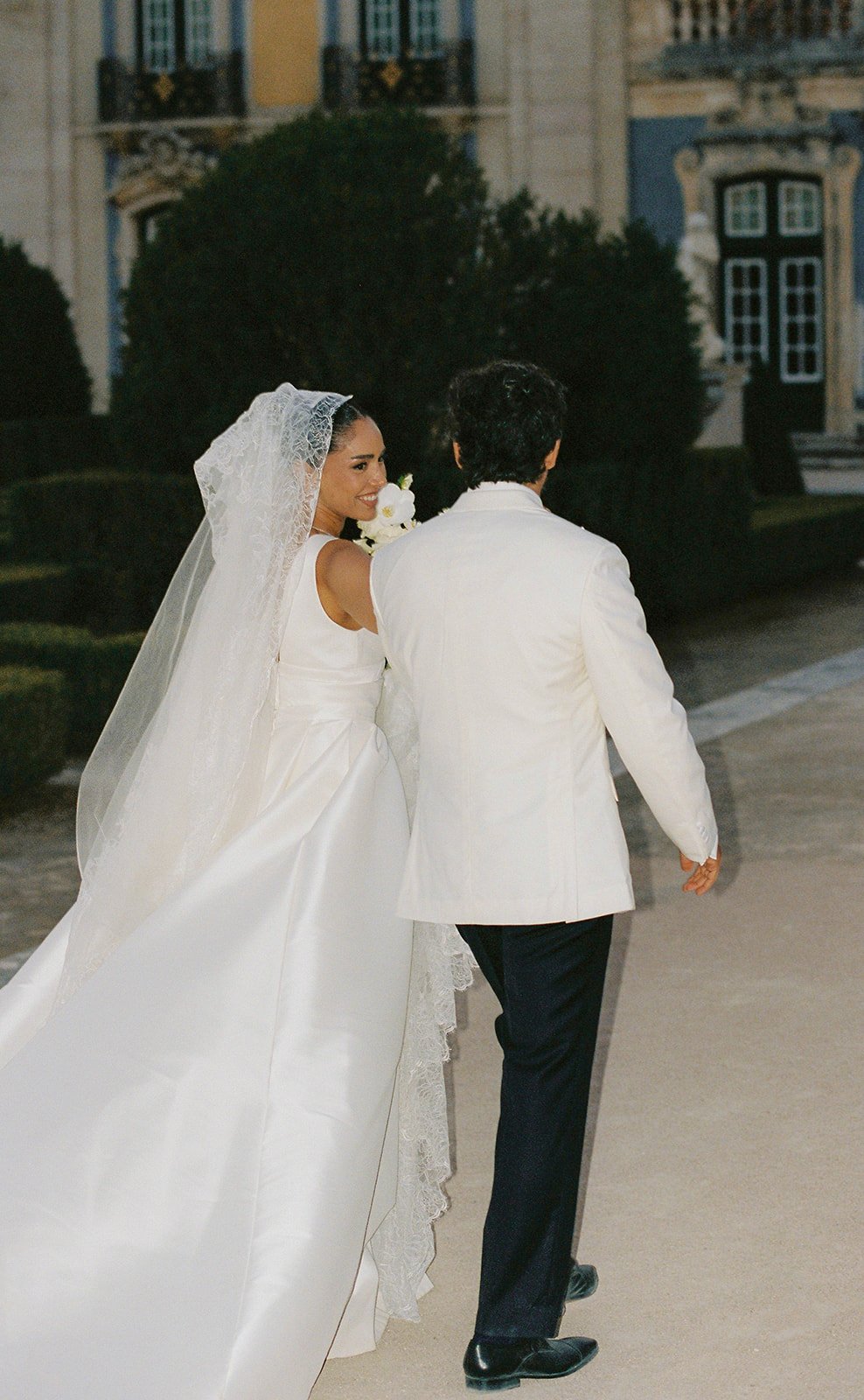
Black and white on film versus black and white in post
There is a difference between a photograph taken on black-and-white film and a color digital photograph converted to monochrome in editing software, and it is not subtle.
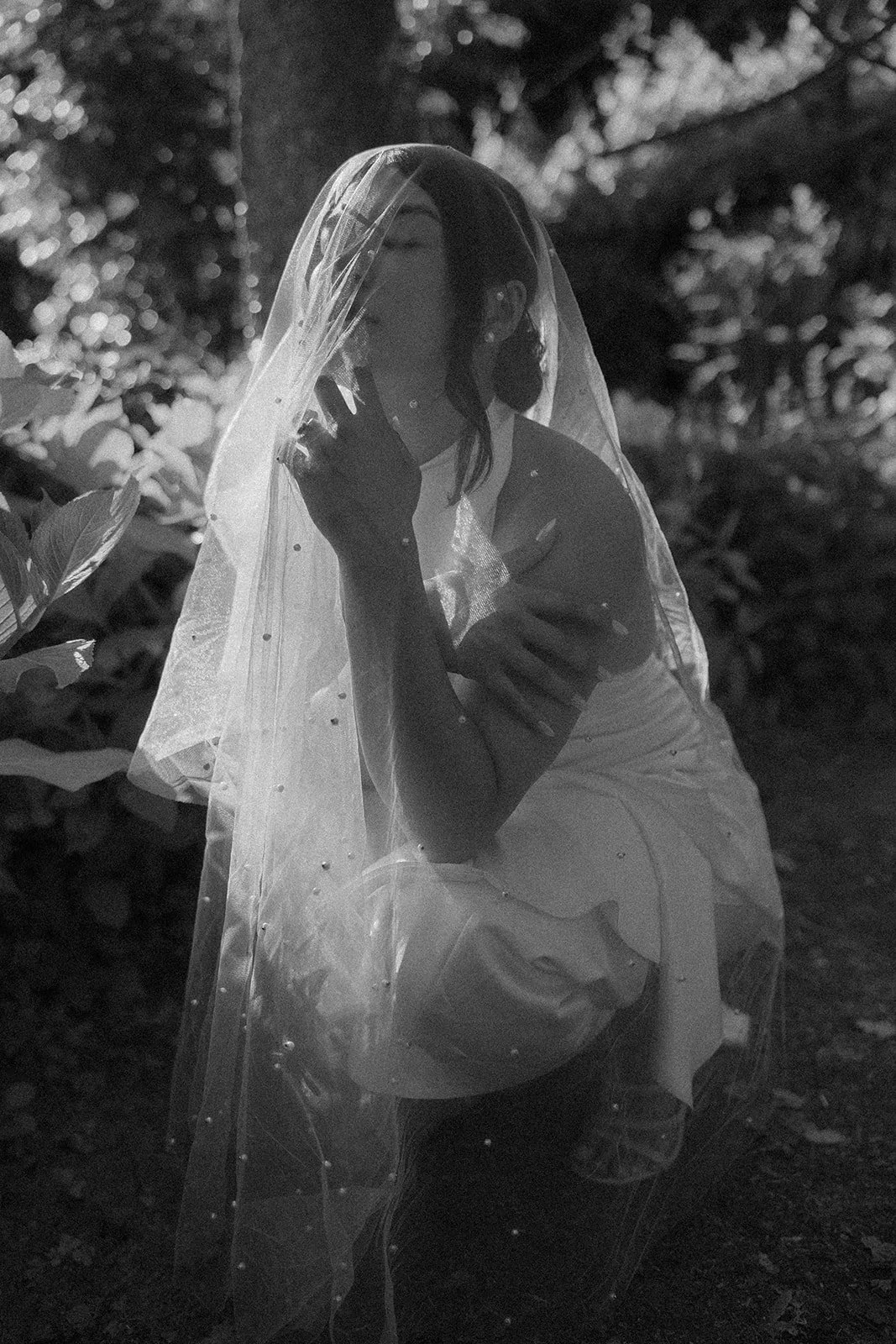
Black and white film is sensitive to light in a specific way. The tonal relationships, the way skin renders, the contrast in the shadows, the grain structure, all of these emerge from the original capture rather than being applied afterward. A digital conversion produces a technically clean monochrome image. A photograph taken on Kodak T-Max or Ilford HP5 carries a quality that is harder to name but easy to recognize.
For weddings that include film, we often shoot a portion of the day on black and white stock, particularly during quieter, more intimate moments: a first look, the ceremony itself, the end of the evening when the formality has dissolved and what remains is just two people.
Film alongside digital, or film only
We work with both. Some couples want a fully analog edit, with the understanding that every image comes from film. Others want the depth and permanence of film alongside the coverage that digital allows, particularly useful for receptions or fast-moving family moments where the timing is less controllable.
Neither approach is more rigorous than the other. They serve different intentions. What matters is being clear about which you are choosing and why, so the deliverable matches what you wanted.
When we use both on the same day, we keep a clear editorial distinction. We do not mix film and digital images in the same sequence without reason. The two mediums have different qualities, and we want both to be visible rather than blended into a homogeneous edit.
A note on processing and delivery
We send our film to a professional lab for development and scanning. The turnaround adds time to the overall delivery. A full film wedding typically arrives to couples in eight to twelve weeks rather than the four to six weeks of a digital delivery.
That timeline is not something we can compress, and we would not want to. The lab process is part of what makes the images what they are. Rushed processing introduces risk to something that cannot be reshot.
Couples who choose film usually know this going in. The wait has always been part of the experience.
Why couples choose film for their Portugal wedding
We have noticed patterns in who asks about film. It is rarely couples who saw it trending on social media, though that happens. More often it is couples who have spent time with photographs, who have looked at their parents' wedding albums and felt something in those images that they want in their own, who collect printed photographs rather than leaving everything on a hard drive or a cloud subscription.
Film suits a certain relationship to images. Not everyone has it, and not everyone needs to. Digital photography done well is extraordinary. But for couples who feel the difference, and who want their wedding photographs to carry that particular weight, film is not an aesthetic choice. It is a choice about what kind of object they want to have at the end.
Portugal is, for many of our couples, a once-in-a-lifetime location. Couples traveling from the UK, the United States, the Middle East, or elsewhere to get married here are often drawn by the quality of the light, the landscapes, the venues, and a general sense that the country offers something that is not easy to find elsewhere in Europe. Film photography fits that intention. It produces images that match the seriousness with which these couples have approached their day.
We photograph a small number of weddings each year. That limit is deliberate. It allows us to give full attention to each one. Film reinforces that. You cannot shoot a hundred weddings a year on analog film and maintain the standard the medium requires. The constraint of the format and the constraint of our calendar are related.
Frequently Asked Questions
How much does film wedding photography cost in Portugal?
Our investment for film photography coverage in Portugal starts from 10,000 euros. Film incurs additional lab and processing costs that we factor into our pricing. When we speak with couples, we are clear about what is included and what the final investment covers, so there are no surprises after the wedding.
How far in advance should we book for film wedding photography?
We photograph a maximum of ten weddings per year, so availability is limited across the full calendar. Most couples who book film coverage with us do so twelve to eighteen months before their wedding date. Couples planning destination weddings in Portugal from abroad often work on longer timelines. We recommend reaching out as soon as you have a date and venue in mind.
What makes The Lopes Photography's approach to film different?
We are based in the Algarve and photograph weddings across Portugal and internationally. We have worked in both film and digital for long enough to know when each serves the work, and we do not apply film as a filter or an aesthetic trend. When a couple chooses film with us, it is because the medium fits the kind of photographs they want and the kind of day they are planning. We bring the same editorial eye to both.
Will we receive fewer photographs if we choose film?
Yes, a film-led delivery is smaller than a digital one. A film edit typically runs between 500 and 800 images, compared to 600 to 900 for a full digital day. What changes is not the quality of coverage but the density of it. Every image in a film gallery was chosen before the shutter was pressed.
How long does film processing and delivery take?
We send film to a professional lab for development and scanning. A complete film delivery typically takes eight to twelve weeks after the wedding. That timeline reflects the lab process and our editing, and it cannot be shortened without compromising the result. We set this expectation clearly before any wedding so couples can plan accordingly.
