
WHAT A CALM WEDDING DAY ACTUALLY LOOKS LIKE BEHIND THE SCENES
After photographing more than sixty weddings across Portugal, Italy and France, and with work published in British Vogue, Vogue Arabia and Tatler, we have seen both kinds of days. The calm ones and the ones that were not. The two look different in photographs. They feel different in the room. And the line between them is rarely the venue, the planner or the guest count. It comes down to time: how much of it there is, and what choices were made about where it went.
This is what a calm wedding day actually looks like from where we stand.
What "Calm" Actually Means on a Wedding Day
A calm wedding day is not a quiet one. It is a well-paced one. The distinction matters because couples often assume they need to simplify the wedding to feel relaxed, when the most effective change is usually in the schedule, not the size.
Calm means that when the getting-ready block ends, there are twenty minutes before anything needs to happen. It means the two of you walk to the first look without someone timing it on their phone. It means the portrait session after the ceremony is forty-five minutes, not fifteen, because the cocktail hour is running without you. It means the dinner stretches slightly because the speeches were worth it, and nobody is watching the clock.
The photographs from calm days have a specific quality. Not technically superior, but differently present. The couple looks like themselves, not like a version of themselves performing composure for the camera.
The Hours Most Couples Don't Plan For
The two most consistently underestimated windows in a wedding day are getting ready and the transition from ceremony to reception.
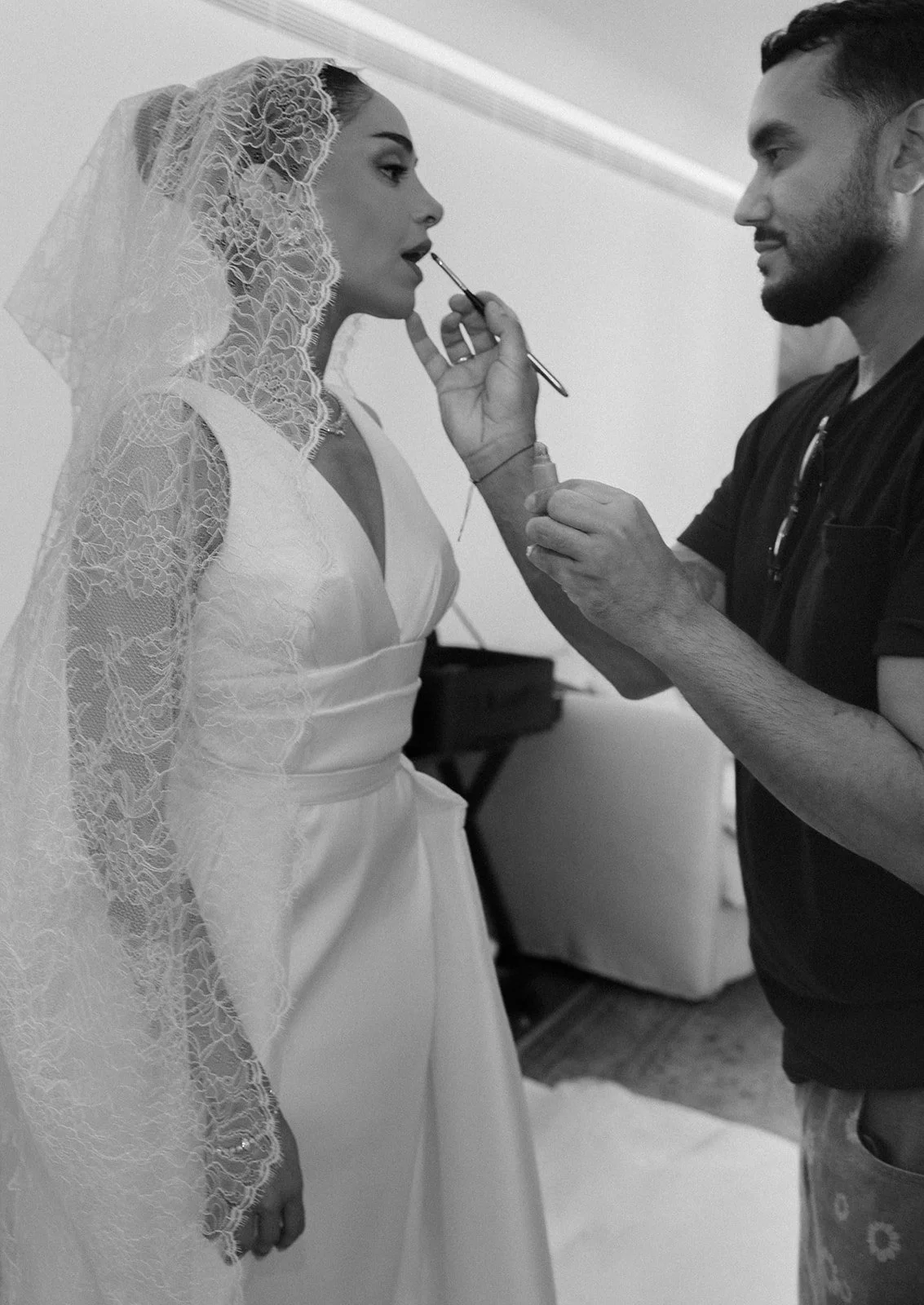
Getting ready almost always runs thirty to forty-five minutes longer than planned. Hair and makeup are unpredictable. Guests arrive early. The dress takes more time to close. The details are in a different bag. For every wedding we have photographed, the couples who felt calm during those hours had built a buffer that their planners called "wasted time" and that everyone described afterward as "the best decision we made."
The transition block between the end of the ceremony and the moment the couple sits down for dinner is where calm either holds or collapses. If portraits are compressed into twenty minutes because the ceremony ran long and the kitchen has a hard start time, the photographs will show it. Not in any technical failure. In the couple's eyes. In the way they carry themselves when there is not enough time to settle.
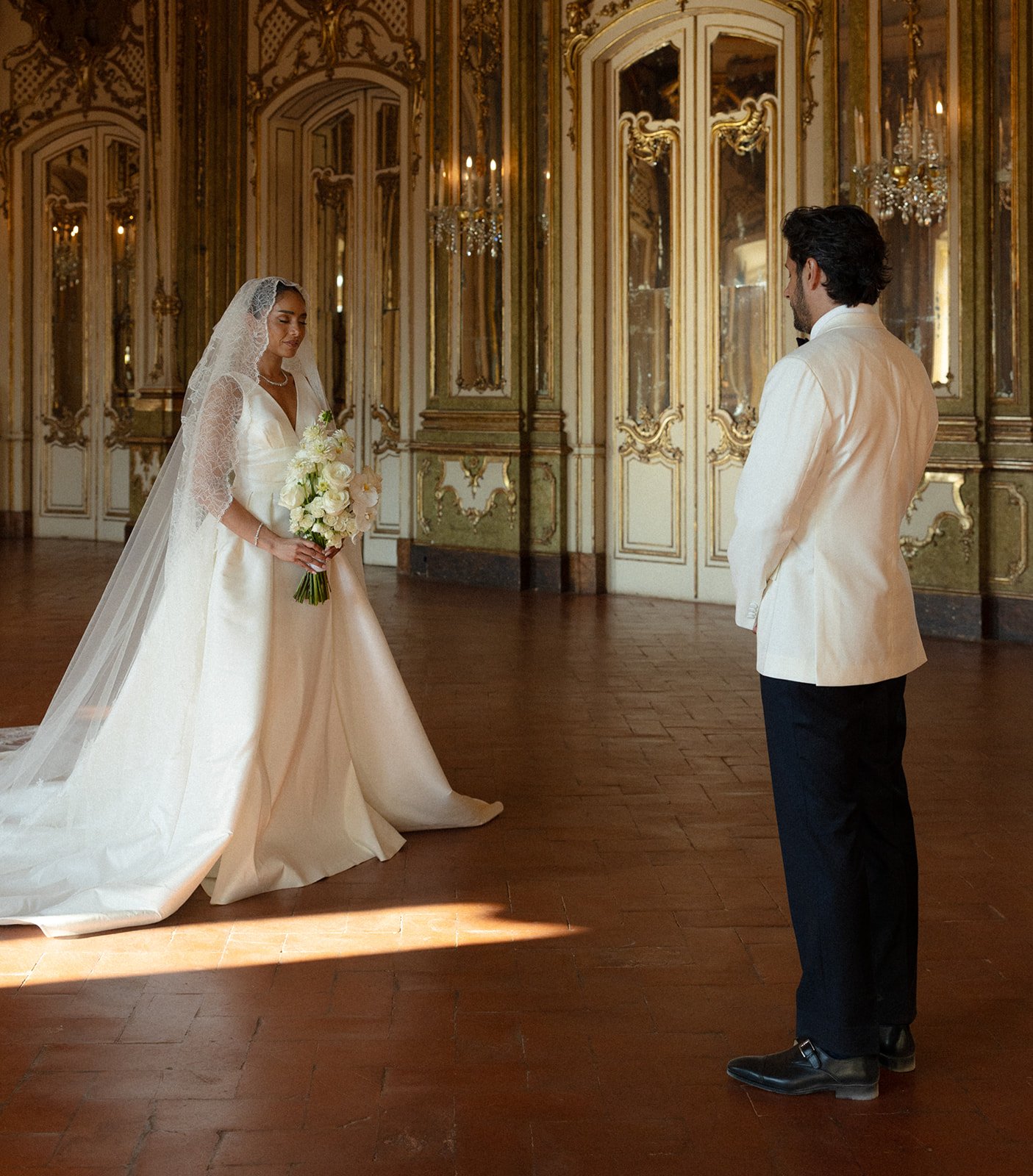
We recommend a minimum of forty-five minutes for portraits after the ceremony, and ideally sixty. Not because photographers need that long to work. Because it takes ten minutes for the adrenaline of the ceremony to pass, and the photographs taken in the last thirty minutes of that window are different from the ones taken in the first ten.
How Photographers Either Support or Disrupt a Calm Day
The photographer's approach to the day has more influence on its emotional quality than most couples realize at the time of booking.
A photographer who directs constantly creates two problems. The couple never relaxes into natural behavior because there is always an instruction to follow. And the day acquires a transactional quality: you do this, then we do that, then we move. The photographer becomes another element of the schedule rather than someone recording it.
At The Lopes Photography, we photograph ten weddings per year precisely because this kind of presence requires preparation. We visit venues in advance. We understand where the light falls at four in the afternoon without checking a compass. We do not direct couples into positions they would not naturally occupy. We work around them, not the other way around.
The practical result is that our couples often describe their wedding day, months afterward, as more relaxed than they expected. Not because nothing went wrong. Because when it did, no one around them amplified it.
For a more detailed account of how this approach works during the day, our piece on working with couples who are nervous about cameras covers it in full.
What Calm Looks Like in the Photographs
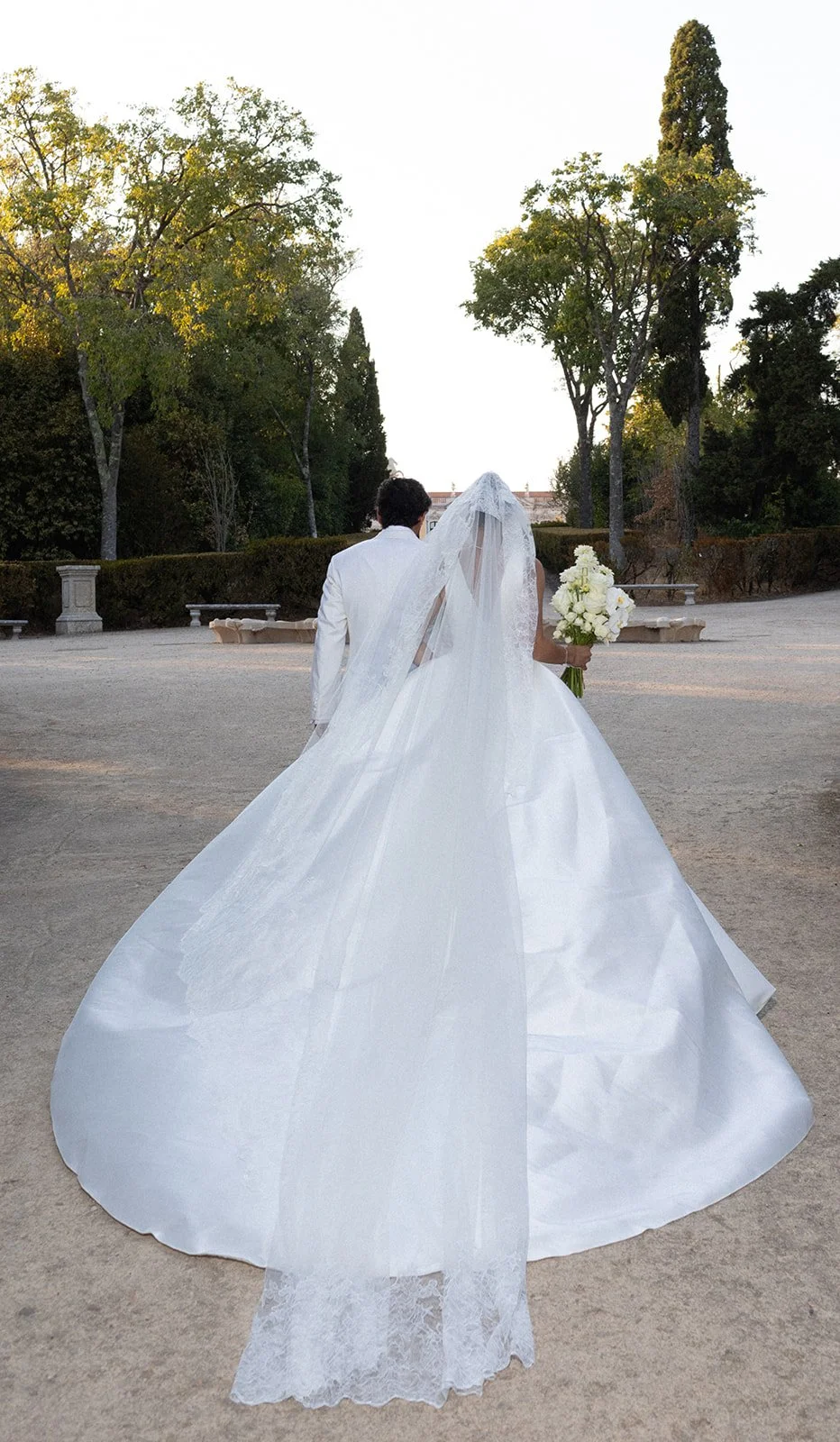
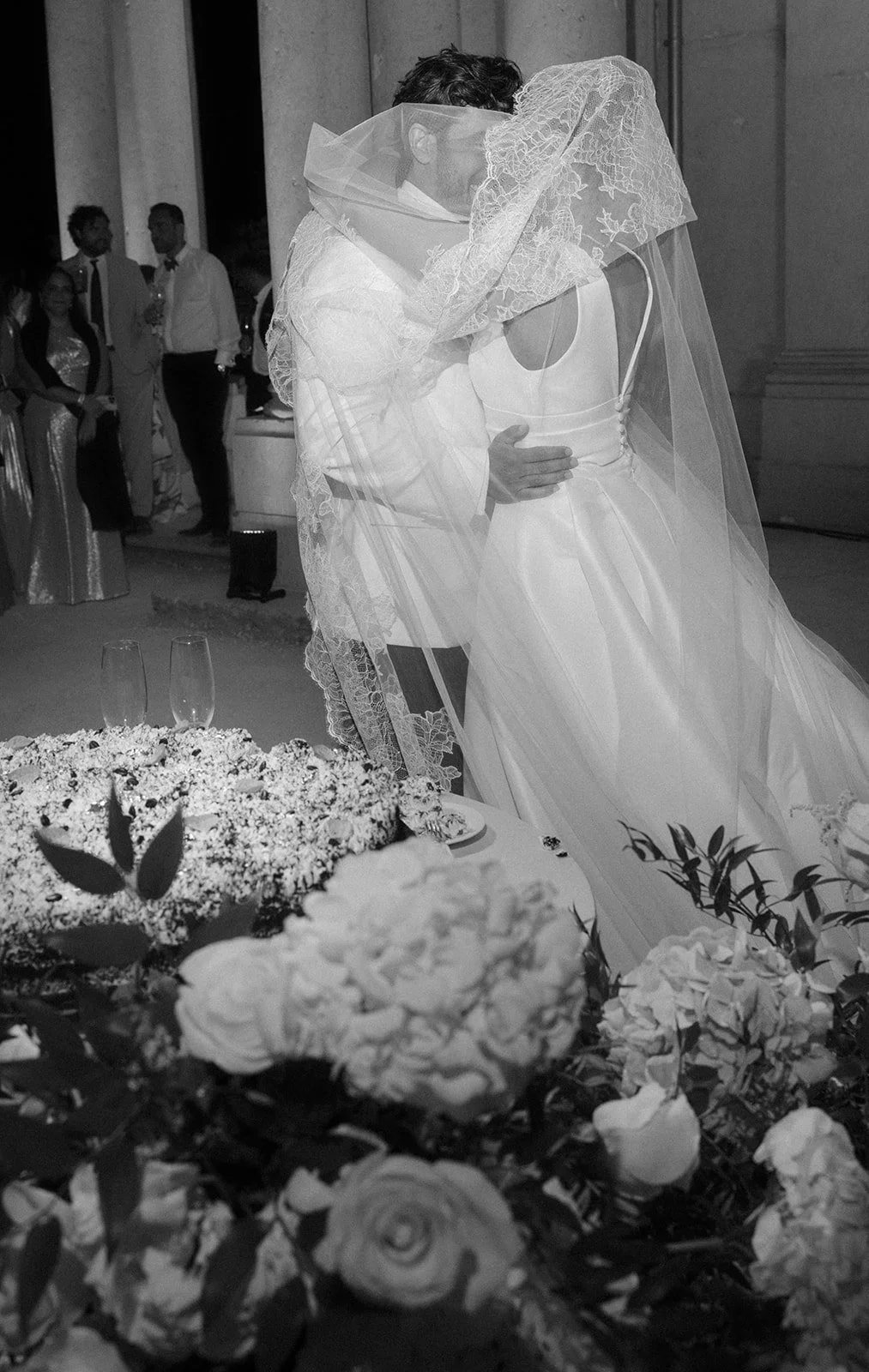
There is a visual signature to photographs taken on a calm day, and it is not what most people expect. It is not that everyone is smiling. It is not that the light is ideal. It is that the subjects look like they forgot someone was taking photographs.
The bride adjusting her veil without looking at the camera. Two guests mid-sentence by a fountain. The groom laughing at something his brother said during cocktail hour. These images require time: not technically, but emotionally. They require that the couple has enough stillness in their day that real, unrehearsed moments have room to surface.
This is why photographs from rushed days share a particular quality regardless of venue, light or skill. The couple is present, but slightly behind glass. There is a guardedness that comes from moving too fast through a day that is supposed to be the most significant one of their lives. The camera catches it every time.
If you are interested in what this looks like in practice, our comparison of documentary and editorial wedding photography explains the two approaches and why the distinction matters.
The Small Choices That Make the Biggest Difference
After sixty weddings, the choices that most consistently produce a calm day are small and unglamorous.
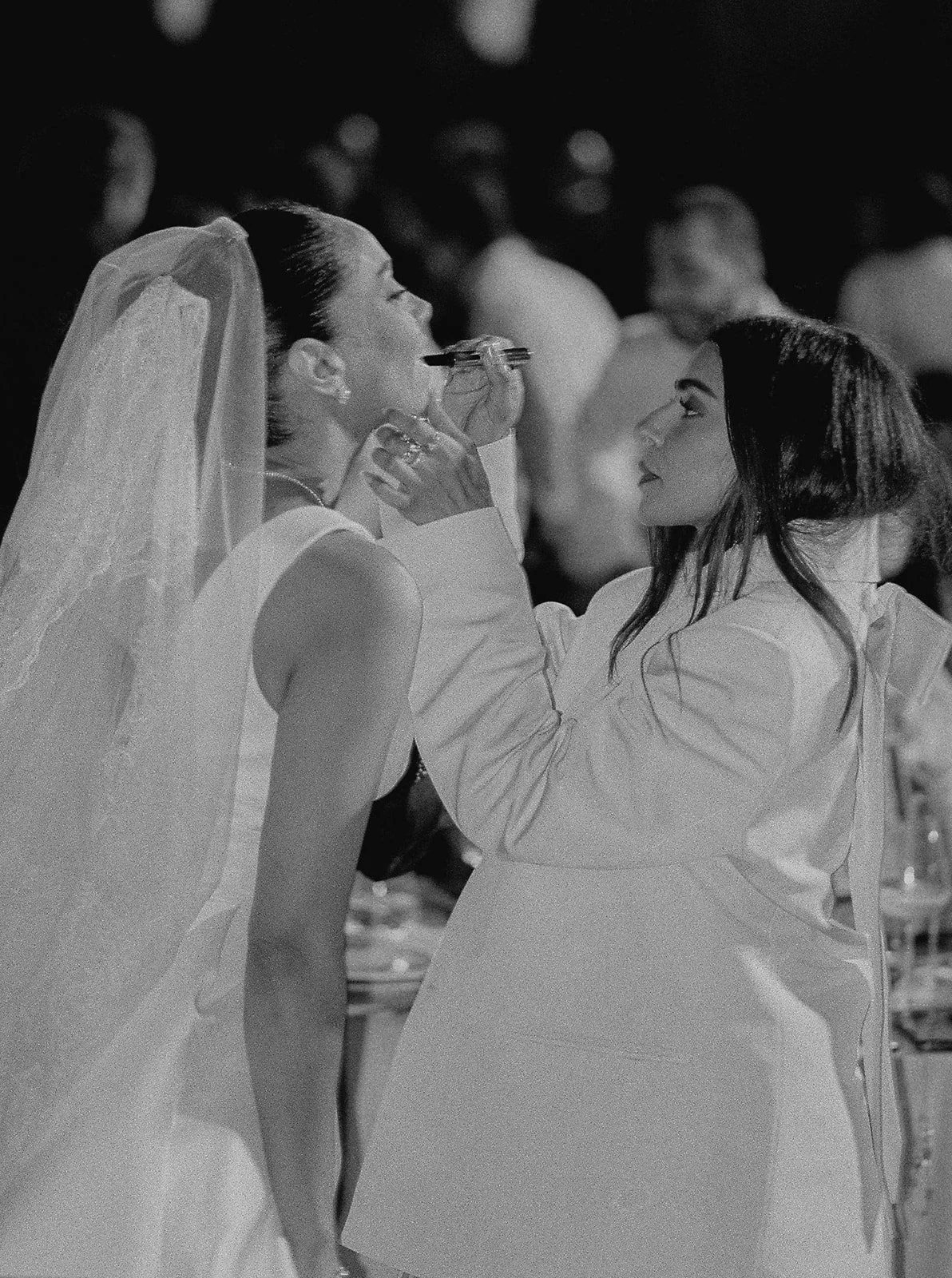
Building a buffer into getting ready that nobody uses and everybody resents during planning, and that everybody thanks during the day. Agreeing with the couple's planner on the portrait window well before the wedding date, not the morning of. Not scheduling the couple for their own cocktail hour. Choosing a venue where the ceremony and reception spaces are close enough that transitions do not consume twenty minutes in formal wear.
The larger choice, the one that shapes everything else, is the number of photographers. A second photographer is not about additional coverage. It is about range. Two photographers working a room create more stillness than one, because the subjects divide their attention rather than concentrating it.
We always work as a two-photographer team, with Rui and Savannah photographing together. It is part of why our images from weddings in Sintra, the Algarve, the Douro Valley and across Italy and France have the quality they do. The couple is never performing for a single pair of eyes.
For couples planning a multi-day celebration, our piece on multi-day wedding coverage explains how the additional time changes what is possible for the photographs.
FREQUENTLY ASKED QUESTIONS
How do I make sure my wedding day doesn't feel rushed?
The most effective step is protecting the portrait window. Agree with your planner in advance that forty-five to sixty minutes of couple portraits, uninterrupted, is non-negotiable. Build thirty minutes of buffer into the getting-ready block. And do not schedule yourselves to be present at your own cocktail hour. Your guests will manage well. You will be better for the absence.
How much time should we allow for wedding photography on the day?
We recommend a minimum of eight hours of coverage for a full wedding day, and ten to twelve for multi-day or larger celebrations. Within that, the portrait session should be at least forty-five minutes, and ideally sixty. Getting ready should be covered for the final ninety minutes before departure, not the final thirty.
What does a calm wedding day timeline actually look like?
A workable example for a ceremony starting at four in the afternoon: photographer arrives at one-thirty for getting ready; couple has buffer built in for two-thirty; first look at two-forty-five in a private space; ceremony at four; guests move to cocktail hour at five; couple photographs until five-fifty, then joins the reception; dinner begins at six-thirty. This is not unusual. It is what most well-coordinated destination weddings in Portugal look like when the timing has been considered in advance.
Does the photographer's approach affect how relaxed we feel during the day?
Yes, substantially. A photographer who directs constantly creates a performance dynamic that is felt by the couple throughout the entire day. A photographer who works around the couple, observing rather than directing, allows the day to keep its natural quality. The difference shows in the photographs, but it is felt first on the day itself.
After photographing more than sixty weddings across Portugal, Italy and France, and with work published in British Vogue, Vogue Arabia and Tatler, we know that the choice of photographer changes more than the photographs. It changes the quality of the day itself. If you are planning a destination wedding and want to understand how we approach it, get in touch through our contact page. We respond to every inquiry within two business days.
