
DOCUMENTARY VS EDITORIAL WEDDING PHOTOGRAPHY: AN HONEST COMPARISON
After photographing more than sixty weddings across Portugal, Italy, and France, and with work published in British Vogue, Vogue Arabia, and Tatler, we have heard every version of this question: are you more documentary or editorial? The honest answer is that most couples asking it are not sure what either term means, and most photographers using these labels are not defining them consistently. This article gives you a clear explanation of both approaches and what they actually mean for your wedding day.
What Documentary Wedding Photography Actually Means
Documentary wedding photography captures what happens without directing it. The photographer works as an observer, moving through the day and responding to moments as they occur. Nothing is staged. The bride does not hold the veil a particular way for the camera. The groom does not know his hand is being photographed. What appears in the images is what actually took place.
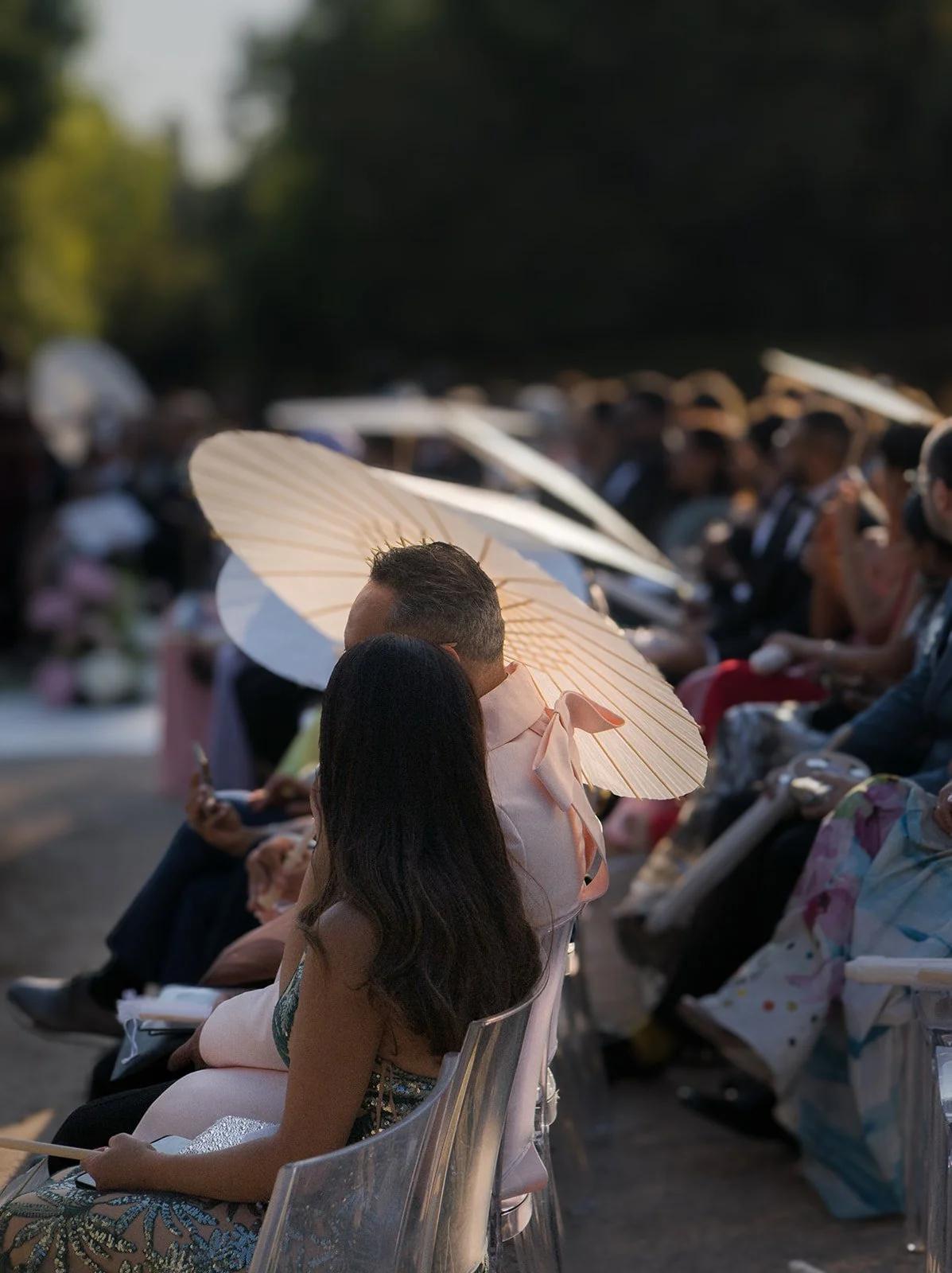
This approach has roots in photojournalism. The goal is to preserve reality, including the chaos, the emotion, the family member who cried unexpectedly, and the ten minutes of quiet before the ceremony that nobody noticed except the photographer. Documentary work demands patience and the ability to anticipate where the next significant moment will come from.
The strength of documentary photography is emotional authenticity. Couples who look at their images years later and feel the day again rather than see a performance of it. The limitation is that documentary work depends entirely on what the day provides. If the light is difficult and the venue offers nothing to work with, the photographer cannot create something that was not there.
What Editorial Wedding Photography Actually Means
Editorial wedding photography is more intentional. The photographer shapes the image rather than finding it. This may mean placing the couple in a specific location, directing how they stand or move, or waiting for a particular quality of light to reach a certain point before asking the couple to step into it.
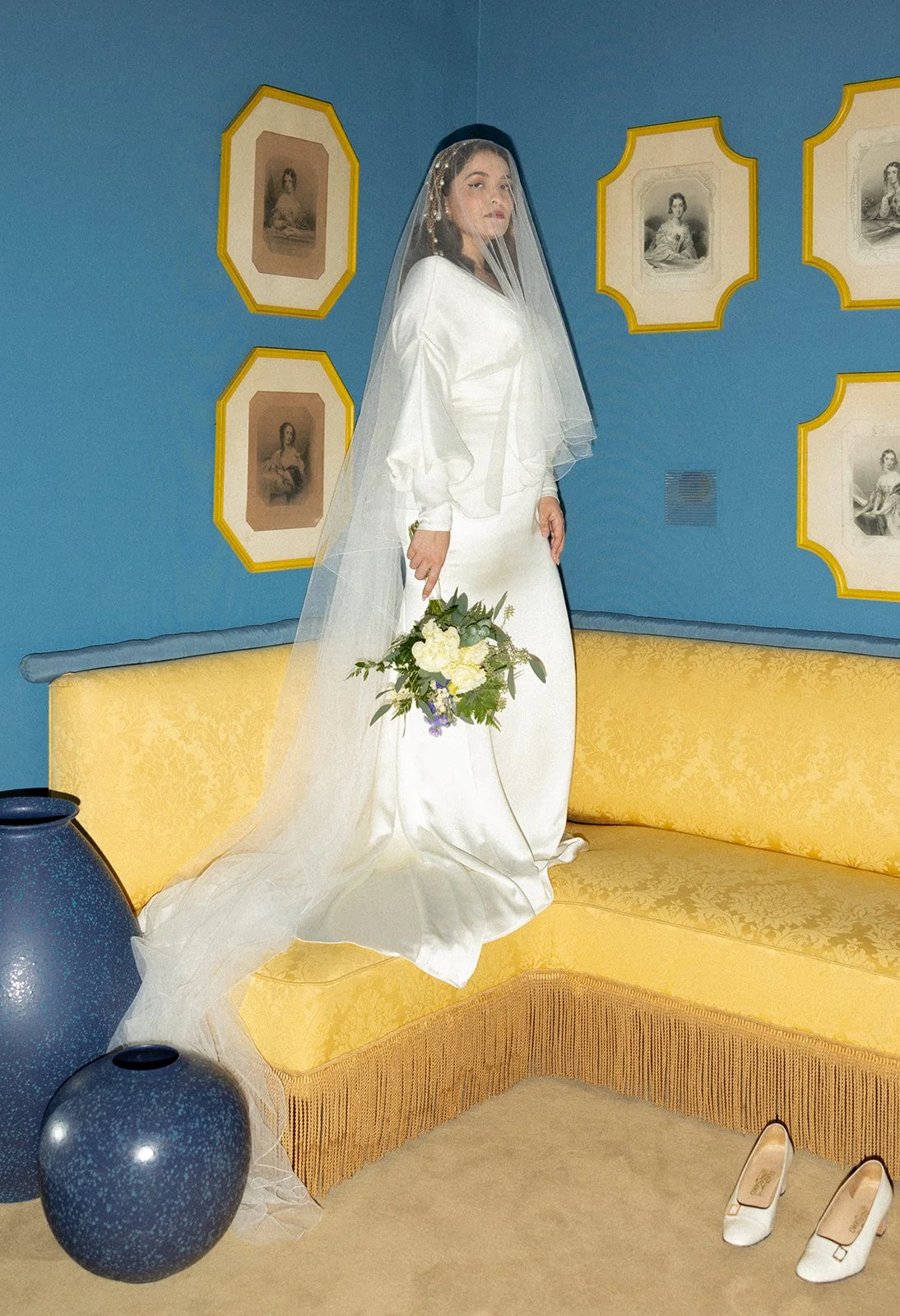
The word editorial comes from fashion and magazine photography, where images are designed to tell a story through visual composition. An editorial wedding photograph looks like it could appear in British Vogue because the same principles of styling, light direction, and graphic composition apply. It requires the photographer to read the venue as a setting and the couple as subjects within a deliberate frame.
To see what that discipline looks like when it is the entire brief rather than one layer of a wedding day, our fashion editorial That's Gucci, shot at 138 Liberdade in Lisbon, is a pure example of the approach.
The strength of editorial photography is visual consistency and a particular kind of beauty that rewards attention. The images hold up under scrutiny and work well across different formats, from large prints to editorial publications. The limitation is that editorial moments require conditions that cannot always be manufactured, and they require couples who are willing to be directed, at least briefly.
How Documentary and Editorial Work Together
The distinction between documentary and editorial is not binary. Most of what happens on a wedding day falls on a spectrum, and experienced photographers move between approaches without naming what they are doing.
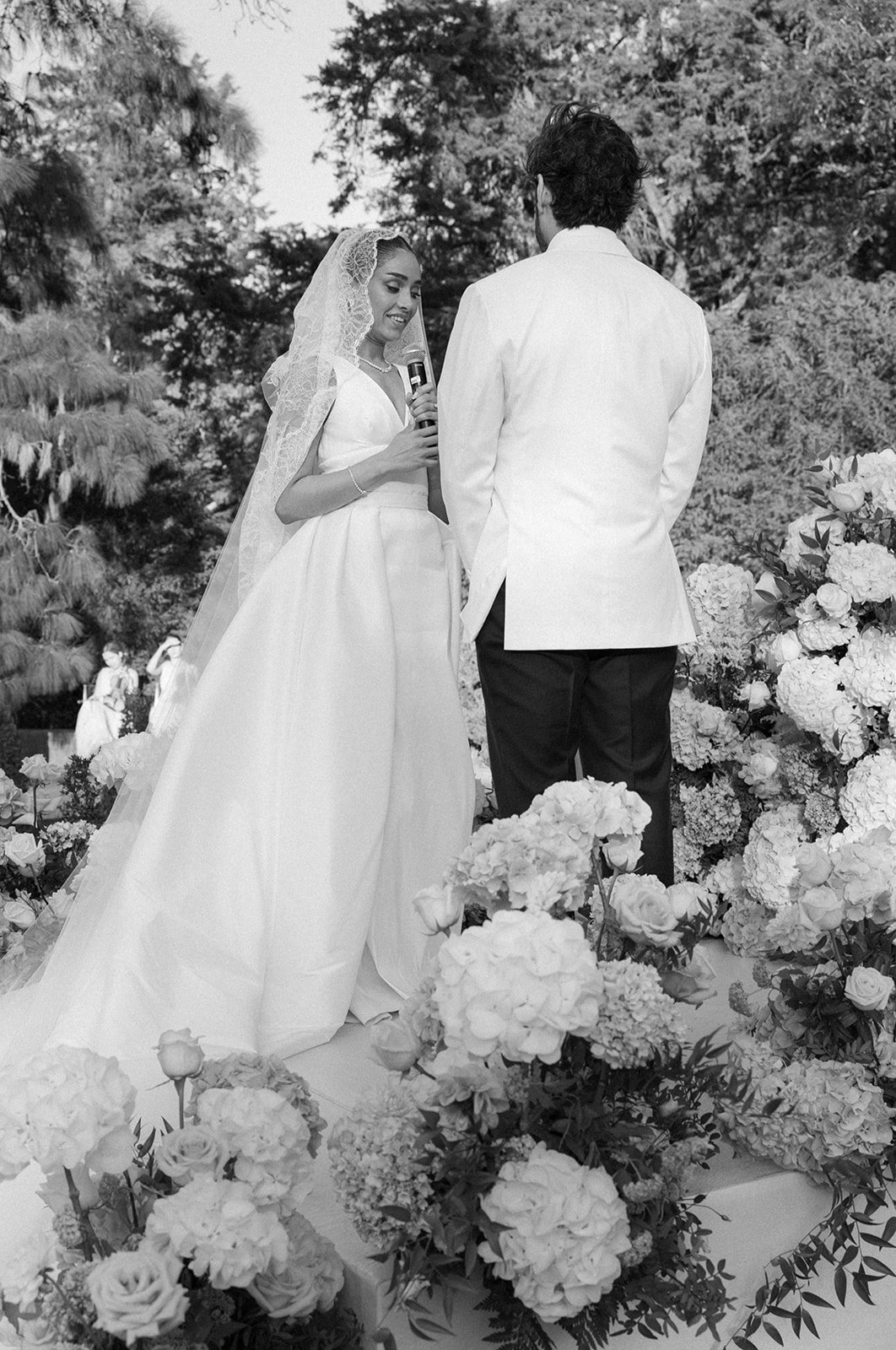
Consider the ceremony. No photographer directs a first kiss. That moment is documentary by definition. But the same photographer may have asked the couple to walk back down the aisle more slowly after the ceremony, creating enough space to capture a wider frame with the full setting in view. That walk is editorial. The tears during the vows are documentary. The portrait in the palace ballroom afterward is editorial. Both exist in the same gallery. Both are necessary.
At The Lopes Photography, we work across both approaches at every wedding. The documentary work happens continuously, because real moments do not wait. The editorial work happens when conditions allow it, which in venues like Palácio de Queluz or the Grémio Literário in Lisbon means extraordinary architecture to work with and couples who trust us to use it well. Both modes inform each other. The discipline of editorial composition makes documentary work more considered. The instinct of documentary observation makes editorial portraits feel less posed.
What These Labels Mean in Practice
When a photographer describes their work as primarily documentary, it usually means they prefer not to direct couples, and that their images are composed around genuine moments rather than constructed ones. This is a valid and often beautiful choice. It produces wedding galleries that feel lived-in rather than performed.
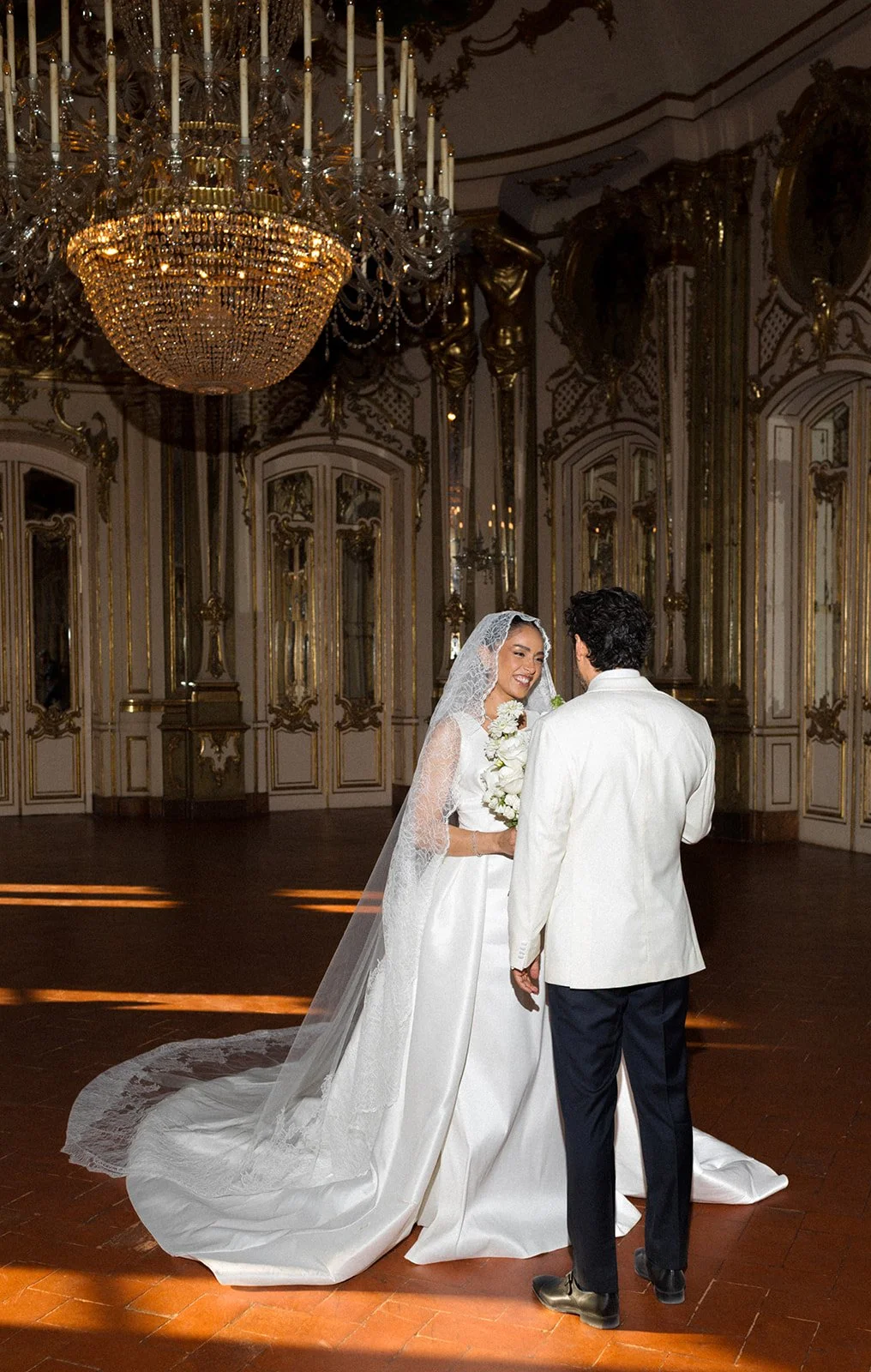
When a photographer describes their work as primarily editorial, it usually means they invest significant time in portrait sessions, think carefully about location and light for those sessions, and produce galleries with a consistent visual character. This is also a valid choice, particularly for couples who want photographs that carry the visual quality of a magazine shoot.
Most experienced destination wedding photographers work across both modes and weigh them differently depending on the couple, the venue, and what the day provides. When a couple tells us they want something that feels like it belongs in Vogue but also captures real emotion, that is not a contradiction. It is a description of what happens when documentary and editorial thinking operate at the same time.
What to Look for When Choosing Your Photographer
Your instinct about which type of image matters most to you is usually reliable. If you find yourself stopping on the candid photographs in a gallery, the ones where someone is laughing with their back to the camera or a parent is watching without knowing they are being photographed, the documentary weight of the work is what draws you. If you stop on the portraits, the ones where the couple is placed in a specific light, and the whole composition has a graphic quality to it, the editorial element is what you respond to.
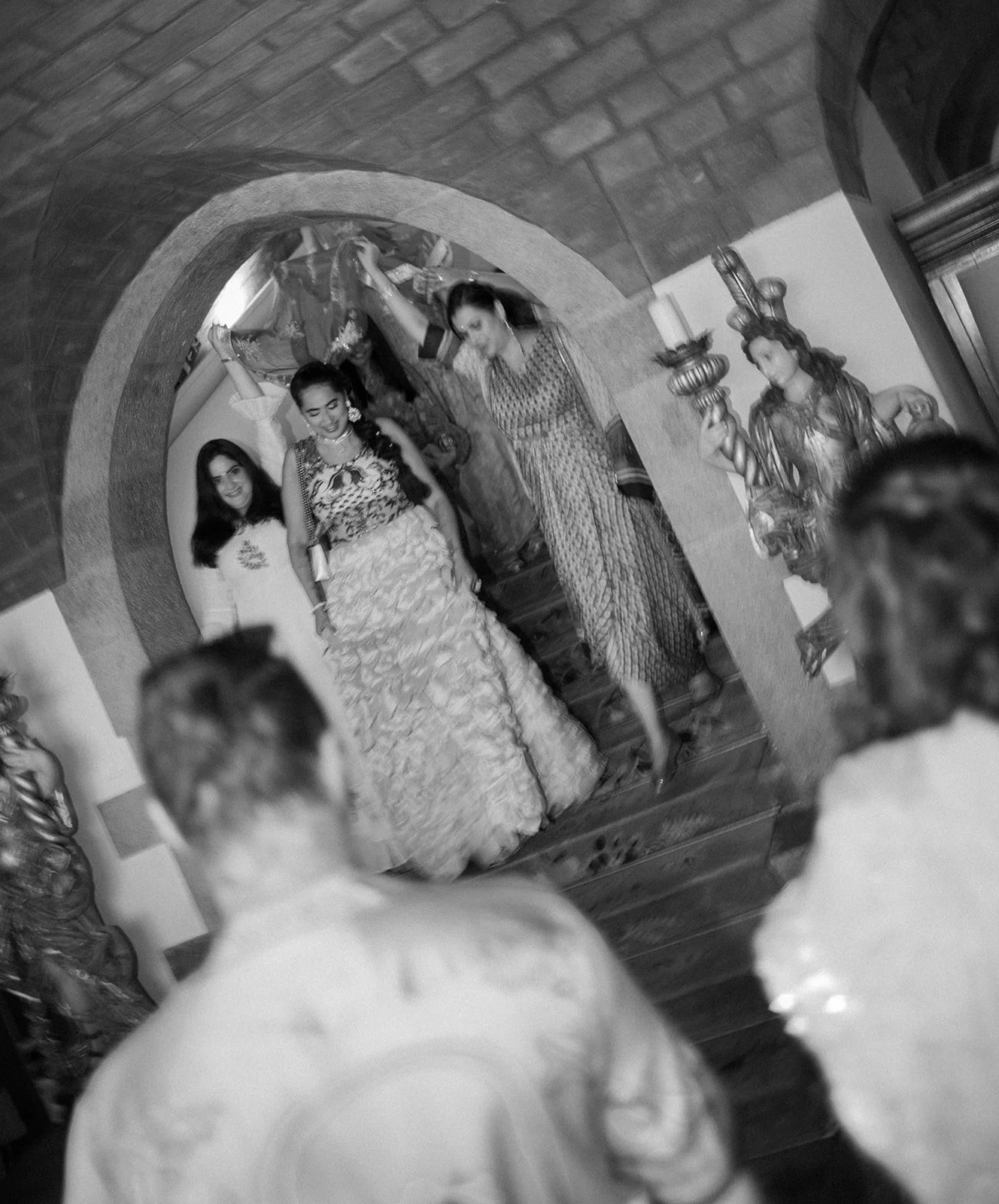
The practical question is not which style you prefer in the abstract, but how you and your partner feel about being directed. Couples who are not comfortable in front of cameras tend to respond better to documentary-led approaches, because those images emerge from real moments rather than from asking two people who feel self-conscious to stand in a specific spot and look natural. Couples who are more at ease being directed, or who have a clear visual idea of what they want their wedding photographs to look like, often enjoy the editorial sessions.
Before booking any photographer, ask to see a full gallery from a single wedding, not a curated selection from across multiple weddings. A curated portfolio shows you what the photographer is capable of on an ideal day. A complete gallery shows you how they handled the entire day, including the difficult moments, the awkward transitions, and the hours before the light was good. A photographer with a coherent approach to both documentary and editorial work will have strong images throughout the gallery, not only during the portrait session.
For more on evaluating photographers before you commit, the guide to finding a destination wedding photographer in Portugal covers what to look for across portfolios, experience levels, and approaches in detail.
Frequently Asked Questions
What is the difference between documentary and editorial wedding photography?
Documentary photography captures moments as they happen without directing them. Editorial photography uses deliberate composition, light, and sometimes direction to create images that feel designed rather than found. Most skilled photographers use both throughout a wedding day, shifting between the two depending on the moment and the conditions.
Which produces better wedding photos, documentary or editorial?
Neither is objectively better. Documentary photography produces authentic emotional records of what actually happened. Editorial photography produces visually constructed images with a consistent aesthetic character. The best wedding galleries contain both. The question is which type of image you want to look at in ten years.
How much does a documentary or editorial wedding photographer cost in Portugal?
Experienced destination wedding photographers in Portugal who work across both documentary and editorial approaches typically charge between €5,000 and €15,000 for full-day coverage. At The Lopes Photography, our work starts from €10,000 and includes documentary coverage throughout the entire day alongside dedicated editorial portrait sessions planned around your venue and the specific light available on your date.
Do I need to tell my photographer which style I prefer?
Yes, but use images rather than terms. Find five or six wedding photographs you genuinely love and send them to your photographer before your first conversation. The images you choose communicate more about what you want than any label will. If you choose five candid photographs, that tells your photographer something specific. If you choose five portraits with deliberate composition, that tells them something different.
What makes an editorial wedding photograph different from a posed photograph?
The difference is intention and craft rather than the presence or absence of direction. A posed photograph puts people in position without thinking about light, setting, or graphic composition. An editorial photograph uses direction as one tool among several: the right light, the right background, the right moment to release the couple so the image feels natural within a deliberate frame. Direction in editorial work is a means to a specific visual end, not a substitute for it.
After more than a decade photographing destination weddings in Portugal, and with editorial work in publications including British Vogue, Vogue Arabia, and Tatler, we know that the labels couples arrive with matter less than the conversations that follow. What light will there be, and where will it fall? What moments in your day will you most regret not having? What kind of experience do you want from the hours you spend with your photographer? Those conversations produce better photographs than any stylistic commitment does. We photograph ten weddings per year and are open to new inquiries through our contact page.
