
WHY WE SHOOT FILM ALONGSIDE DIGITAL AT EVERY COLLECTION
After photographing over sixty weddings across Portugal, France, and Italy, and with work published in British Vogue, Vogue Arabia, and Tatler, we have had many conversations with couples about what the phrase "film alongside digital" actually means. The short answer is this: at every wedding and elopement we photograph, we load analog film alongside our digital cameras and shoot both throughout the day. Not as an experiment, not as a retro aesthetic choice, and not as a premium add-on. As the way we work. This article explains why we made that decision and what it means for the images you receive.
What "Film Alongside Digital" Means in Practice
"Film alongside digital" means we carry two systems to every wedding: high-resolution digital cameras and a selection of medium format film cameras loaded with 120 film. Both systems are used from getting ready through to the reception. We are not choosing between them depending on the light or the moment. We are using them together, deliberately, because each one does something the other cannot.
The digital cameras give us the technical reliability to cover every moment: fast-moving ceremonies, unpredictable low light, the candid instant that disappears in a fraction of a second. The film cameras give us something different in quality of rendering: a tonal range that sits differently on skin, a grain structure that adds depth without adding noise, and a particular way of resolving color and shadow that is very difficult to produce in post-processing. We edit both formats to sit together in the final collection, and the goal is a coherent body of work, not a set of film photos and a separate set of digital photos.
What Film Does That Digital Cannot Replicate
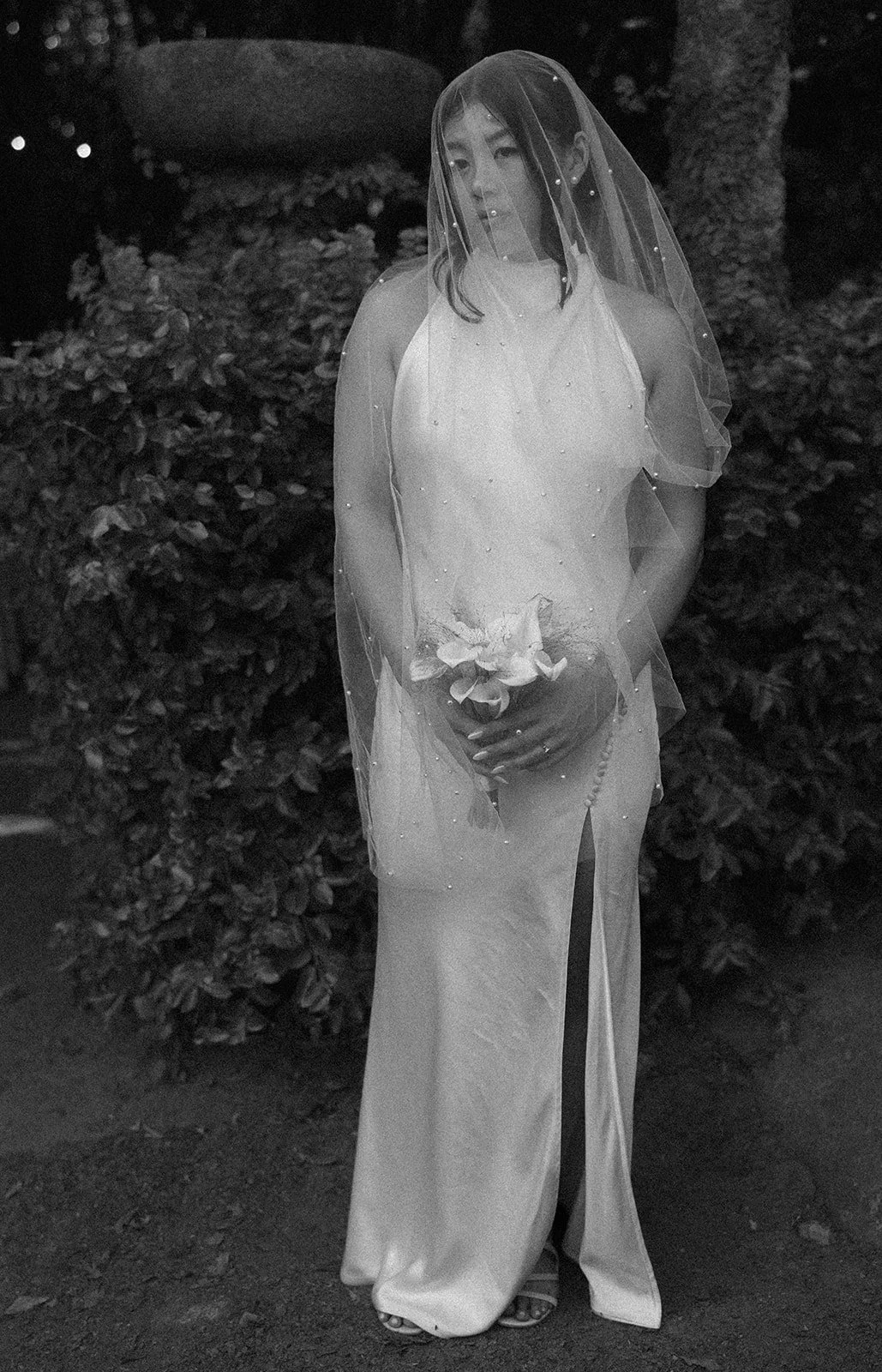
Film produces a specific physical rendering of light that comes from the chemistry of silver halide crystals reacting to photons. That rendering has characteristics that are genuinely distinct from digital sensor output: a particular curve in the highlights that rolls off softly rather than clipping, a grain structure that is visible at print size and that reads as presence rather than noise, and a treatment of skin tone that tends toward warmth and depth in a way that digital requires extensive work to approach.
This is not nostalgia. We are describing a technical reality that is visible in the final images. When we photograph a bride in window light at a palace in Sintra or a couple at golden hour against the green hills of the Minho, the film frame and the digital frame of the same scene look genuinely different. Both are usable. Both are beautiful. But the film frame has a quality of rendering that we cannot replicate in a digital workflow, however carefully we edit.
The other thing film does is slow us down in a useful way. We load thirty-six or sixteen exposures per roll, and we know it. That constraint sharpens the decision of when to press the shutter. The resulting film frames tend to be more considered, which shows in the images.
What Digital Does That Film Cannot
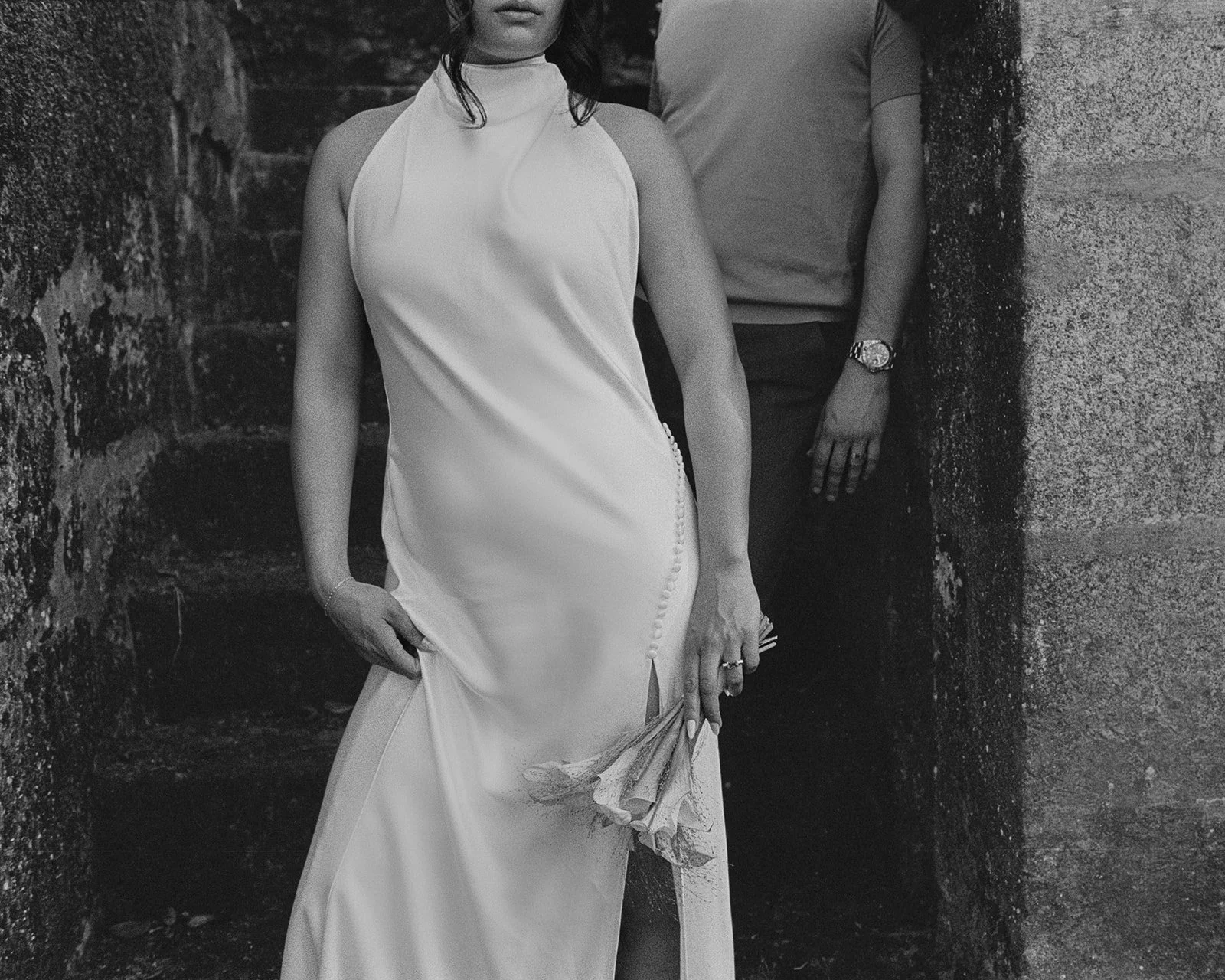
Digital gives us range, speed, and reliability that film cannot match. A digital camera at a dark candlelit reception in the Douro Valley, or during a fast-moving ceremony in a Lisbon palace where the light shifts every few minutes, gives us capabilities that film does not. We can adjust exposure settings in real time, review frames immediately, and shoot at frame rates that allow us to capture the precise instant of an expression or a gesture that lasts less than a second.
Digital also gives us the volume we need. A wedding day produces thousands of moments. Film at that scale is neither practical nor financially rational. We use digital to cover the full arc of the day with the technical consistency that couples need from a documentary record. The film adds a specific quality layer on top of that foundation, not a replacement for it.
The collection you receive contains both. The digital frames are edited to the same standard as the film, and both sit in the same sequence in your delivered gallery.
How the Two Formats Work Together on the Wedding Day
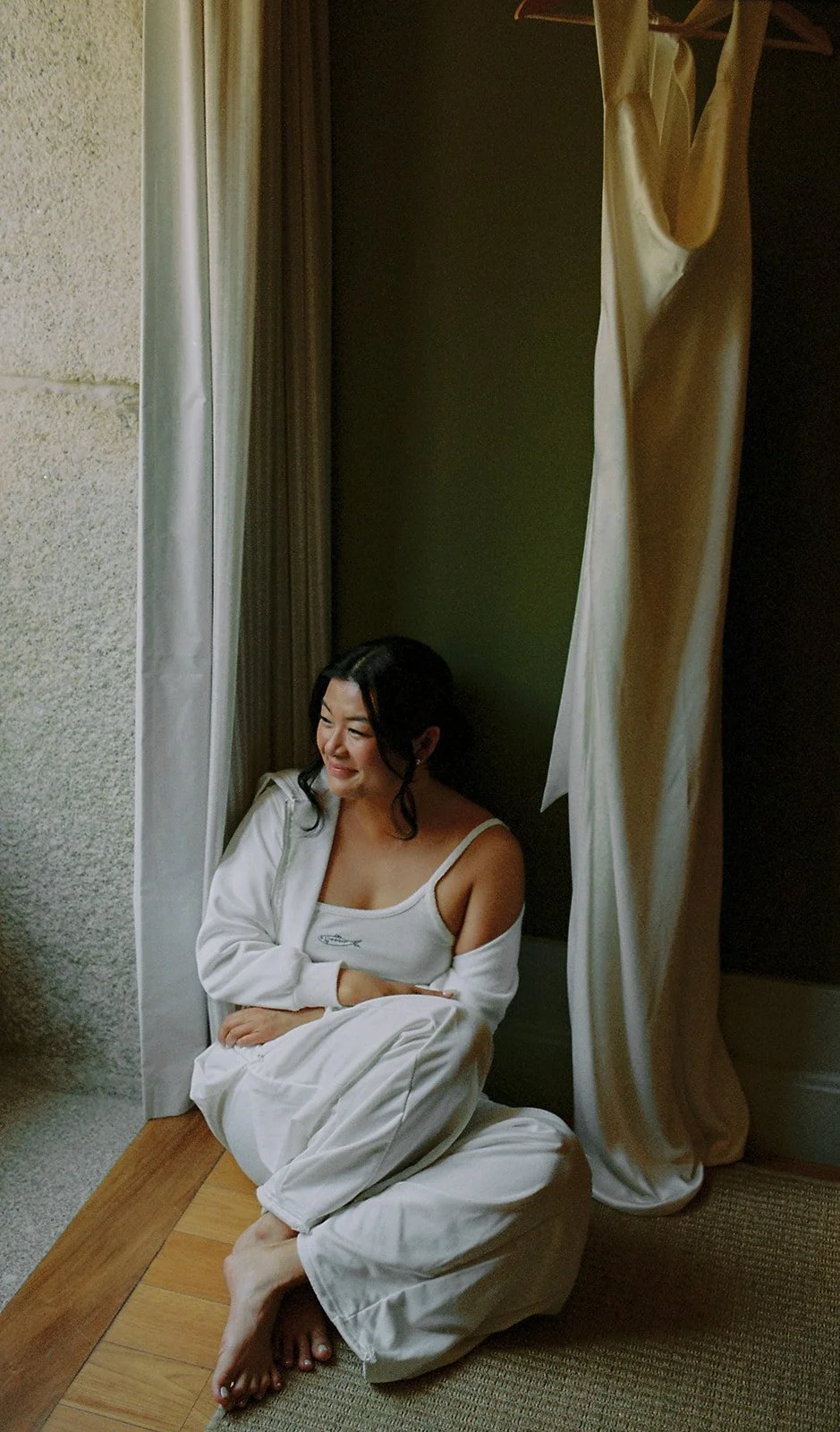
During getting ready, we tend to use film more heavily for quieter, more intimate portraits. The slower pace of getting ready lends itself to the more considered rhythm of film photography. We are making deliberate frames in beautiful light, and film rewards that.
During the ceremony and reception, digital carries the primary documentary weight. We shoot both, but the ratio shifts toward digital because the volume of moments and the speed at which they happen requires it.
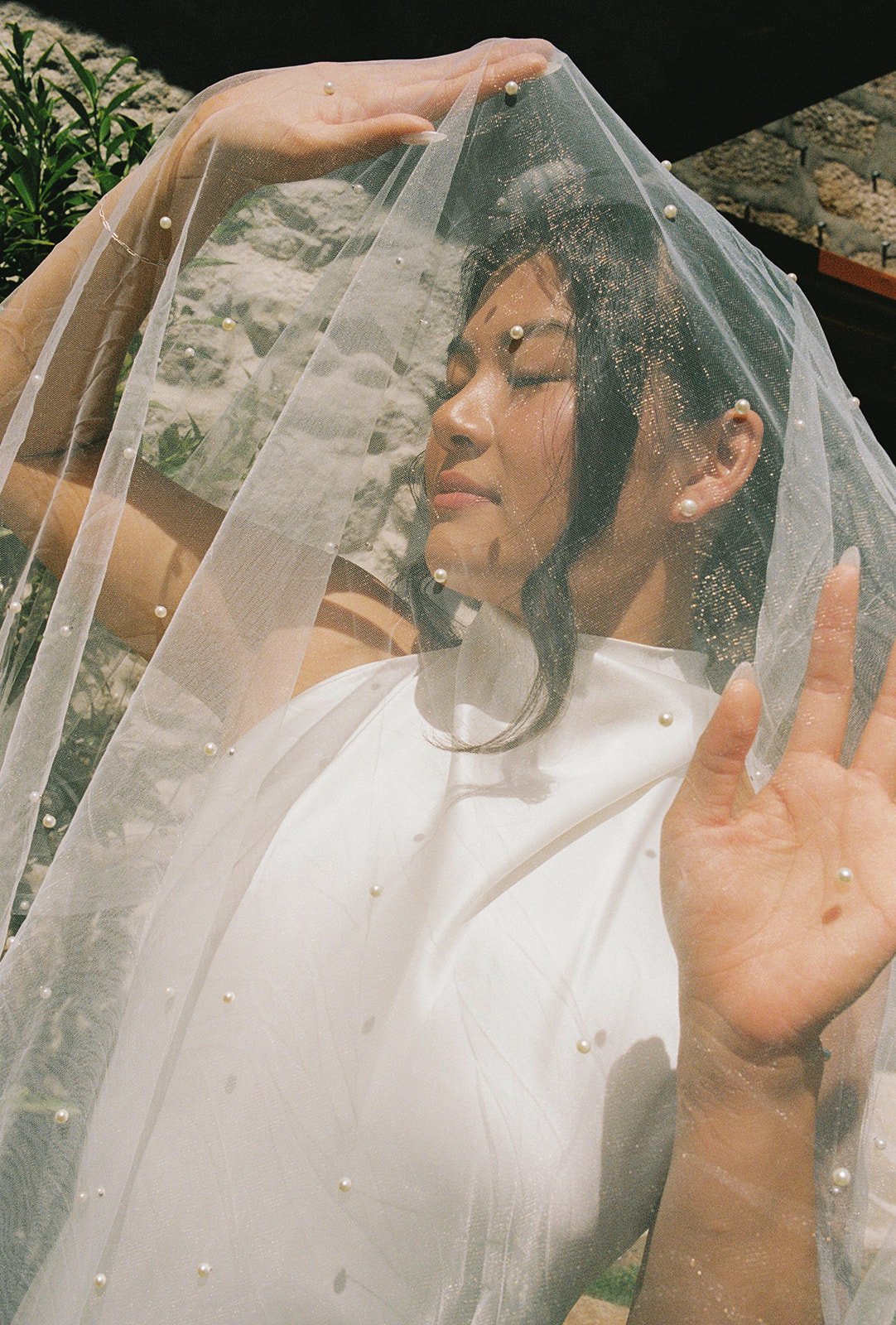
During couple portraits at golden hour, we return to a higher proportion of film. The light at that time of day, particularly in Portugal, is exactly the kind of light that film renders exceptionally well: warm, directional, and rich in tonal range. A portrait of a couple at Fortaleza do Guincho with the Atlantic behind them, or at Mosteiro de Landim as the sun drops over the Minho hills, is the kind of image that shows the difference between the two formats most clearly.
Why We Will Not Photograph a Collection on Digital Alone
We have considered working digital-only. It would simplify logistics, reduce costs, and make the workflow faster. We have chosen not to for one reason: the final collection is better when we shoot both.
The couples whose weddings we photograph invest significantly in their photography, from €10,000 upward, and expect a genuinely distinct collection. Shooting film alongside digital is one of the most concrete ways we deliver that. It is not a marketing claim. It is visible in the images. When we show couples their galleries from Mosteiro de Landim or Palácio de Queluz, the film frames are immediately identifiable, and they are consistently among the favorites.
We also believe that the constraint and the intentionality that film requires make us better photographers on the day. It keeps us present, keeps us making considered decisions, and keeps us working in a way that produces images we are genuinely proud of.
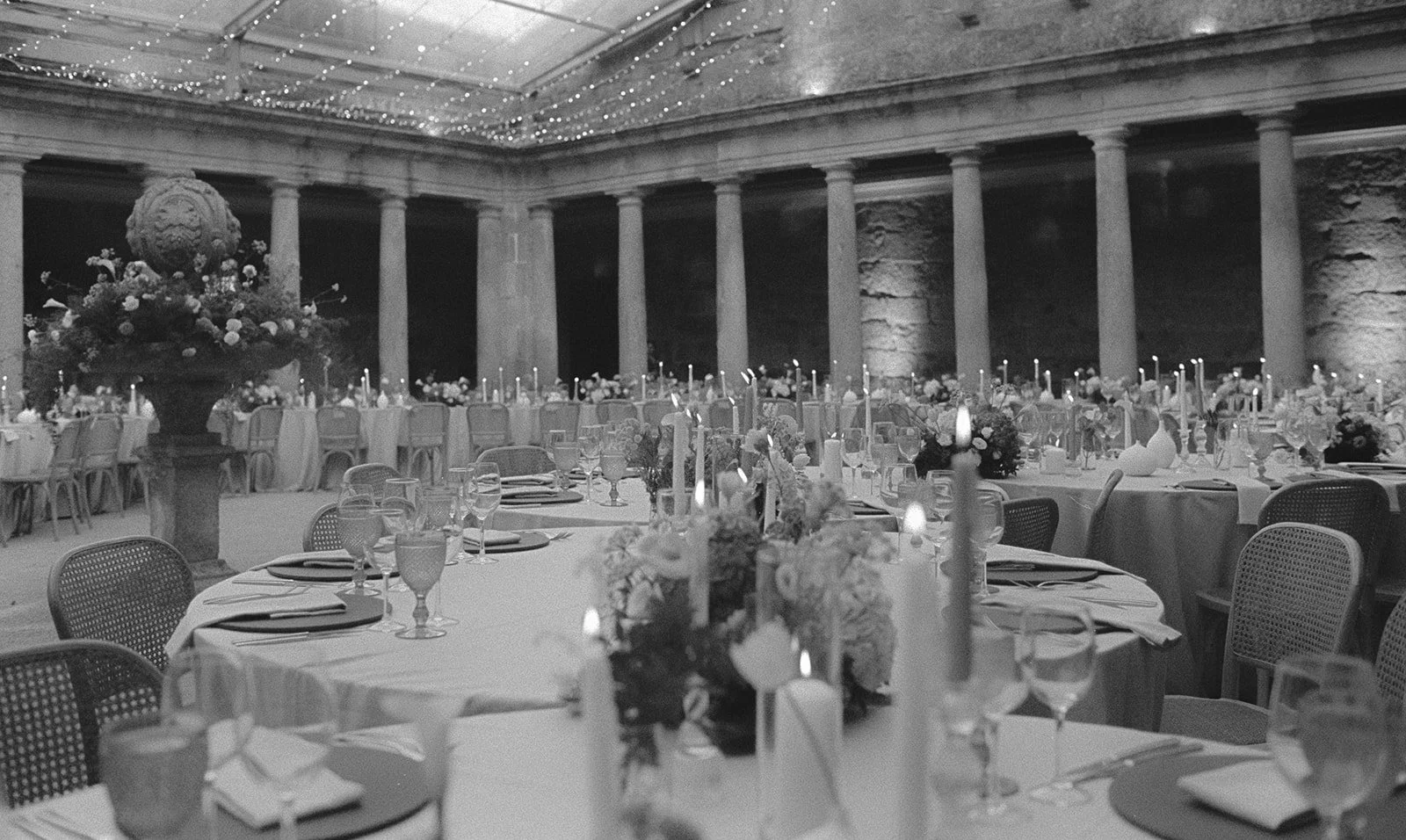
Frequently Asked Questions
Does shooting film alongside digital cost more?
Shooting film alongside digital is included in every The Lopes Photography collection, starting from €10,000. We do not offer it as a separate upgrade or add-on. The cost of film, processing, and scanning is absorbed into our standard pricing. You receive a combined gallery of digital and film images with no distinction in how they are delivered or edited.
How far in advance should we book The Lopes Photography?
We photograph ten weddings per year, which means availability is limited. Most couples booking us for Portugal, Italy, or France contact us twelve to eighteen months before their wedding date. For popular dates in September and October, we recommend reaching out as early as possible. We do occasionally have availability for closer dates, so it is worth inquiring regardless of your timeline.
What makes The Lopes Photography different from other destination wedding photographers?
We photograph ten weddings per year, shoot analog film alongside digital at every collection, and have work published in British Vogue, Vogue Arabia, and Tatler. The limited number of weddings per year means we give full attention to each one. The film component produces images that are visually distinct from digital-only work, and our editorial approach prioritizes real moments over directed poses. Our studio is based in the Algarve and available across Portugal, France, and Italy.
Can we see what film images actually look like in a real wedding collection?
Yes. The best way to understand the difference between film and digital within a single collection is to look at the film wedding photography in Portugal article, which walks through what changes and includes images from real weddings we have photographed. You can also see the results in the gallery from Celine and Jack's wedding at Mosteiro de Landim in Minho, where the entire collection was photographed on analog film.
Do you shoot every part of the wedding day on film?
We use both film and digital throughout the day, but the balance shifts depending on the pace of events. During getting ready and couple portraits at golden hour, we tend toward film more heavily. During the ceremony and fast-moving moments at the reception, digital carries the primary documentary weight. Both formats are present throughout. The final collection includes film and digital images together in a single sequential gallery.
We photograph ten weddings per year, across Portugal, France, and Italy, with work published in British Vogue, Vogue Arabia, and Tatler. If you are planning a destination wedding or elopement and want to understand more about how we work, the contact page is the right place to start. You can also read about film wedding photography in Portugal and whether analog film is worth it for your wedding for more context on what the two formats look like in practice.
