
ELOPEMENT VENUES IN PORTUGAL
Portugal has a particular quality that becomes obvious the moment you start working in it seriously: the light arrives at a low angle and holds there for a long time. It comes in off the Atlantic and catches on whitewashed walls, on river terraces, on old stone. That quality of light matters more than almost anything else a photographer can promise a couple. The photographs are grounded in it.
Beyond the light, what makes Portugal genuinely suited to intimate celebrations is the density of landscape variety within a small country. In a single trip, a couple can move from a Sintra forest to an Atlantic cliffside to the terraced Douro to the wide Alentejo plains. Each setting has its own visual register and its own emotional temperature. That kind of range, within easy driving distance of a single international airport, is rare in Europe. Lisbon is well-connected from the US, the UK, Canada, and Australia, and most of the country is reachable within three hours of landing.
What also matters, and what this guide is organized around, is scale. An elopement is not a reduced wedding. It is a different kind of day entirely, one where the location does more of the work and the production does less. The venues and natural locations below were chosen specifically for what they offer to couples who want something intimate, considered, and unhurried. Some are boutique hotels with fewer than 30 rooms. Some are private houses that sleep fewer than ten. Some are landscapes that require no venue at all. The criterion is consistent throughout: does this place earn its place for a day that belongs entirely to two people.
Lisbon
Lisbon works for elopements in a way that most European capitals do not. The city is hilly, intimate in scale, and genuinely varied in atmosphere from one neighborhood to the next. A morning in the Alfama district, where the streets are quiet before noon and the light comes in sideways through old doorways, feels nothing like an evening on a rooftop in Chiado.
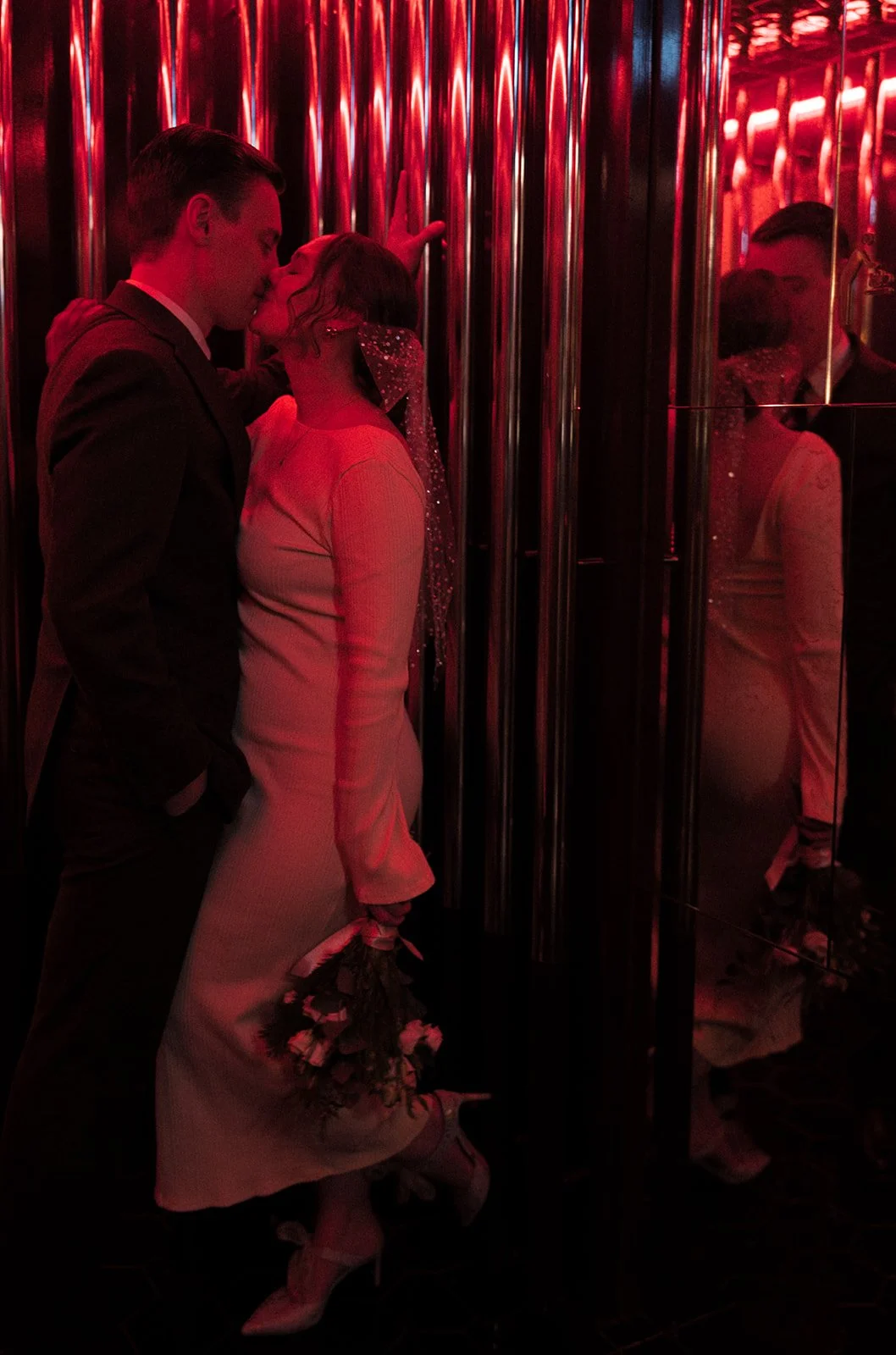
Santa Clara 1728 sits on the edge of the Alfama, overlooking the Tagus and the Feira da Ladra market square. It was built as a convent in the 18th century and operates now as a boutique hotel by Silent Living, the same group behind Casa Na Terra in the Alentejo. The play of light inside is one of the most distinctive things about it: soft shadows, architectural window frames, a quality of stillness that most Lisbon hotels cannot manufacture. For couples who want a Lisbon elopement with a genuinely editorial register, it is a strong starting point.
The Ivens Hotel, in the Chiado neighborhood, is a restored 19th-century building with an interior courtyard and a scale that keeps the day feeling contained and private. We have photographed a destination elopement here, and the building earns its atmosphere. The Chiado location also gives couples immediate access to the surrounding streets for a more urban part of the day if they want it.
For a purely urban elopement that uses the city itself as the setting, the miradouros in the Alfama and Mouraria neighborhoods, particularly Miradouro da Senhora do Monte, offer elevated views over the skyline and the Tagus at golden hour. These are public spaces, which have implications for timing and privacy, but in the early morning or on a weekday in the shoulder season, they can be genuinely quiet.
For more options across the region, see the dedicated guide to elopement venues near Lisbon.
Sintra
Thirty minutes from Lisbon, Sintra operates at a different pace and a different visual register. The forest is cultivated, the palaces are genuine rather than reconstructed, and the light behaves differently here because of the humidity and microclimate that comes off the Atlantic. It is one of those places that photographs differently at every hour of the day, and the best work tends to happen either early in the morning or in the last hour of light.
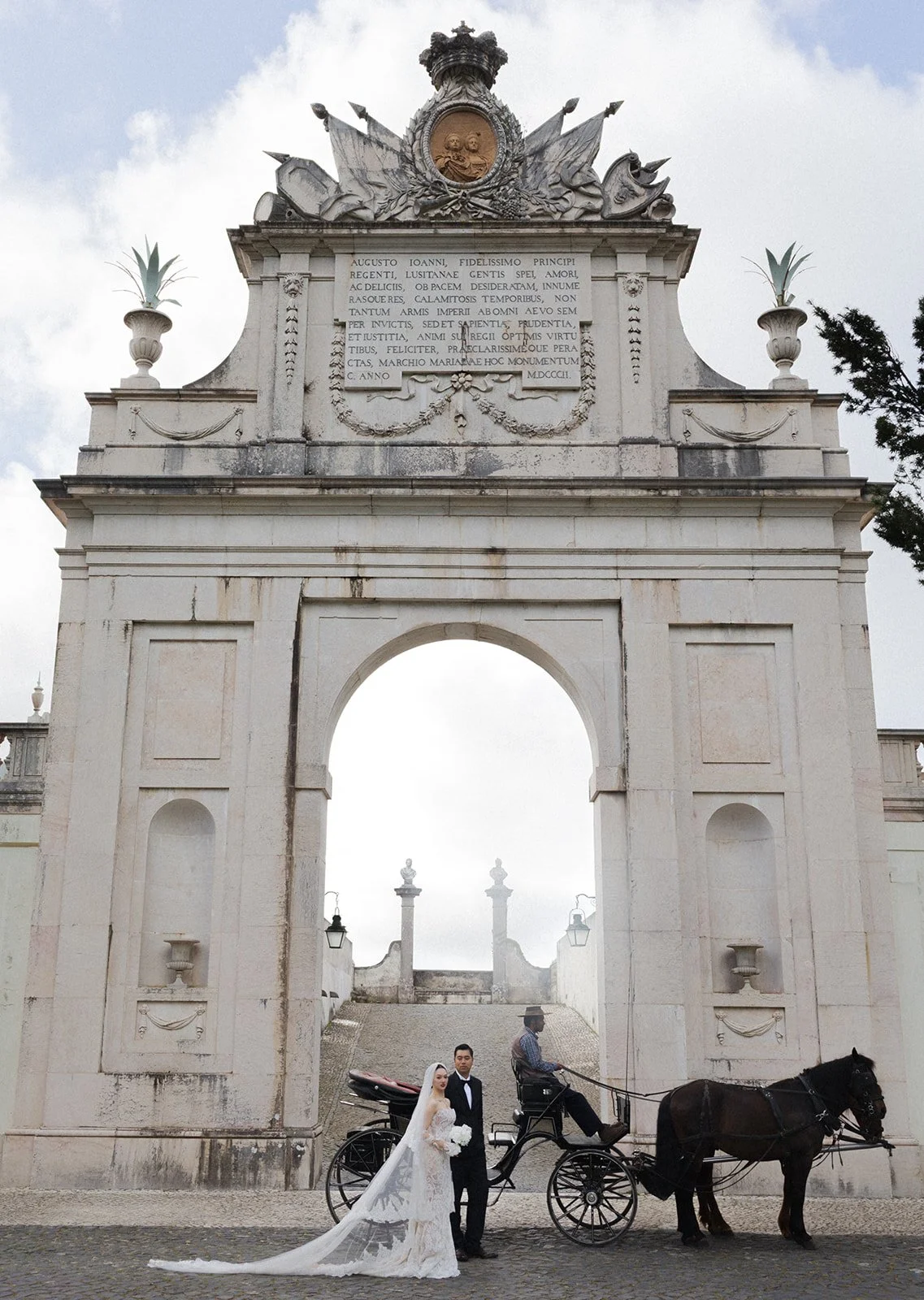
Palácio de Seteais is the venue we return to most in Sintra. A neoclassical palace built in the 18th century, it operates now as a Tivoli hotel, which means private access, a controlled environment, and a team that understands small, considered ceremonies. Its symmetrical facade, formal gardens, and views toward the Serra de Sintra give it a scale that works precisely because it is not overwhelming. We have photographed two separate elopements here, and what is consistent across both is that the building gives the day structure without competing with the couple for attention.
See the gallery from Josh and Melissa's elopement at Palácio de Seteais. We also worked across two Sintra locations with Neil and Xuan in April 2026.
Quinta da Bella Vista is a historic house and estate in the Sintra hills, with an antique greenhouse, mature gardens, and a more intimate domestic scale than the palace hotels. It was once home to Arthur Conan Doyle, which is a detail that carries no particular significance for most couples but gives some sense of the age and character of the property. For a Sintra elopement that avoids the formality of a palace setting, this is a considered alternative.
Monserrate Palace is the most architecturally unusual of Sintra's historic properties: an Indo-Gothic building with exotic gardens and a ballroom open to the sky. For an outdoor ceremony with a singular backdrop, it is difficult to match anywhere in the region. Access for private events requires advance coordination with Parques de Sintra, and permits for professional photography apply.
For the full range of Sintra venue options, see our guide to Sintra wedding venues.
The Atlantic Coast
The stretch of coastline from Cascais northwest toward the Arrábida peninsula offers something that Sintra and Lisbon do not: open sky, sea wind, and the full weight of the Atlantic horizon. The light on this coast is particularly good in the late afternoon, when the low sun catches the dune landscape, and the water turns copper.
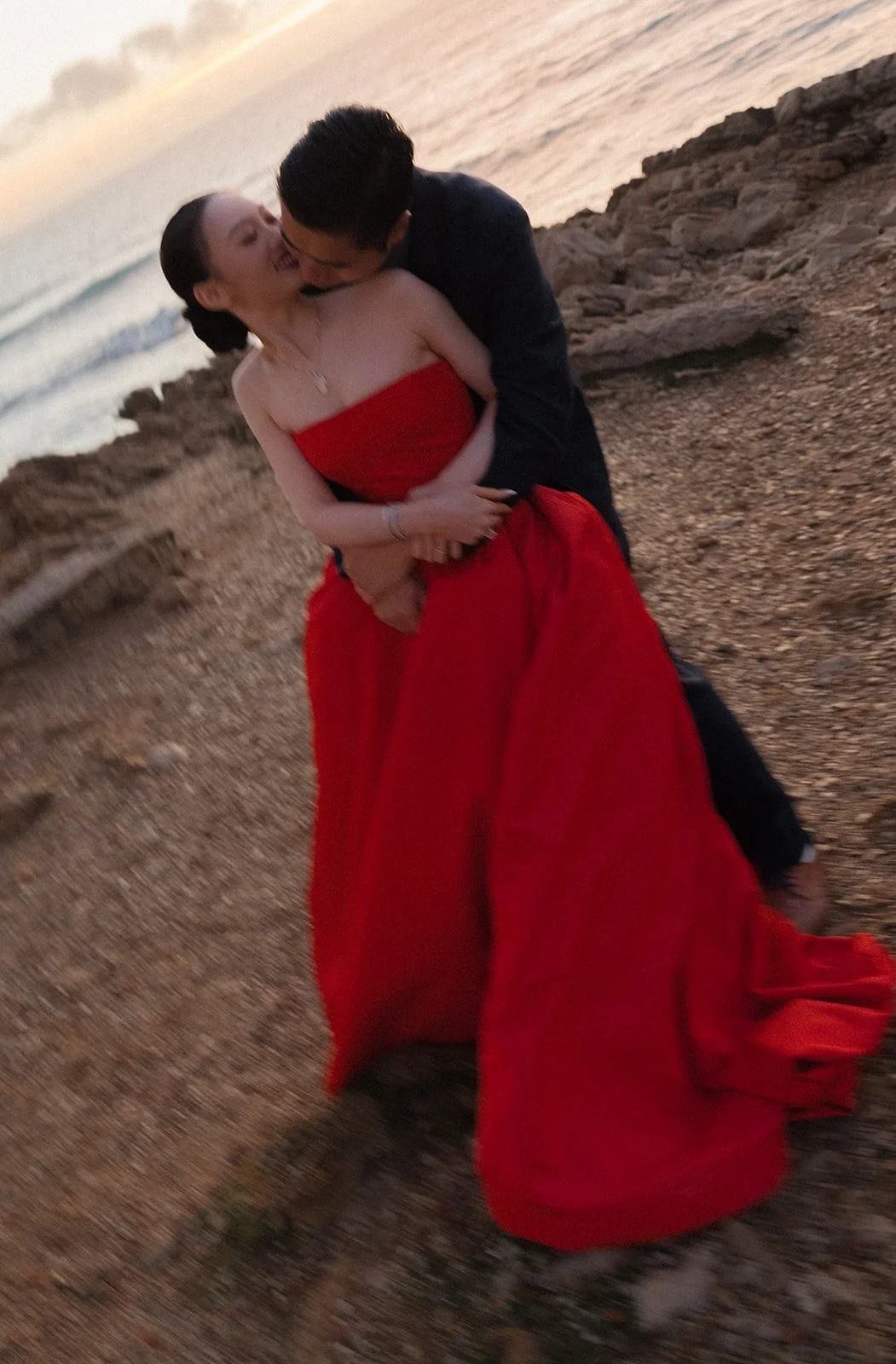
Fortaleza do Guincho is a 17th-century fort converted into a boutique hotel and two-Michelin-star restaurant, set on the edge of the Guincho dunes facing the open Atlantic. It has 27 rooms and no event infrastructure designed for large weddings, which in practice means that elopements and small ceremonies receive the full attention of the property. The building has real physical mass, the landscape around it is wide and unobstructed, and the combination of fort architecture and Atlantic light is one of the most distinctly Portuguese things in the Lisbon region. We have worked here with two separate couples.
See the full gallery from Fortaleza do Guincho.
Areias do Seixo sits on Portugal's Silver Coast, about an hour north of Lisbon, built directly into the coastal dunes. It is a design-led eco hotel with 13 rooms, ocean-view terraces, outdoor fire pits, and a deliberate sense of remoteness. The property has made elopements a specific part of what it offers rather than an accommodation of a smaller guest list. For couples who want a coastal elopement without the visual busyness of the Algarve, this stretch of the Atlantic is a strong alternative.
The Oitavos is a contemporary hotel within the Sintra-Cascais Natural Park, close to the Guincho beach. Its architecture is restrained and surrounded by pine forest and dune landscape, which gives it a sense of privacy unusual for a hotel of its size. We photographed a destination elopement here in October 2022.
Comporta & the Alentejo
The landscape south of Setúbal changes dramatically once you cross the Sado estuary. The terrain flattens, the palette shifts to pale sand, umbrella pine, and rice field green, and the pace of the whole area slows in a way that is not just atmospheric but structural. Comporta and the wider Alentejo are where couples come when they want the day to feel unhurried in the most literal sense.
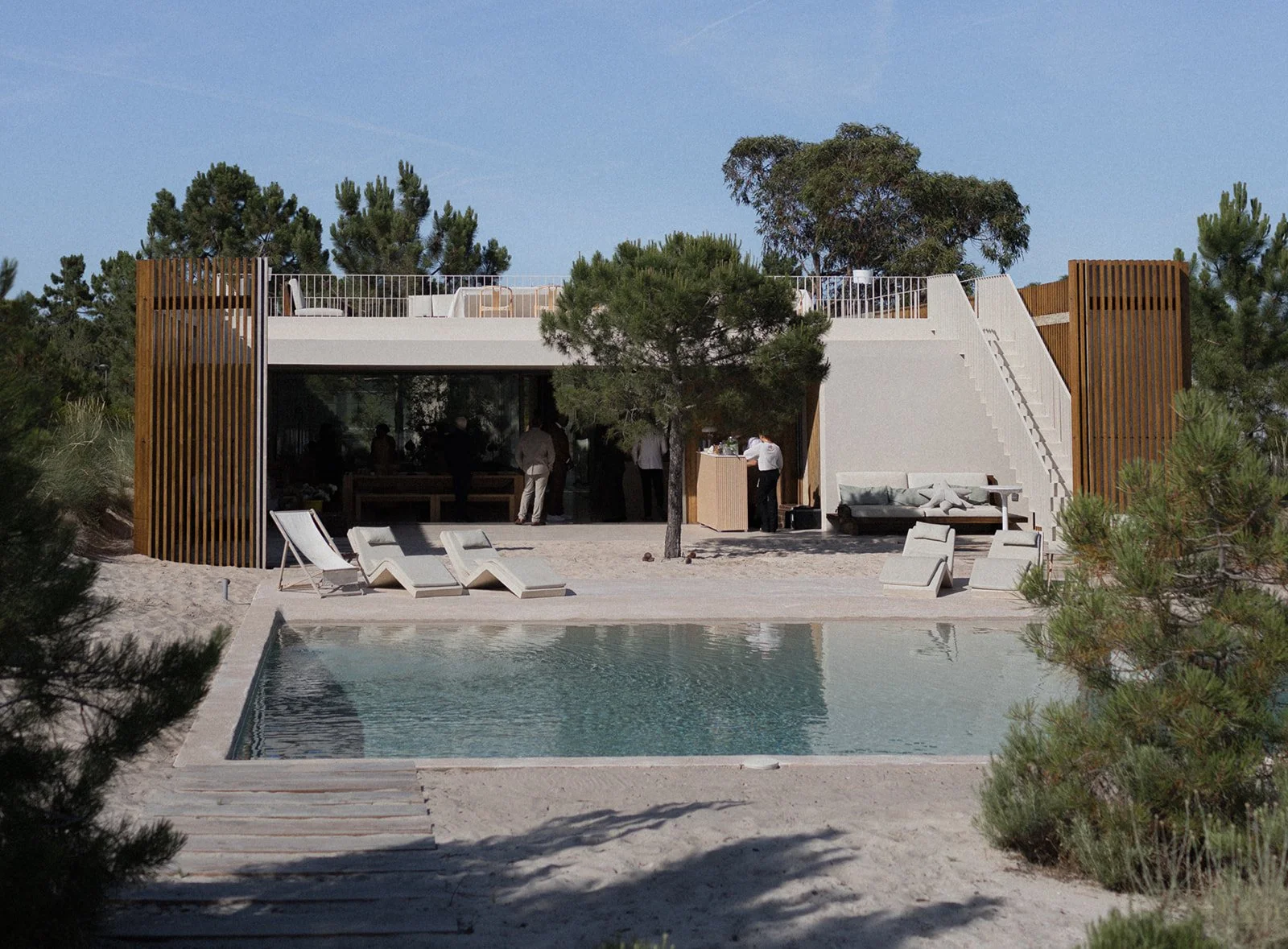
Casa da Volta is a six-suite private villa near Comporta designed in a contemporary alcáçova style: high walls enclosing an interior courtyard, cork oaks in the land beyond. The property sleeps twelve, is rented in its entirety, and was designed from the beginning at a scale where a ceremony inside the walls and a dinner as the sun drops behind the hills is exactly the right use of the space. It is one of the clearest examples in Portugal of a venue conceived for the kind of day where there is no separation between the private time and the event itself.
Further inland, in Monsaraz, Casa Na Terra is a different proposition entirely. Designed by Manuel Aires Mateus and built into the Alentejo earth beside the Alqueva reservoir, the house is subterranean by design: the only visible elements from the outside are the patio canopy and a circular skylight. Inside, the spaces move between raw plaster, stone, and natural light filtered through openings carved into the ground above. The project won the ArchDaily Building of the Year award in 2020. It sleeps six to eight adults and is booked as an exclusive private house. For couples whose elopement vision is organized around architecture and intention rather than setting and service, there is no more specific venue in Portugal.
São Lourenço do Barrocal, also near Monsaraz, is a different scale: a 780-hectare estate that has been in the same family for two centuries, with vineyards, holm oaks, and architecture designed by Eduardo Souto Moura. It has been used for elopements as well as larger weddings, and what makes it relevant here is the atmosphere of the Alentejo itself rather than the size of the event. The landscape is wide, quiet, and genuinely unhurried. For couples who want Alentejo character with more infrastructure and on-site accommodation for a small group, it is the obvious reference point.
Porto & the Douro Valley
The Douro Valley runs east from Porto along the river, carved by the water and terraced with vineyards on both banks. The scale of the landscape genuinely affects in a way that photographs do not fully prepare you for. You feel the valley more than you see it. September and October are harvest months: the quintas are alive, the light arrives at near-horizontal angles, and the vineyards are at their fullest.
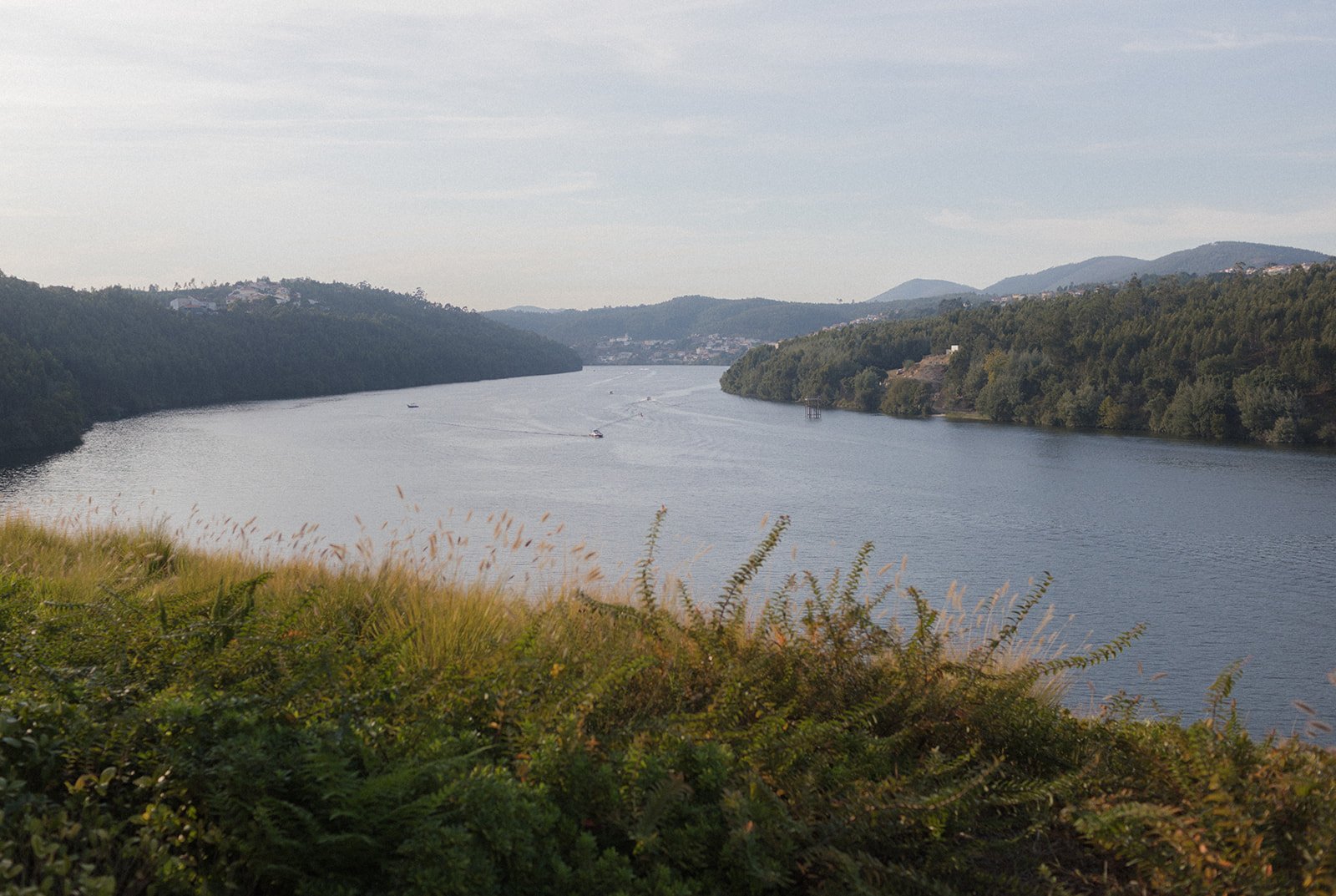
Quinta de São Bernardo is a boutique hotel and vineyard in the Douro with a boutique approach: river-view suites, farm-to-table dining, and a capacity that makes it explicitly suited to elopements and small intimate weddings. The setting is genuine rather than staged. What matters at a property like this is not the ceremony space but the experience of being in that particular corner of the valley for a full day, and the quinta's scale makes that possible in a way that the larger Douro hotels cannot replicate.
Quinta do Ventozelo is a historic wine estate with panoramic river views and an eco-conscious approach to how the estate operates. Like São Bernardo, its scale works in the couple's favor: the intimacy comes from the size of the property itself rather than from having to carve out a quiet corner of a busy hotel. Wine and olive oil are produced on site and are very much part of what the day feels like if you let them be.
Six Senses Douro Valley, a restored 19th-century manor, is the Douro's most fully serviced option for couples who want the landscape but also want a team managing every detail. Its ceremony locations, whether among the estate's own vineyards or on the terrace overlooking the river, place the couple directly inside one of Europe's most layered wine landscapes. For an elopement with a small guest count where logistics and comfort are the priority, it remains the standard-bearer in the region.
The Algarve
The Algarve is Portugal's most reliably sunny region, and that reliability matters when a ceremony depends on the sky. The southern coast receives more than 300 days of sun annually, and the winter months are mild enough to make it a viable option year-round. What makes the region specific to elopements is the concentration of dramatic natural backdrops within short distances of each other, most of which require no venue booking at all.
Ponta da Piedade, near Lagos, is the most architecturally varied stretch of the Algarve coastline: towering limestone formations, sea arches, grottos, and sea stacks rising from water that shifts between turquoise and deep blue depending on the hour. A symbolic ceremony on the cliff path above these formations, at golden hour on a weekday, is as direct an argument for elopement as Portugal makes anywhere. It is a public space, and timing is everything.
Praia da Marinha, further east near Carvoeiro, is reached by a clifftop path that gives it a natural sense of arrival. The eroded limestone arches and sea caves visible from the cliff edge create a layered backdrop that works in both wide and tight frames. The access walk is part of the photographic sequence rather than an inconvenience. Early morning in the shoulder season offers genuine quiet.
Quinta Morgado do Quintão is a vineyard estate in the Lagoa hills, a counterpoint to the coast-only view of Algarve elopements. Its vineyards, stone buildings, and interior Algarve landscape offer a setting with real character for couples who prefer land over sea. The intimacy of the property's scale makes it suited to small celebrations where the guest list and the venue are genuinely proportionate to each other.
Madeira
Madeira sits in the middle of the North Atlantic, a 90-minute flight from Lisbon, and it operates at a different pace and a different visual register from the mainland. The island's landscape is volcanic, with ravines, levada irrigation channels, ancient laurel forest, and sea cliffs that drop directly into the ocean. It rewards couples willing to travel to get somewhere that genuinely cannot be approximated elsewhere in Portugal.
The island's most specific elopement locations are natural rather than built. Cabo Girão, one of the highest sea cliffs in Europe at 580 meters, offers a glass-floored skywalk cantilevered above the Atlantic on its upper edge. A ceremony here is one of the most singular location choices in Portugal's entire territory: no fabricated backdrop, no venue architecture, just the cliff face and the open ocean. Fanal Forest in the northwest is the other end of that spectrum: a plateau of ancient laurel trees inside the UNESCO Laurisilva forest, where early morning mist sits low in the canopy, and the atmosphere is entirely its own.
For couples who want a property base from which to work these landscapes, Belmond Reid's Palace in Funchal is the historic reference point for luxury on the island: a clifftop hotel with formal gardens, ocean terraces, and a sense of accumulated character over more than a century. Quinta Jardins do Lago is a quieter alternative: a boutique hotel set within botanical gardens in the heart of Funchal, with suites overlooking the gardens and the city below, suited to a more private and contained day.
The Azores
The Azores are nine islands in the North Atlantic, a two-hour flight from Lisbon, and they belong to a separate category. The landscape is volcanic, with calderas, crater lakes, geothermal pools, and a green so saturated that photographs can look edited when they are not. For couples who want an elopement that is genuinely unrepeatable anywhere else in Portugal, the Azores offer that.
São Miguel is the largest and most accessible island, and the natural starting point. The caldera at Sete Cidades holds twin lakes, one blue and one green, separated by a narrow bridge and surrounded by a crater rim ridgeline. The viewpoint at Vista do Rei gives the full panorama; the caldera rim itself has quieter viewpoints for couples willing to walk. This is the most frequently cited elopement landscape in the entire Azores archipelago, and the description is earned.
Lagoa do Fogo is a crater lake on the same island, quieter and less visited, with a descent trail that keeps most visitors at the upper viewpoint rather than reaching the water. Couples who hike to the lakeshore find a level of solitude that the more accessible Azores landscapes cannot match. The volcanic shoreline is entirely its own as a backdrop.
The geothermal area at Furnas adds a third register: steaming caldeiras, thermal pools, and the Terra Nostra Garden Hotel, which sits within centuries-old botanical gardens with a thermal pool at their center. For couples who want a property based in São Miguel that has genuine character without being a generic hotel, Terra Nostra offers both the gardens and the geothermal experience as part of a single day.
For couples considering locations close to Lisbon specifically, the dedicated guide to elopement venues near Lisbon covers Arrábida, Cascais, Sesimbra, and the Atlantic coast north of the capital in more detail.
For a national overview of wedding venues across all regions, see the best wedding venues in Portugal.
Planning an Elopement in Portugal? Questions We're Often Asked
Do we need a legal ceremony in Portugal, or can we just have a symbolic one?
You have both options. A legally binding civil ceremony in Portugal requires submitting documentation in advance, typically 60 to 90 days before the date, through the Portuguese civil registry. The requirements for foreign nationals include birth certificates, proof of single status, and valid identification, all of which need to be officially translated. Many international couples choose instead to marry legally at home before or after their trip and hold their ceremony in Portugal as a symbolic celebration. A symbolic ceremony has no legal standing but no bureaucratic requirements, and from a photographic and experiential standpoint, it is indistinguishable from the legal version.
How many guests can we bring to an elopement in Portugal?
There is no fixed rule. Most of the venues in this guide work well for two people, and most also work for a small group of up to 20 guests without requiring a full wedding-scale production. The distinction between an elopement and a micro-wedding in Portugal is largely one of intention: an elopement is organized around the couple rather than around a guest list. Some of the natural locations in this guide, such as the cliffsides in the Algarve or the crater rim in the Azores, are publicly accessible with no guest count restrictions. Private houses like Casa da Volta or Casa Na Terra have their own capacity limits, which are worth factoring into the venue decision from the beginning.
Do we need permits to photograph at natural locations and palaces in Portugal?
It depends on the location. Most beaches, coastal paths, and countryside areas are publicly accessible with no commercial photography permit required. Protected natural areas such as Arrábida Natural Park or Parques de Sintra properties, including Quinta da Regaleira and Monserrate, require advance permits for professional photography sessions. Fanal Forest in Madeira and the caldera landscapes in the Azores may also have access restrictions worth confirming in advance. The practical answer is to verify permit requirements with the managing body of any protected area at least two to three months before your date.
What time of year is best for an elopement in Portugal?
Portugal does not have a bad month for an elopement, though each season has a distinct character. Spring, from late March through May, brings long days, moderate temperatures, and a quality of light that is softer and more diffuse than summer. Autumn, from September through November, is the most photogenic season across much of the country: the Douro Valley is at harvest, the Alentejo light turns amber and long-shadowed, and the tourist pressure in Sintra drops significantly. Summer offers certainty of sun and long evenings, but the most popular locations are busier, and the Alentejo and Douro interiors can be very hot in July and August. Winter is the most private season, particularly in the Algarve and Madeira, where the climate remains mild. The Azores are workable year-round, with the understanding that the weather on Atlantic islands is inherently variable.
If you are planning an elopement in Portugal and want photography that honors the intimacy of the moment, we would love to hear from you.
