
HOW AN ELOPEMENT DIFFERS FROM A DESTINATION WEDDING (AND WHICH IS RIGHT FOR YOU)
The distinction between an elopement and a destination wedding is not about size alone. It is about intention, planning complexity, guest dynamics, and how you want your day to feel. At The Lopes Photography, we photograph destination weddings and elopements across Portugal and Europe, with work published in British Vogue, Vogue Arabia, Vogue Australia, and Tatler, and what we see is that couples who understand the difference before they book anything make far clearer, calmer decisions.
This guide breaks it down honestly.
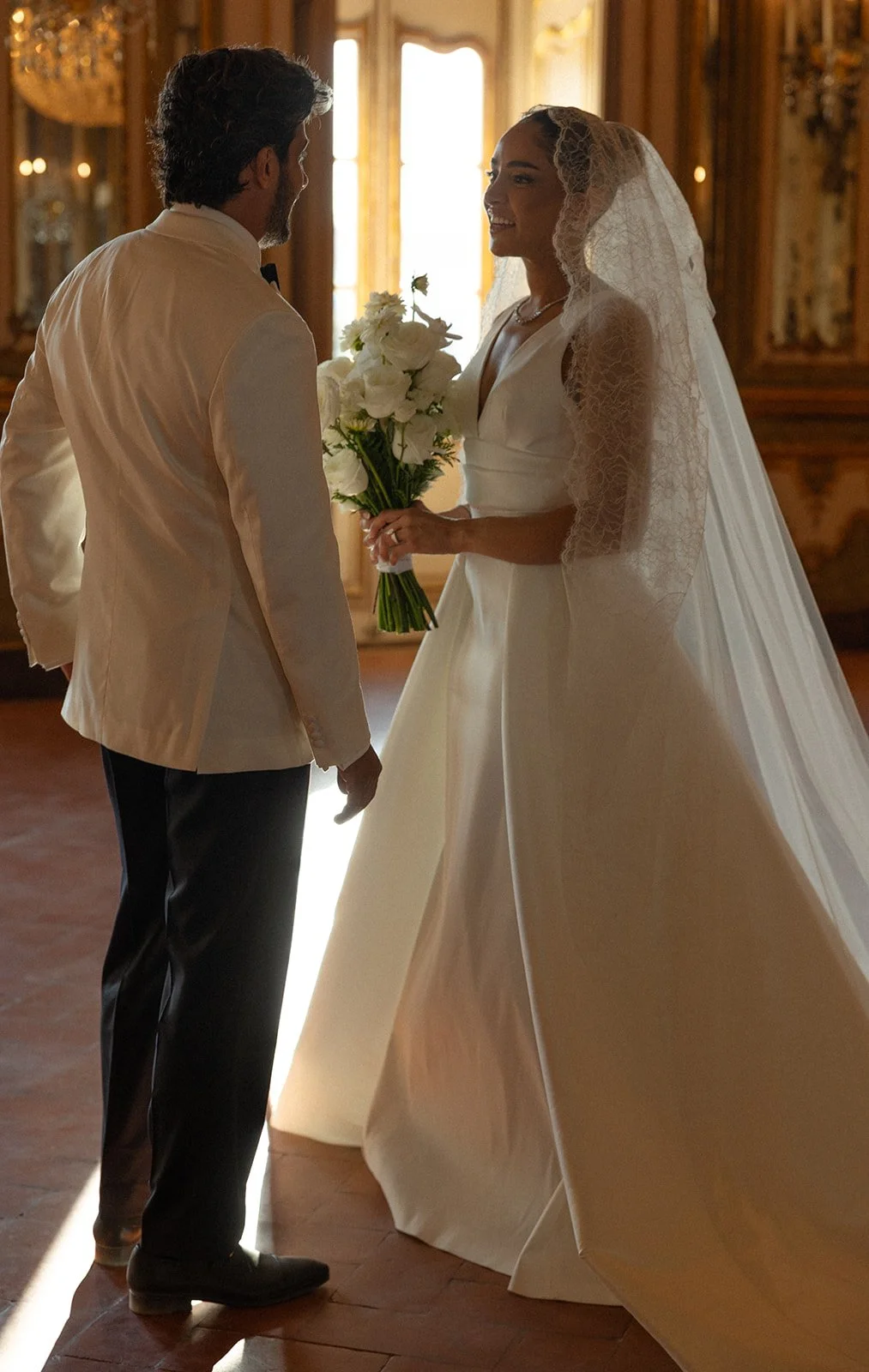
What Is the Actual Difference Between an Elopement and a Destination Wedding
The clearest distinction is guest count and ceremony structure. An elopement involves two people (and sometimes a witness or two) marrying in a location they find meaningful, with the emphasis on the couple rather than a social event. A destination wedding involves a guest list, a venue contract, a catering team, and a formal program: ceremony, cocktail hour, dinner, and dancing.
The word "elopement" has shifted considerably. A decade ago, it implied secrecy: couples who left without telling anyone and married at a registry office. Today it describes any intimate ceremony built primarily around the couple's experience, from a sunrise cliff in the Algarve with ten guests to a private dinner for two in Sintra following a civil ceremony.
A destination wedding, by contrast, is a hosted event. Your guests travel for it. The venue, the dinner, the entertainment, the coordination: these are all built around giving your guests an experience as much as the two of you.
Neither is better. They answer different questions about what you value.
How Planning Differs Between the Two Formats
An elopement in Portugal can be planned in four to six weeks if you already have a legal marriage in your home country and want a symbolic ceremony. If you need a legally binding ceremony on Portuguese soil, civil documentation and waiting periods apply, and the timeline expands to three to six months.
A destination wedding in Portugal realistically requires twelve to eighteen months of planning lead time, often more for marquee venues that book far in advance. You are coordinating venue contracts, catering, florals, accommodation blocks, transportation, and entertainment across a guest list that is traveling internationally. The planning weight is substantially higher.
This is one of the most common surprises couples encounter: they come to us thinking they want a "small destination wedding of forty people" and discover that forty guests in Portugal involves the same planning infrastructure as one hundred and twenty. The threshold is lower than people expect.
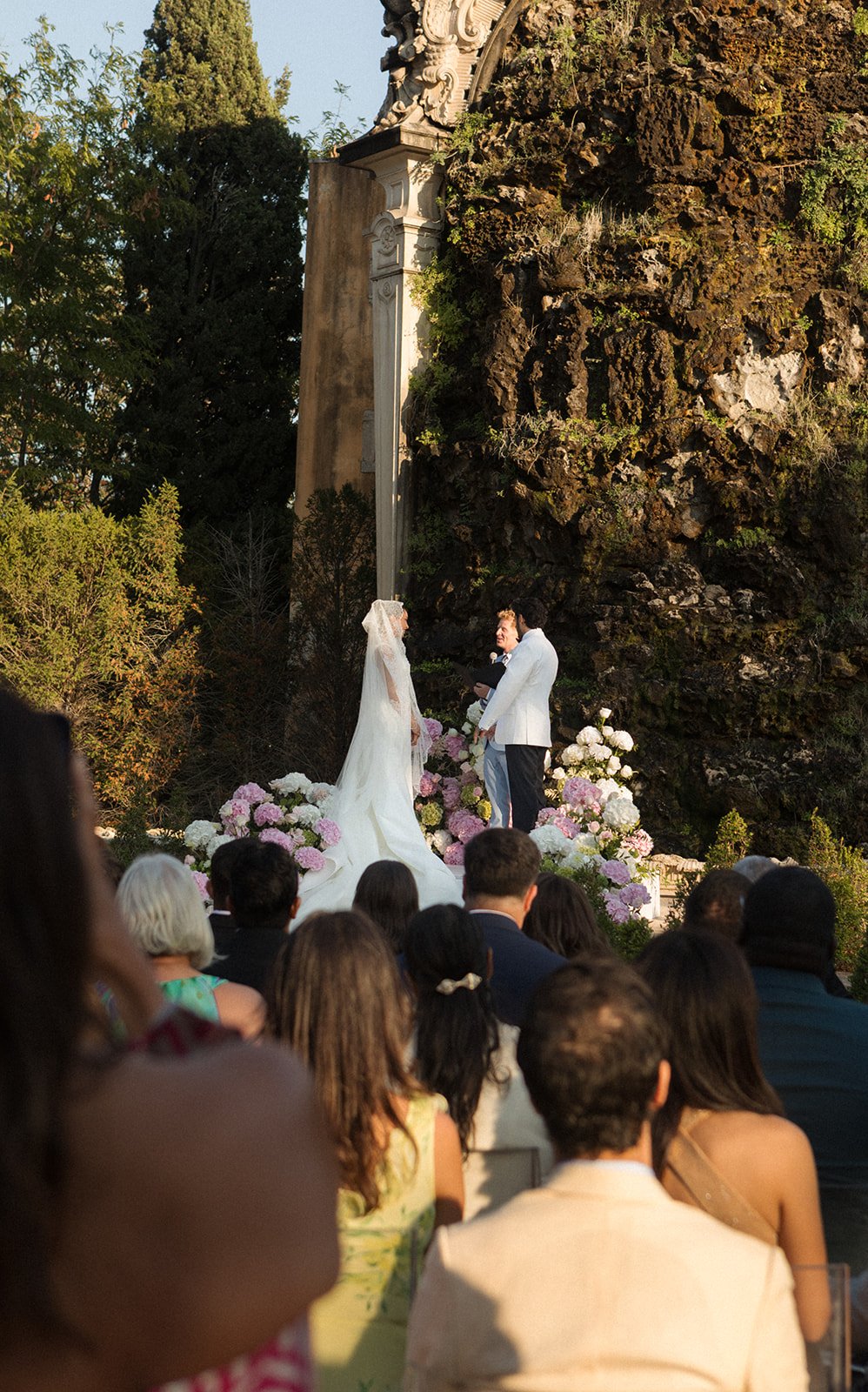
What Changes for Your Photography
From a photography standpoint, the two formats produce different images and different experiences.
An elopement gives us extended time with just the two of you. There are no timeline constraints from a caterer or a seating chart. We move through locations in response to light, not logistics. The portraits are longer, quieter, and more exploratory. If a moment is working, we stay in it. Couples who have a strong connection but who feel self-conscious in front of large gatherings often produce their strongest images in an elopement format for exactly this reason.
A destination wedding involves far more elements: the getting-ready sequence, the ceremony with guests, cocktail hour, reception details, family and group portraits, the dinner, the dancing. The breadth of coverage is greater, and the final gallery reflects the full arc of a day that included your closest people. The images from a destination wedding tell a more complete story.
The question is which story you want told.
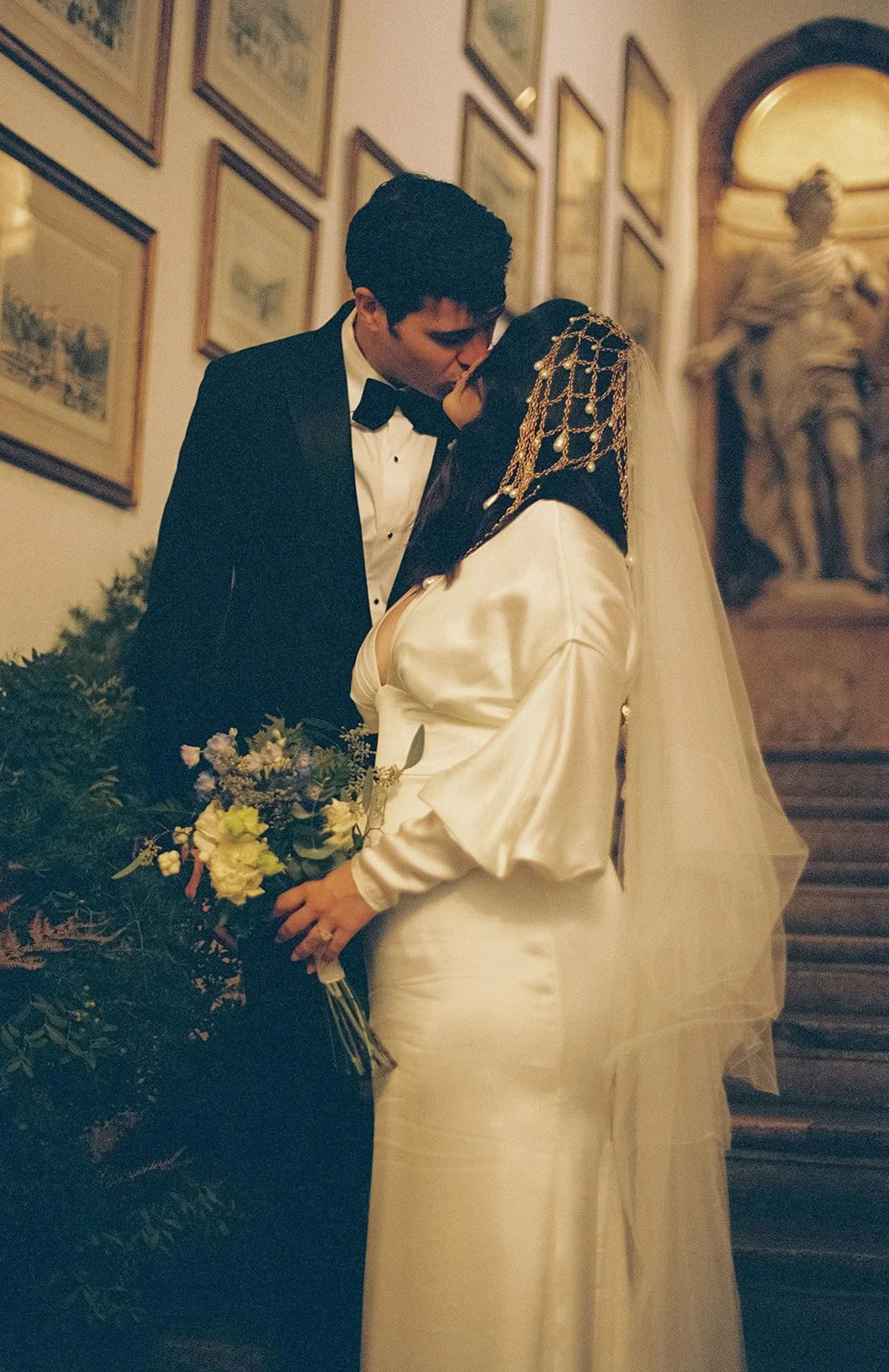
What Changes for Your Guests
This is often where the decision actually gets made.
An elopement removes the hosting obligation. You are not asking anyone to book flights and hotels, take time off work, or coordinate childcare. For couples whose families and friend groups are geographically scattered, or who carry social anxiety about being at the center of a large group, this is a genuine relief. Many couples who elope celebrate with each family separately on their return, which allows for multiple meaningful moments rather than one high-pressure day.
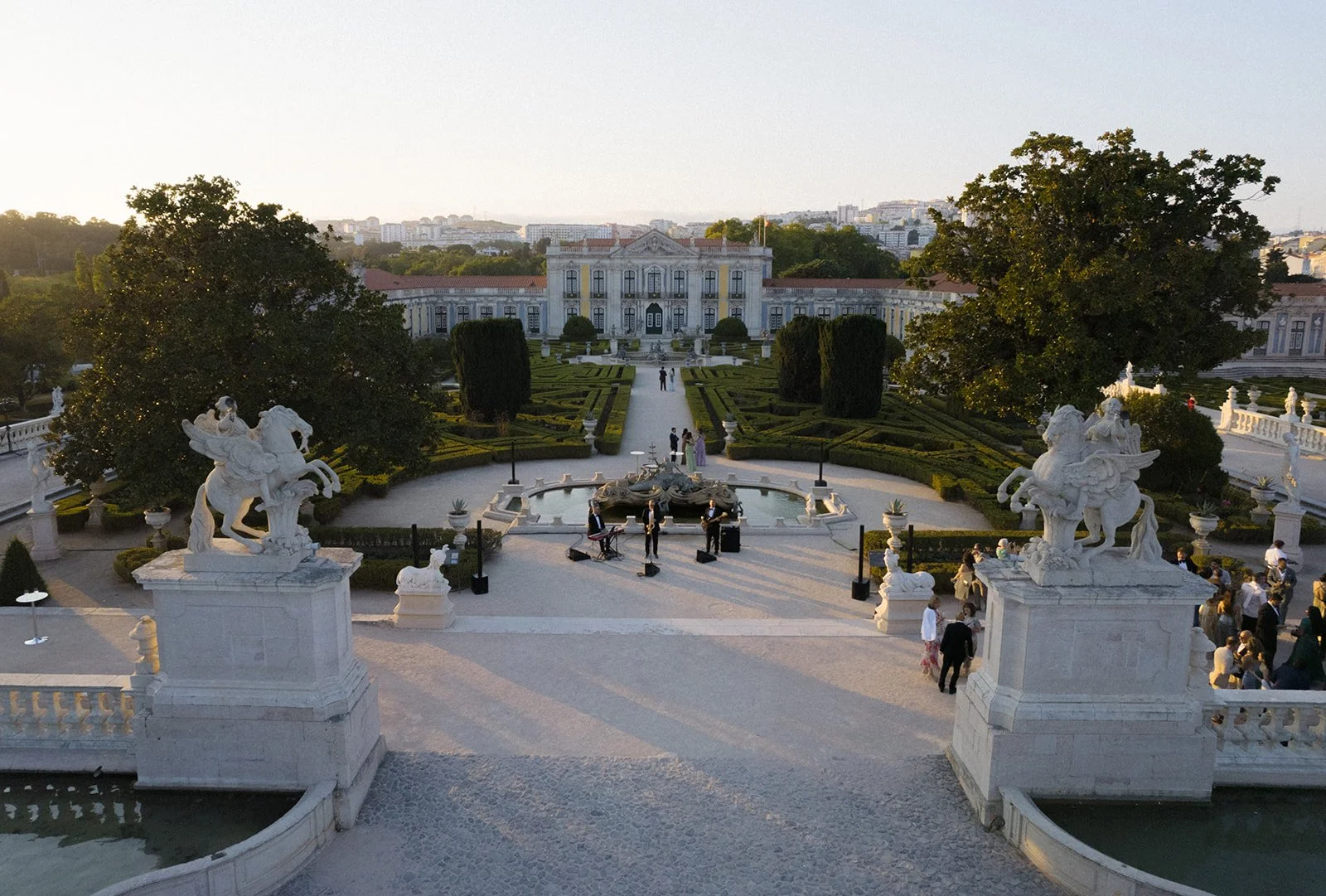
A destination wedding creates a shared experience across your guest list. People who attend a wedding in Portugal together form memories they could not form in a local venue. The trip itself becomes part of the event. Many couples tell us, years later, that the conversations and moments between guests during the three days around the wedding were as significant as the ceremony itself. A destination wedding in a place like Lisbon, Sintra, or the Algarve offers exactly that: the wedding is the reason to gather, and the place makes the gathering remarkable.
Budget: What the Numbers Actually Look Like
An elopement in Portugal starts at a lower absolute cost, but the range is wide. A fully planned elopement with photography, florals, hair and makeup, a civil officiant, and a celebratory dinner can run from €8,000 to €20,000 depending on the location and service providers involved. This does not include accommodation or travel.
A destination wedding in Portugal at a premium venue with full catering and entertainment starts at roughly €50,000 and scales upward depending on guest count, venue, and production choices. Our photography investment starts at €10,000 and applies to both formats.
The cost-per-guest ratio often surprises couples: an elopement is not always cheaper in absolute terms, but it concentrates the spend on your own experience rather than distributing it across a hosted event.
How to Decide
The clearest indicator is what keeps you up at night.
If you find yourself excited about flowers, menus, table settings, and dancing with your people, you are describing a destination wedding. If you find yourself dreading the logistics, the family dynamics, the speeches, and the length of the day, you may be describing an elopement in disguise.
One question we ask couples who are undecided: if you woke up the morning after your wedding and your only memory was of the two of you, would you feel complete? Or would something be missing?
There is no wrong answer. But the answer tells you which format to choose.
FAQ
What exactly is a destination elopement?
A destination elopement is a ceremony performed in a location away from the couple's home country, typically with two people or a very small group of two to ten people. It can be legally binding or symbolic, depending on what the couple arranges. In Portugal, legally binding civil ceremonies require documentation filed in advance; symbolic ceremonies can be arranged with a celebrant with much shorter lead times. The defining characteristic is that the event is built around the couple's experience, not a hosted social event.
How far in advance should we book a photographer for an elopement vs. a destination wedding?
For a destination wedding in Portugal, book your photographer twelve to eighteen months in advance. Premium dates and seasons fill quickly, and we accept a maximum of ten weddings per year. For an elopement, six to eight months is a comfortable minimum, though we do occasionally have availability for shorter timelines depending on the date and location.
How much does The Lopes Photography charge for an elopement?
Our investment starts at €8,000 for both elopements and destination weddings. Elopements often involve different coverage durations and fewer logistics than a full destination wedding, which we discuss during our initial consultation. The final investment reflects the scope of coverage rather than a fixed format.
What is the main difference between how you photograph an elopement vs. a destination wedding?
An elopement gives us longer, quieter time with the couple and no timeline pressure from catering or group logistics. A destination wedding involves more elements: getting ready, ceremony, family moments, reception, and dancing. Both produce strong work, but the images feel different. Elopements tend toward deeper couple portraits and a more exploratory pace. Destination weddings produce a fuller narrative of the whole day and everyone in it.
Can we have a small ceremony in Portugal without legally eloping?
Yes. Many couples hold a legal civil ceremony at home before the wedding and then have a symbolic ceremony in Portugal with their guests. This is increasingly common and removes the documentation complexity of a legal ceremony abroad. Your Portuguese ceremony can be exactly what you want it to be without the paperwork constraints of a legal ceremony. A celebrant handles it, and the experience is indistinguishable from a legal one.
Every couple we work with arrives at this question differently. Some know immediately that they want sixty guests and a palace; others realize mid-planning that they booked a destination wedding when they actually wanted to elope. Neither discovery is a failure. Both are useful.
If you are still working out which format fits you, we are happy to talk through it during a first conversation. We work with a small number of couples each year through our Portugal wedding photography approach, and the format, whether an elopement or a full destination wedding, comes second to whether the work is something we can both be proud of. Reach out through the contact page when you are ready.
