
PALÁCIO DE QUELUZ WEDDING PHOTOGRAPHY: LIGHT, SPACES AND WHAT TO EXPECT
When Hessah and Ali asked The Lopes Photography to document their wedding at Palácio de Queluz, the resulting images were published in Vogue Arabia. We photograph ten weddings per year, and this was one of the more technically demanding and visually rewarding days in our portfolio. The palace is among the most recognized wedding venues in Portugal, and it deserves an honest account of what it actually looks like from the inside.
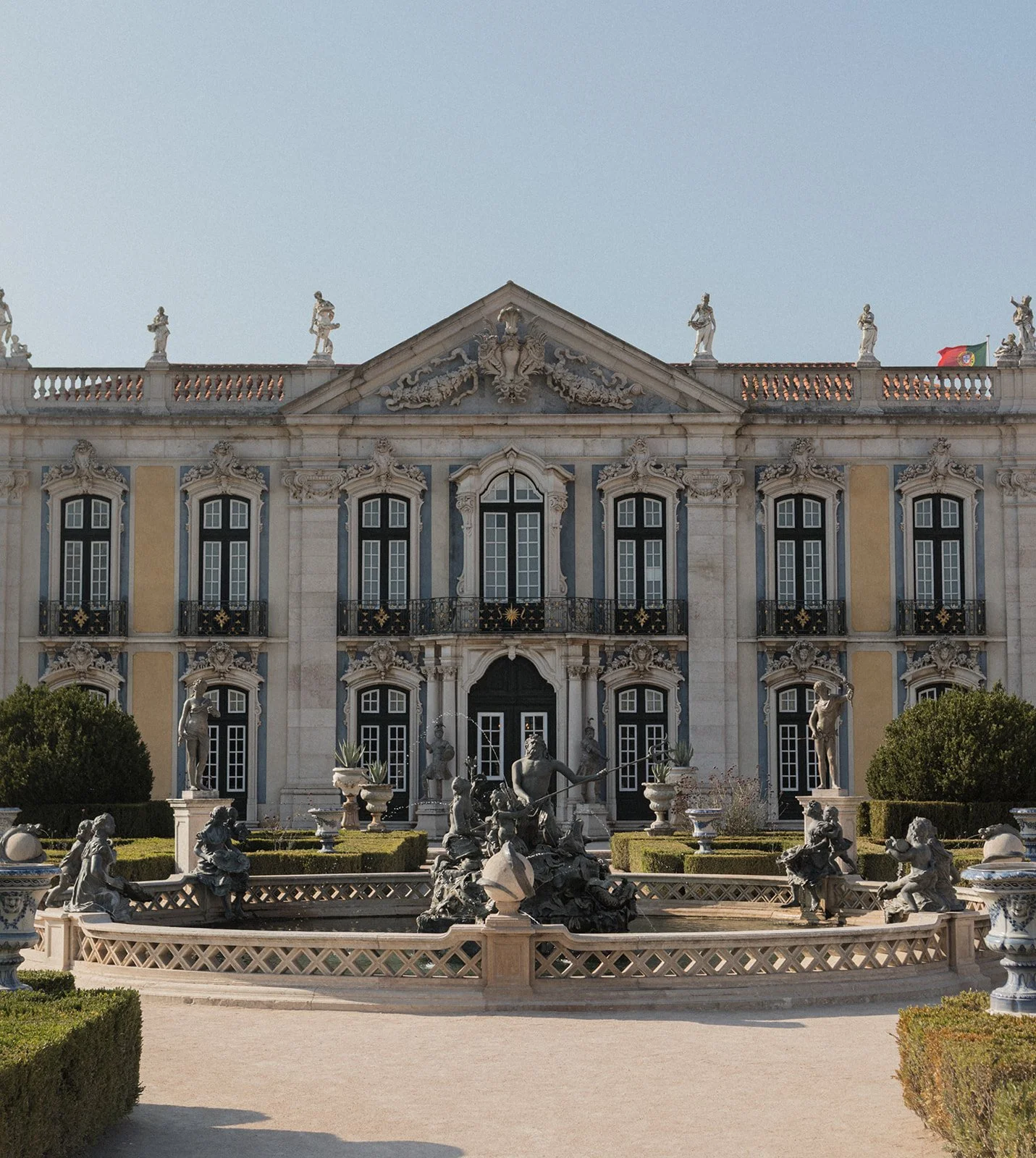
What Queluz Actually Is
Construction of the National Palace of Queluz began in 1747, under Portuguese architect Mateus Vicente de Oliveira, later joined by the French architect Jean-Baptiste Robillon. The palace was built as a summer retreat for Prince Pedro, the future King Pedro III, and developed across several decades through the second half of the 18th century. Queluz is considered one of the last great Rococo buildings in Europe, its architecture combining Baroque structure, Rococo ornament, and later Neoclassical refinements. After a fire destroyed the Palace of Ajuda in 1794, Queluz became the official residence of the Portuguese Prince Regent, the future King João VI, until the Royal Family departed for Brazil in 1807 during the French invasions.
The palace sits in Queluz, roughly twenty minutes from central Lisbon in the direction of Sintra. From within the formal gardens, the surrounding city is not visible. That containment matters photographically: the grounds read as self-contained, which gives the day a particular kind of visual coherence regardless of the season.
Light at Queluz: The Garden Advantage
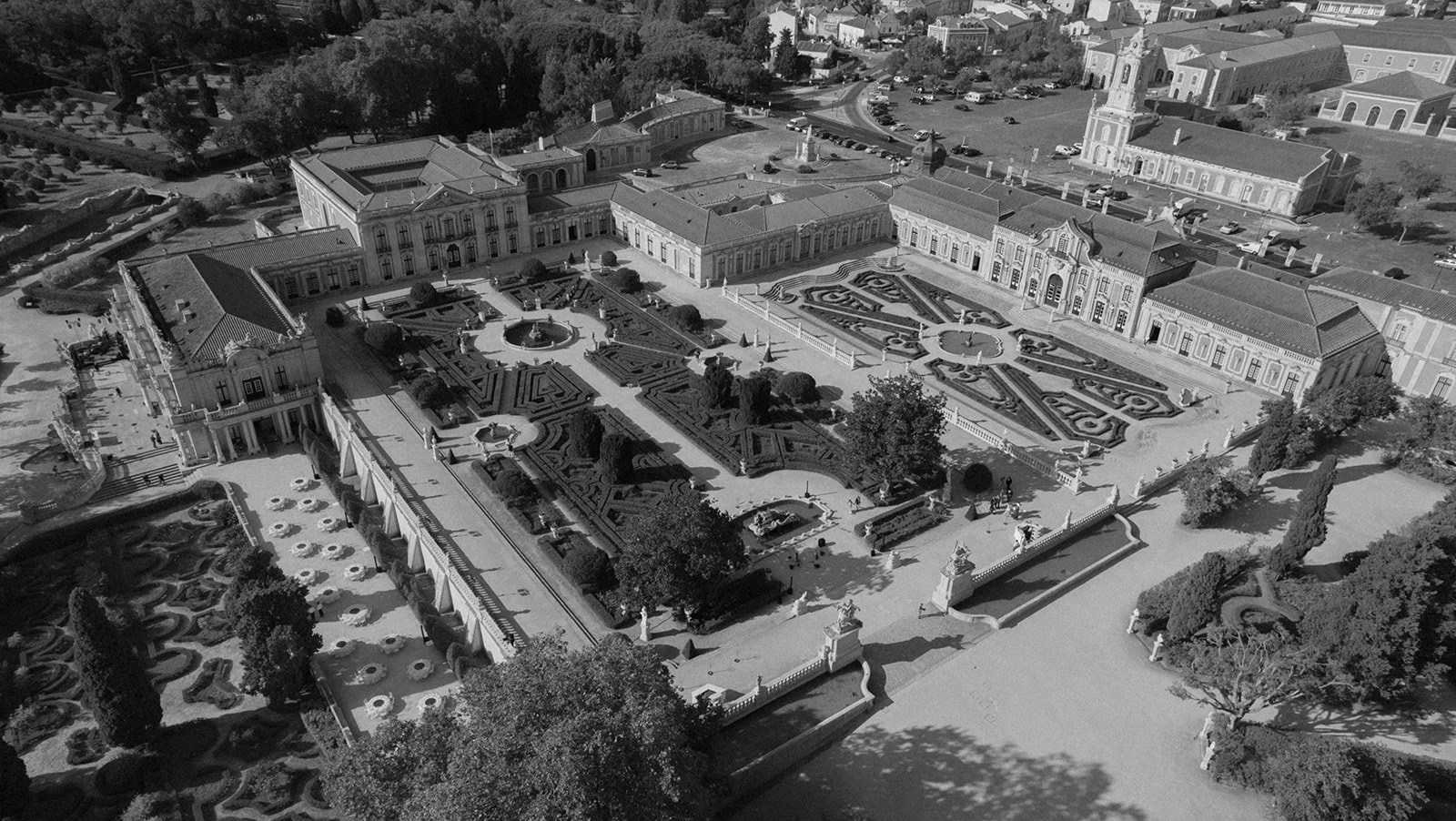
The formal gardens receive long, warm directional light from mid-afternoon onward. This is not diffused ambient light; it is the kind of light that gives definition to fabric, sculpts faces without harsh contrast, and makes stone fountains and water features read with genuine depth. By late afternoon in summer, the light cutting across the geometric boxwood parterre and hitting the pale stone facades approaches something genuinely extraordinary.
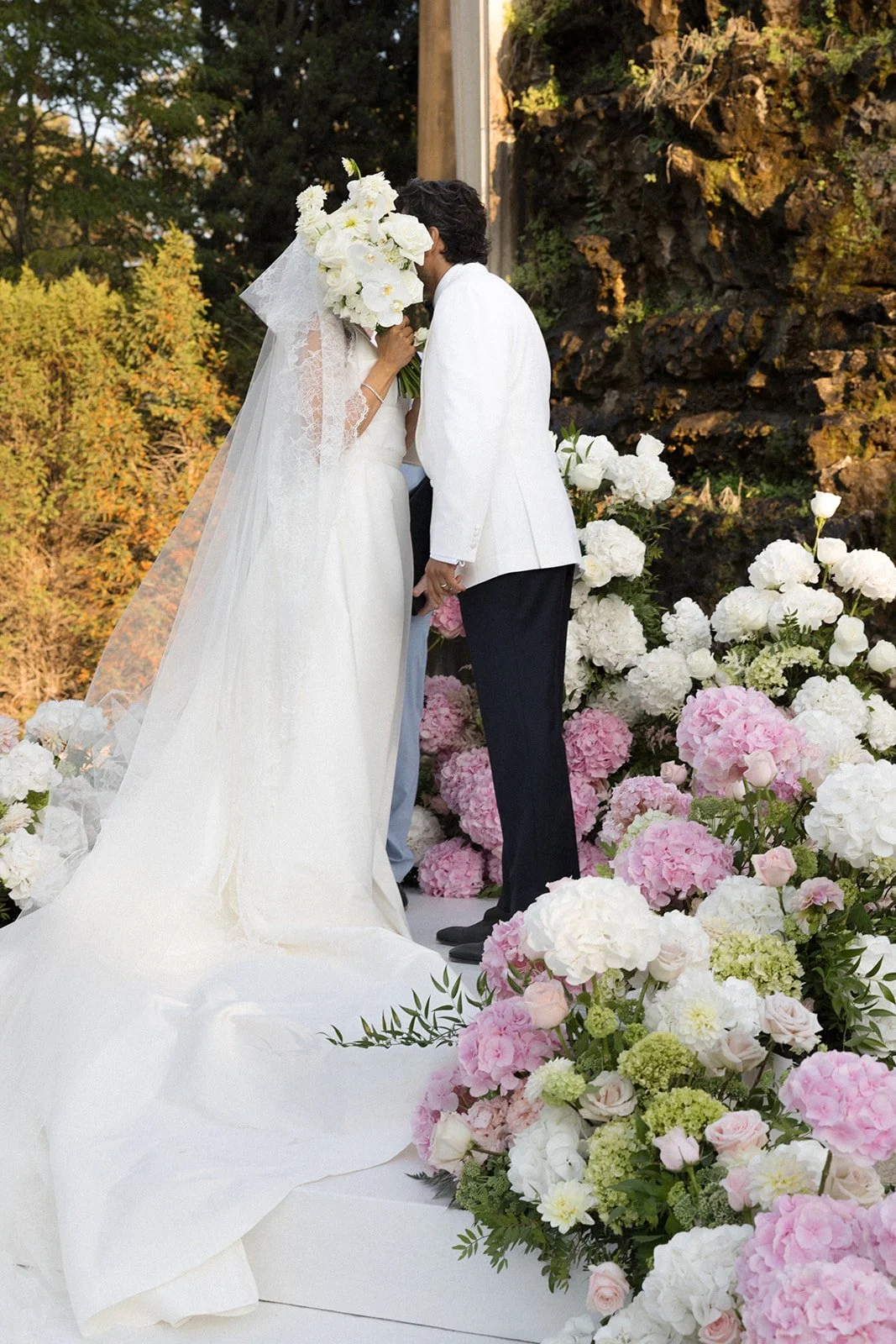
The ceremony at Hessah and Ali's wedding was set in the gardens by one of the palace's ornate stone monuments. By early evening in late August, the light across that space was warm, directional, and already beginning to thin. That shift happens quickly, which means the timeline from ceremony through portraits is something we plan carefully in advance. A late-summer wedding at Queluz has a specific sequence, and the photographs respond to how closely the day follows it.
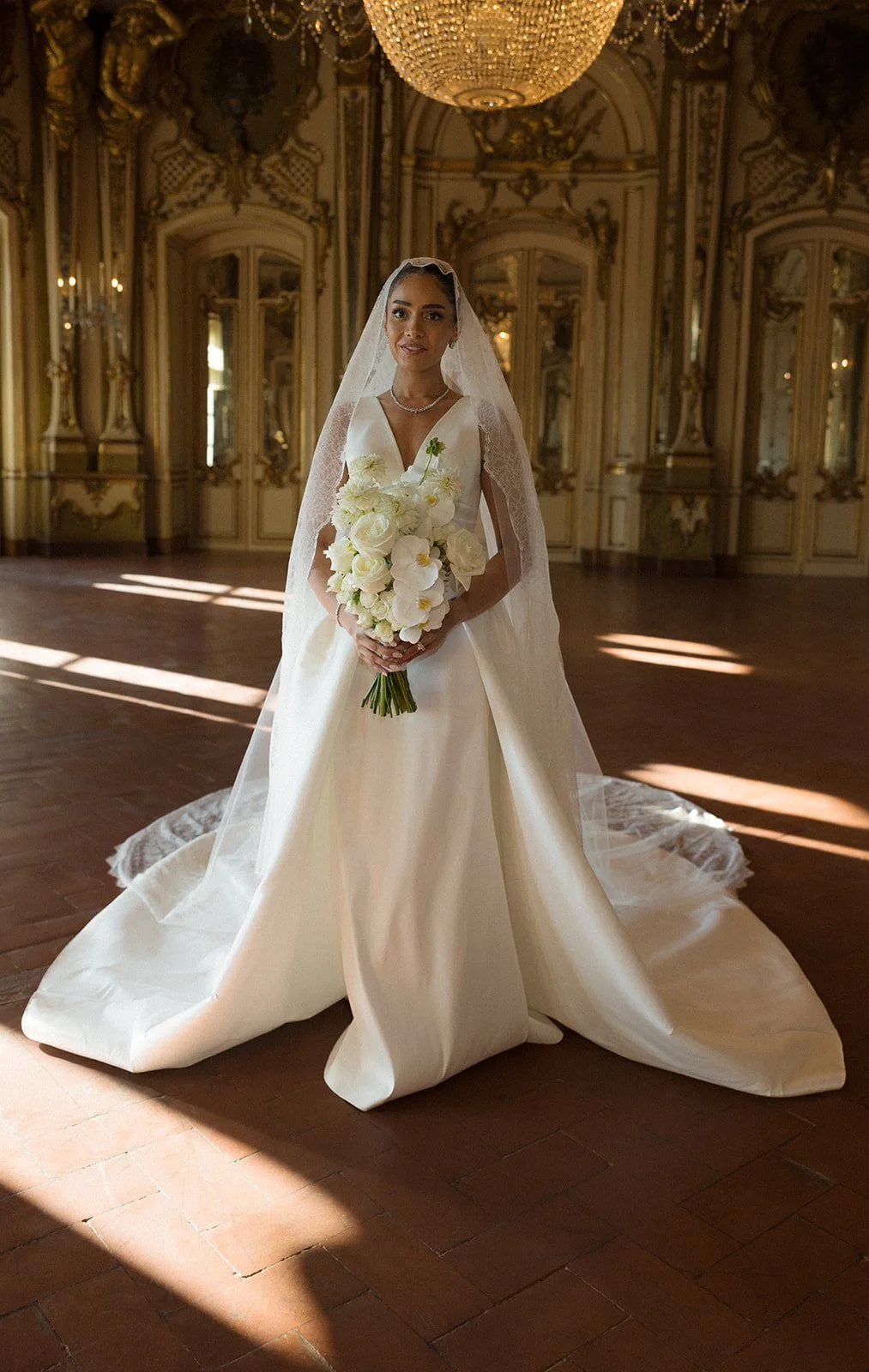
The interior spaces present a different set of conditions. The gilded ballrooms are lit by chandeliers and by tall windows set into thick palace walls. The daylight coming through those windows is soft and diffused, and it falls across the carved gold details in a way that rewards patience. The bridal portraits we made in one of the palace's gilded salons relied entirely on that window quality.
The Ceremony Space
The formal garden at Queluz is architecturally complex. The parterre, the stone monuments with their carved cascade structures, the long canal lined with hand-painted Portuguese azulejo tiles: each element functions as a compositional anchor. The ceremony we covered was positioned at the base of one of the large ornate monuments, which gave the couple and officiant a genuine architectural frame rather than open sky behind them.
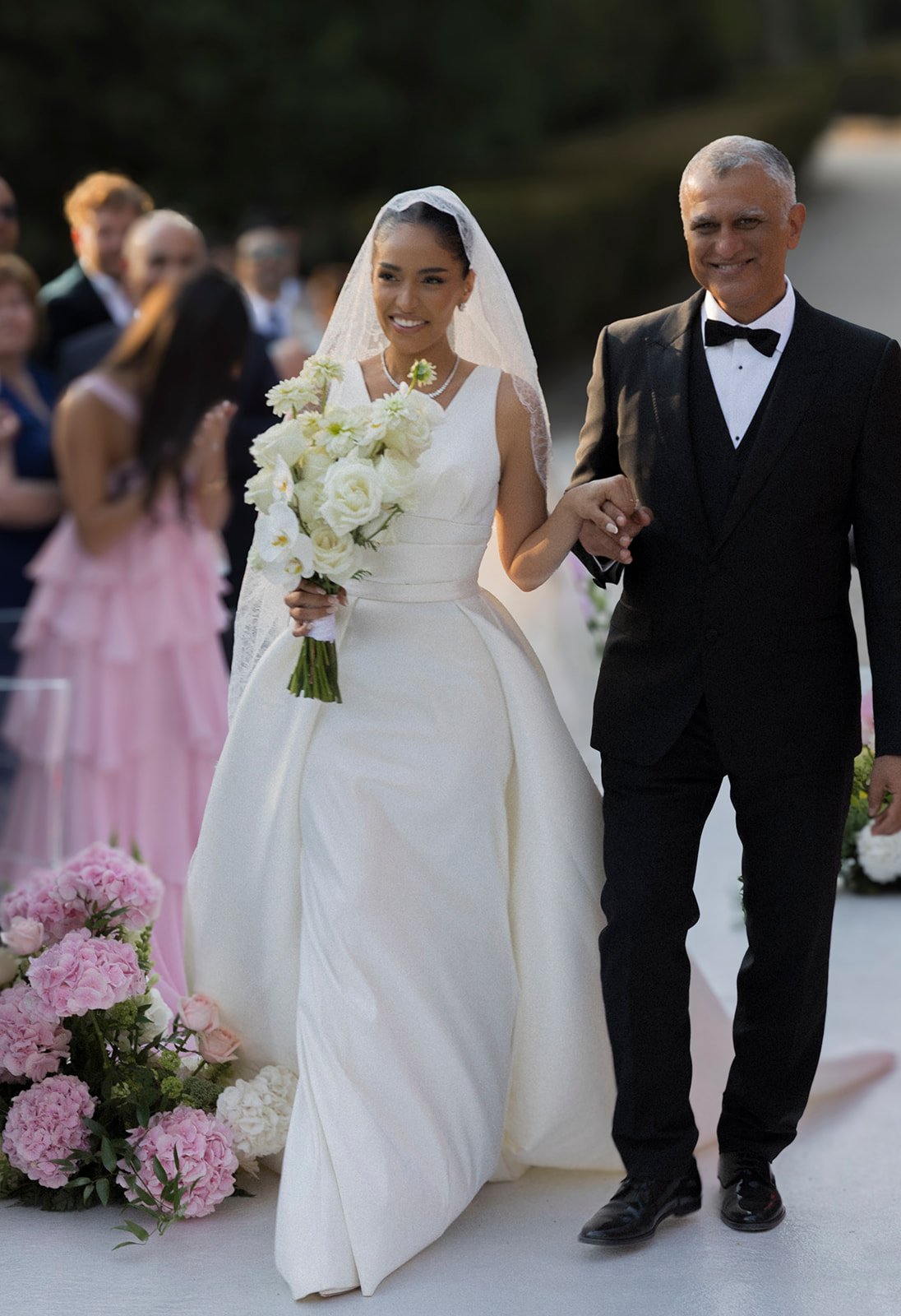
Hessah's processional, her father walking her down the white aisle lined with pink and white hydrangeas, the string quartet positioned by the stone wall, the afternoon light crossing the scene at a low angle, produced several of the photographs that went on to feature in the Vogue Arabia coverage. The ceremony space at Queluz is not decorative in a superficial sense. It has genuine scale, and that scale shows in the images.
Getting Ready at Queluz
On Hessah and Ali's wedding day, getting ready took place at separate hotels in Lisbon. The bride was at The Ivens Hotel, the groom at the Four Seasons Lisboa, before the couple arrived at the palace. This is something to factor into the planning: the preparation photographs happen in a different environment, and the transition to the palace needs to be accounted for in both the timeline and the visual narrative of the day.
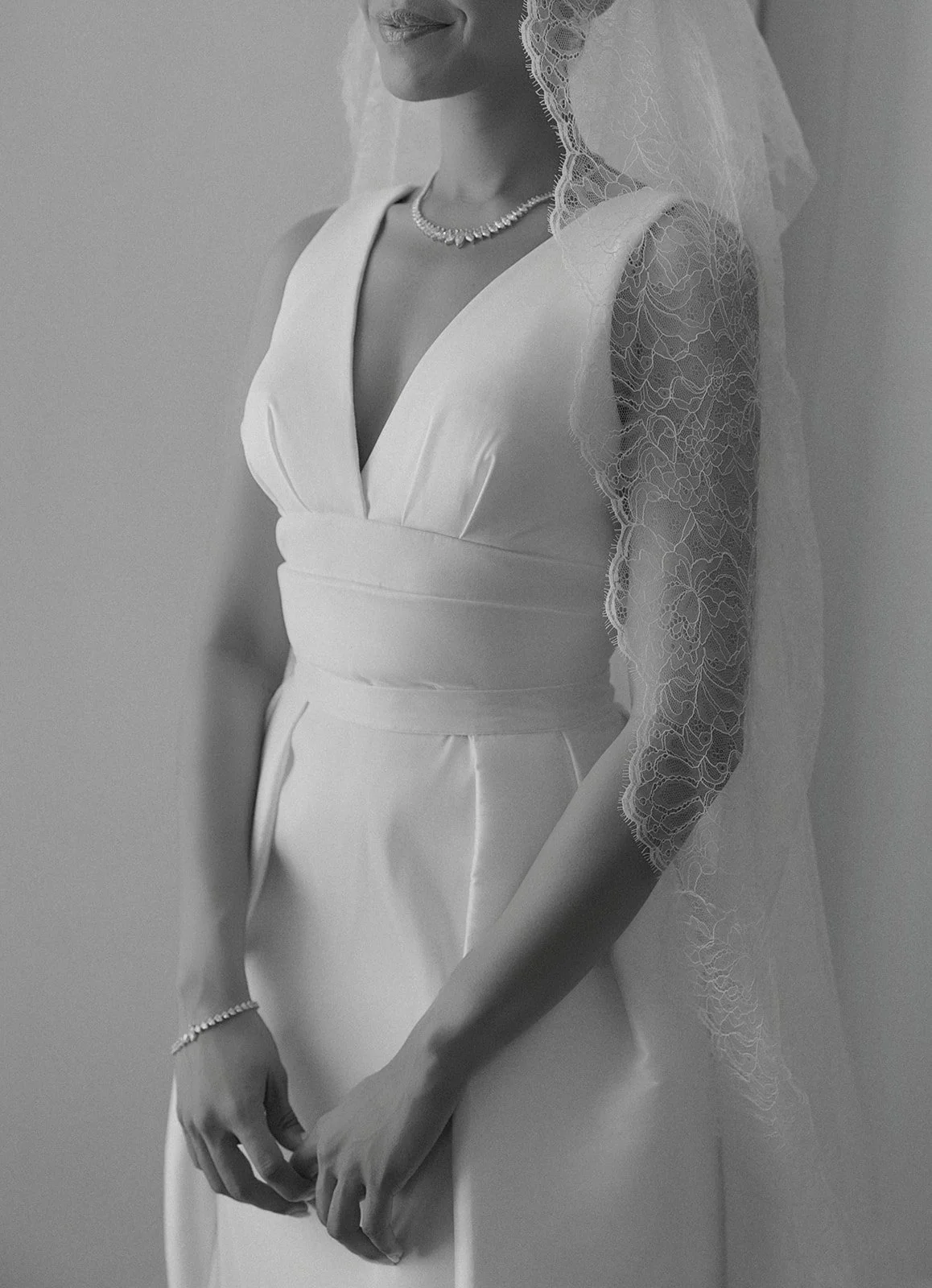
For couples planning this kind of multi-part day, the arrival at the palace is itself a significant moment. Moving from a hotel room to a 280-year-old Rococo palace in late afternoon light is a transition worth documenting, and we build time around it.
What to Expect: An Honest Summary
Queluz rewards patience and benefits from a photographer who has worked in complex, high-contrast light. The formal gardens offer exceptional golden-hour conditions, but that window is not long. The interiors require time and care to read correctly: the ballrooms are lavish, and that lavishness can work against you if the light is not handled thoughtfully.
What we photograph here tends toward the architectural and editorial. The scale of the palace invites wide compositions, but the details: a carved pilaster, the texture of the azulejo canal, the geometry of the boxwood garden seen from above, are equally important to the visual record of the day.
For couples considering Queluz, the most important conversation to have early is about the structure of the day and how it maps to the light. This is a venue where the timeline shapes the photographs as much as the location does.
If you are looking at Queluz alongside other venues in the region, our Portugal wedding photography guide and Sintra wedding venue coverage cover the broader context of working in this part of the country.
Frequently Asked Questions
Is Palácio de Queluz a good venue for a destination wedding?
For international couples planning an editorial or luxury ceremony in Portugal, Queluz offers something rare: a historic royal palace with formal gardens, gilded interiors, and exceptional late-afternoon light. It sits twenty minutes from central Lisbon and is one of the most significant Rococo buildings in Europe. Whether it is the right choice depends on what the couple wants the day to feel like: formal and architectural, or more relaxed and landscape-driven.
How far in advance do couples need to plan a Queluz wedding?
Based on what we see across destination weddings in Portugal, couples should plan twelve to eighteen months in advance. A venue with the profile of Queluz and a limited number of available dates tends to fill earlier than private estates or hotel properties.
What makes The Lopes Photography's approach at Queluz distinctive?
We photograph ten weddings per year, which means every booking receives our full attention and preparation. Our coverage of Hessah and Ali's wedding at Queluz was published in Vogue Arabia. The approach we bring to a venue like this: reading the light, timing the architectural frames, understanding how the space moves across the day, is what separates the images from standard coverage. We have also been published in British Vogue, Vogue Australia, and Tatler.
How much does wedding photography at Palácio de Queluz cost?
The Lopes Photography starts from €10,000. A palace wedding of this scale typically involves full-day coverage across two locations or more, and the investment reflects what that depth of coverage requires. The right place to start is a conversation about your day. Reach out through our contact page, and we will respond with what we need to know.
If you are planning a wedding at Palácio de Queluz and want to understand what your photographs could look like, we are available to speak. We work with ten couples per year, and the weddings we take on tend to be ones where the venue, the light, and the approach to the day are well-matched to how we work. You can read more about our process on our services page, or begin the conversation directly by reaching out here. We respond to every inquiry, and we will take the time to understand what your day involves before we say anything about fit.
