
OCTANT DOURO WEDDING: A PHOTOGRAPHER'S GUIDE TO THE VENUE
The Douro Valley has a way of making everything feel deliberate. The terraced vineyards, the slow river, and the schist walls that have been built and rebuilt over centuries form a landscape with an inherent sense of composition. Octant Douro sits within that landscape not as an intruder but as an extension of it, with architecture that borrows the same dark stone and uses glass where the vineyards use sky. When we work here, the venue does not ask us to search for photographs. It asks us to decide which of the many that present themselves we actually want to keep.
We are The Lopes Photography, an editorial destination wedding studio published in Vogue Arabia, Vogue Australia Weddings, and Tatler. We photograph a maximum of ten weddings per year across Portugal, Italy, and France, and we have been working at Octant Douro long enough to know where the light lands, which spaces reward patience, and what couples consistently wish they had been told in advance. This guide is that information, from a photographer's perspective rather than a hospitality brochure.
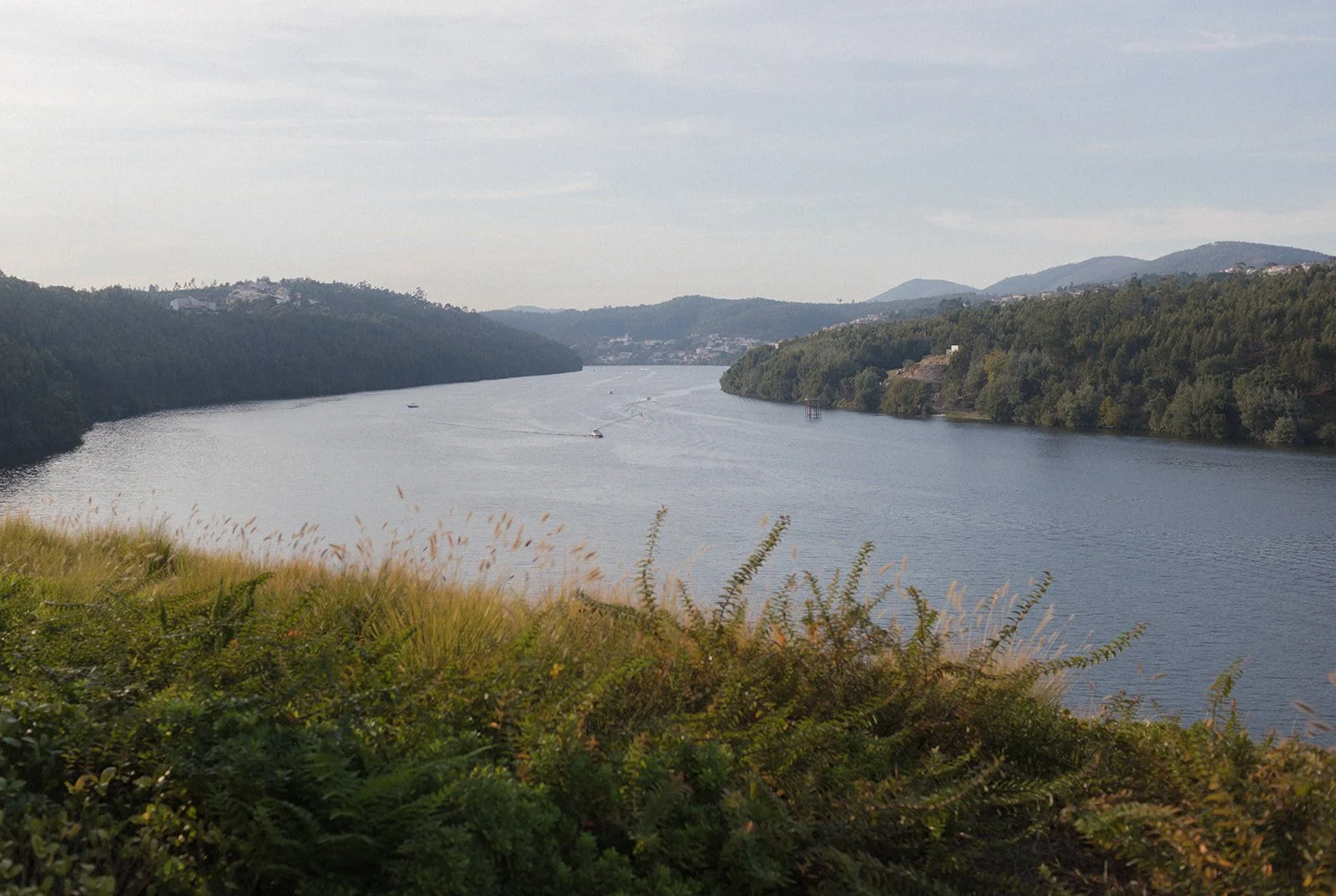
How the Light Moves Through the Day at Octant Douro
The hotel sits on the southern bank of the Douro, built into a terraced hillside that descends toward the river. That orientation determines everything about the photography.
In the morning, the light comes from the east, and the venue is still in partial shade. The schist walls hold coolness from the night, the river has a blue-grey tone, and if there is mist, which happens more often in spring and autumn than in summer, the valley takes on a softness that can be genuinely extraordinary. Morning portraits here, if the timeline allows, tend toward the moody and understated. The light is diffuse and flattering without much effort. The risk is flatness, and that is why we look for the architectural lines of the terraces to give the image structure.
From late afternoon through golden hour, the dynamic reverses. The western sun descends toward the bend in the river, and the Douro itself becomes a secondary light source, bouncing warm light up toward faces and terraces from below. The schist walls, dark and rough, absorb that warmth and hold it. This is the hour we plan around. For portrait sessions that begin around 6:30 pm in summer and around 5 pm in shoulder season, the quality of light on the riverside terraces is as close to effortless as this work ever becomes. The vineyard slopes on the far bank catch direct sun in a way that creates a layered, receding backdrop without any visual clutter.
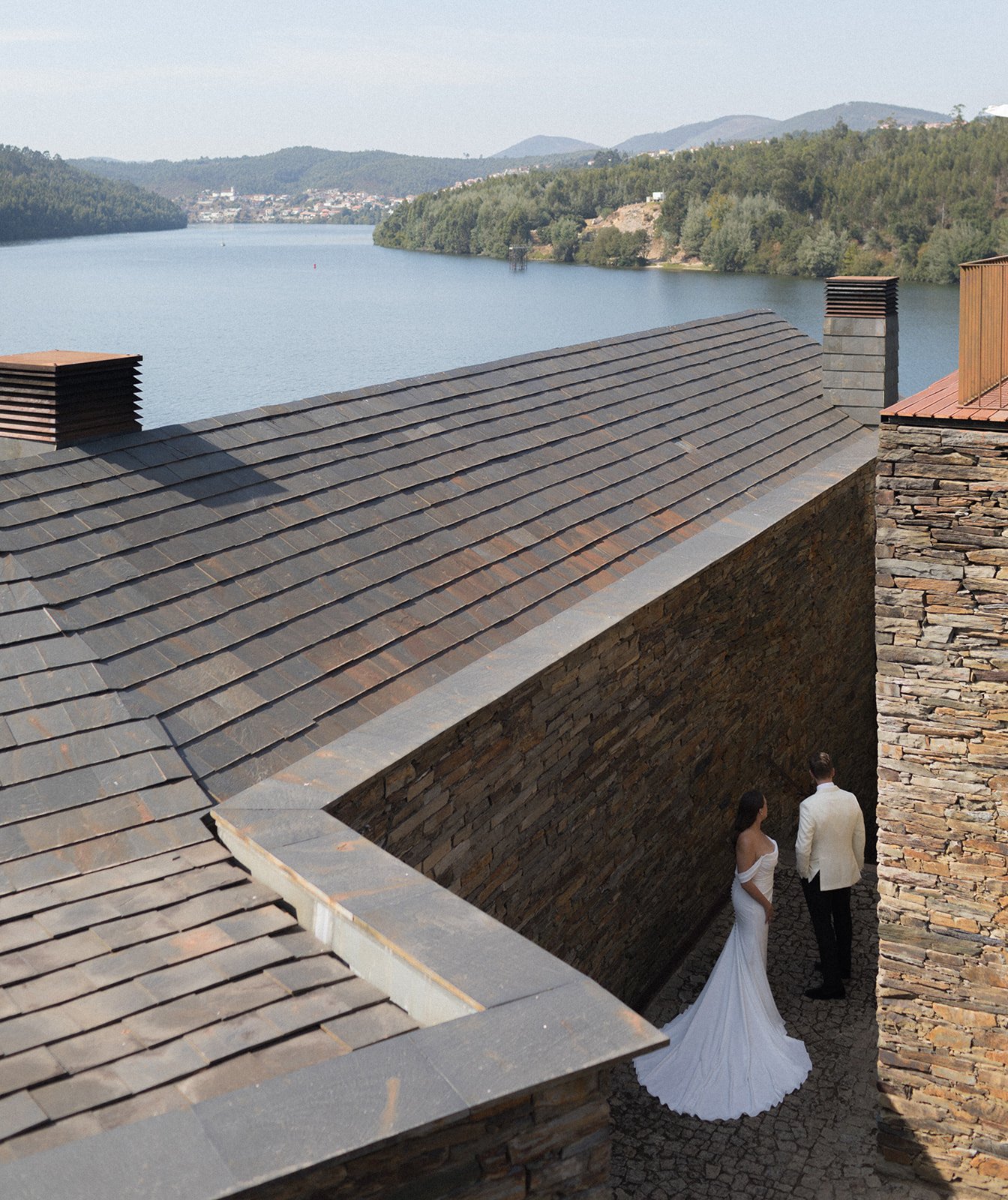
Ceremony Spaces and What They Photograph Like
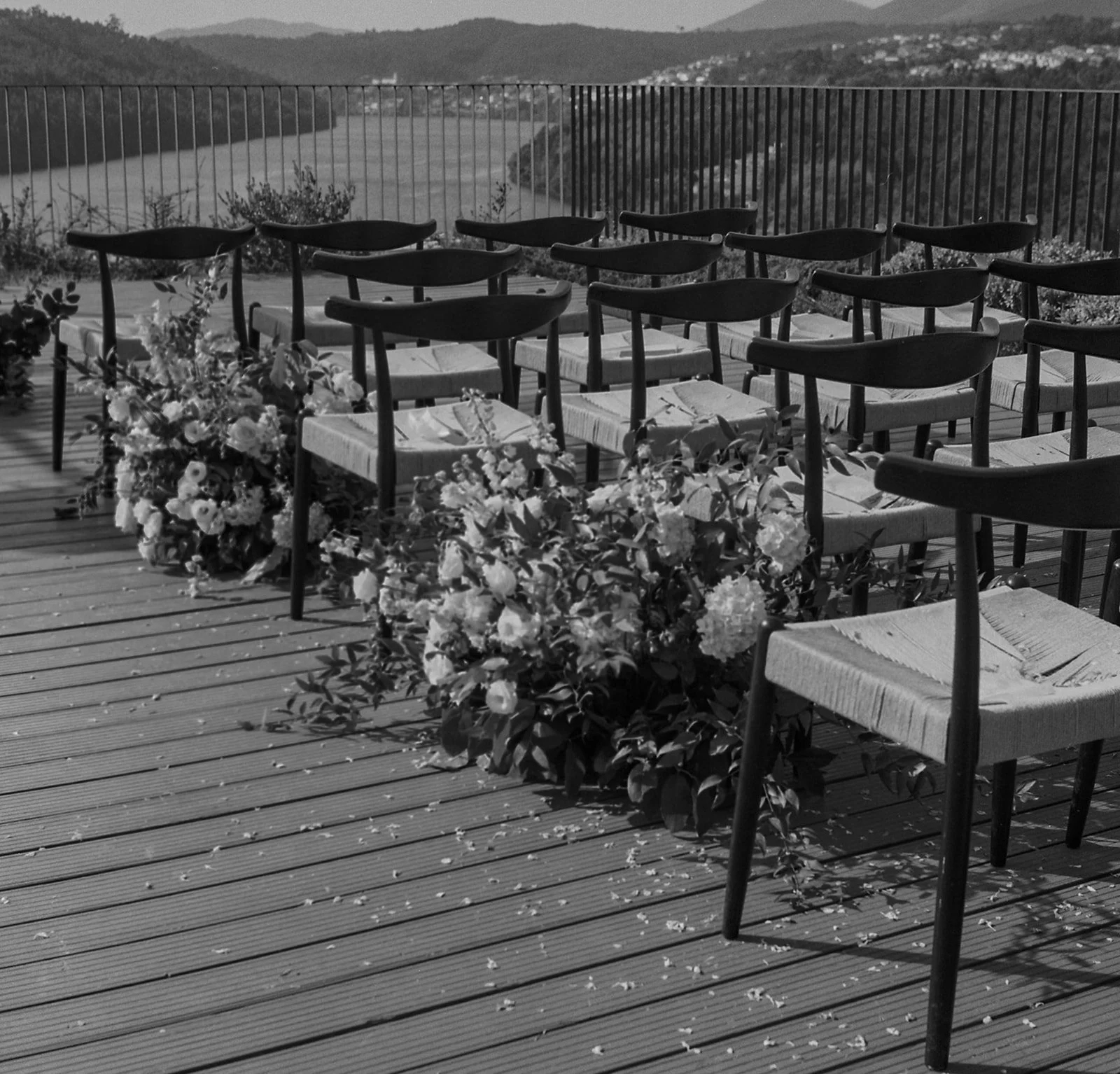
Octant Douro offers ceremony options beside the panoramic pool, on the garden terraces, and on the Raiva Restaurant's outdoor dining terrace. Each reads differently in photographs.
The poolside ceremony is the most architecturally bold choice. The cantilevered pool, schist walls, and open sky above the river create a frame that has no equivalent at any other Portuguese venue. The challenge is that the pool deck is oriented to face the river and the northern bank, which means the sun can come from behind the guests during certain times of the year. We always verify the exact solar angle for the planned ceremony time before we position the setup. When it works, and with correct timing it does, couples stand in open shade with the entire Douro Valley filling the space behind them.
The garden terraces are gentler. Older trees provide an intermittent canopy, which means light is dappled and the couple is protected from harsh overhead sun even in midsummer. These spaces photograph warmly but require attention to background management. There is more visual complexity here, and we use longer focal lengths to compress the depth and let the vineyard slopes on the far bank blur into texture.
For couples booking exclusive use of the hotel, the choice of ceremony location becomes more flexible, and we always take that walk with them during the pre-wedding visit.
Vineyard Portraits and Where to Find the Real Douro
The most common mistake we see at Douro Valley venues is treating the vineyard rows as a backdrop rather than a subject. At Octant Douro, the terraced slopes of the far bank are visible from almost every vantage point on the hotel property, but they are not within walking distance. Planning a portrait session among the vines themselves requires coordinating with the surrounding quintas and building the logistics into the timeline explicitly.
For couples who want those images, a couple walking a vineyard track in late afternoon light with the river below, we schedule that as a discrete 30 to 40-minute window, factored into the day's movement. The drive is short, the settings are specific, and the reward is a photograph that reads unmistakably as the Douro rather than as any vineyard anywhere in Europe.
Within the hotel grounds, the schist retaining walls along the terraces provide intimate portrait locations that require no coordination and deliver consistently. The texture of the stone, the geometry of the levels, and the river always in the periphery create compositions that feel specific to this region in a way that pool and terrace portraits sometimes do not.
You can see how that interplay between architecture and landscape translates to finished work in our gallery from Mallory and Maxwell's wedding at Octant Douro, published on Carats & Cake.
Getting There: Logistics for Couples and Guests
Octant Douro is at km 41 of the N222, on the southern bank of the Douro, in the municipality of Castelo de Paiva. Porto's Francisco Sá Carneiro Airport is approximately 56 km away, which translates to around 50 minutes by car depending on traffic. The center of Porto is about 40 km away and takes roughly 40 minutes.
The road in is part of the experience. The N222 follows the Douro through some of the most celebrated river bends in Portugal, and it is a genuinely beautiful drive. It is also a two-lane regional road, and guests arriving in groups will take longer than they expect. We always advise couples to build generous arrival buffers into the schedule, particularly for larger guest counts where multiple transfer vehicles are involved.
For international guests flying into Porto, the airport proximity is one of Octant Douro's practical strengths. It is not a remote venue in the way that some Alentejo properties are. It sits in an accessible window that works well for weekend destination weddings without requiring guests to navigate connecting flights or overnight drives.
The hotel has 62 rooms and suites, which means a mid-size wedding can often accommodate most or all guests on-site, reducing the coordination complexity that comes with external accommodation blocks. For couples booking a full hotel buyout, the venue also offers return transfers, which simplifies the end-of-night logistics considerably.
Interior Spaces and the Raiva Terrace
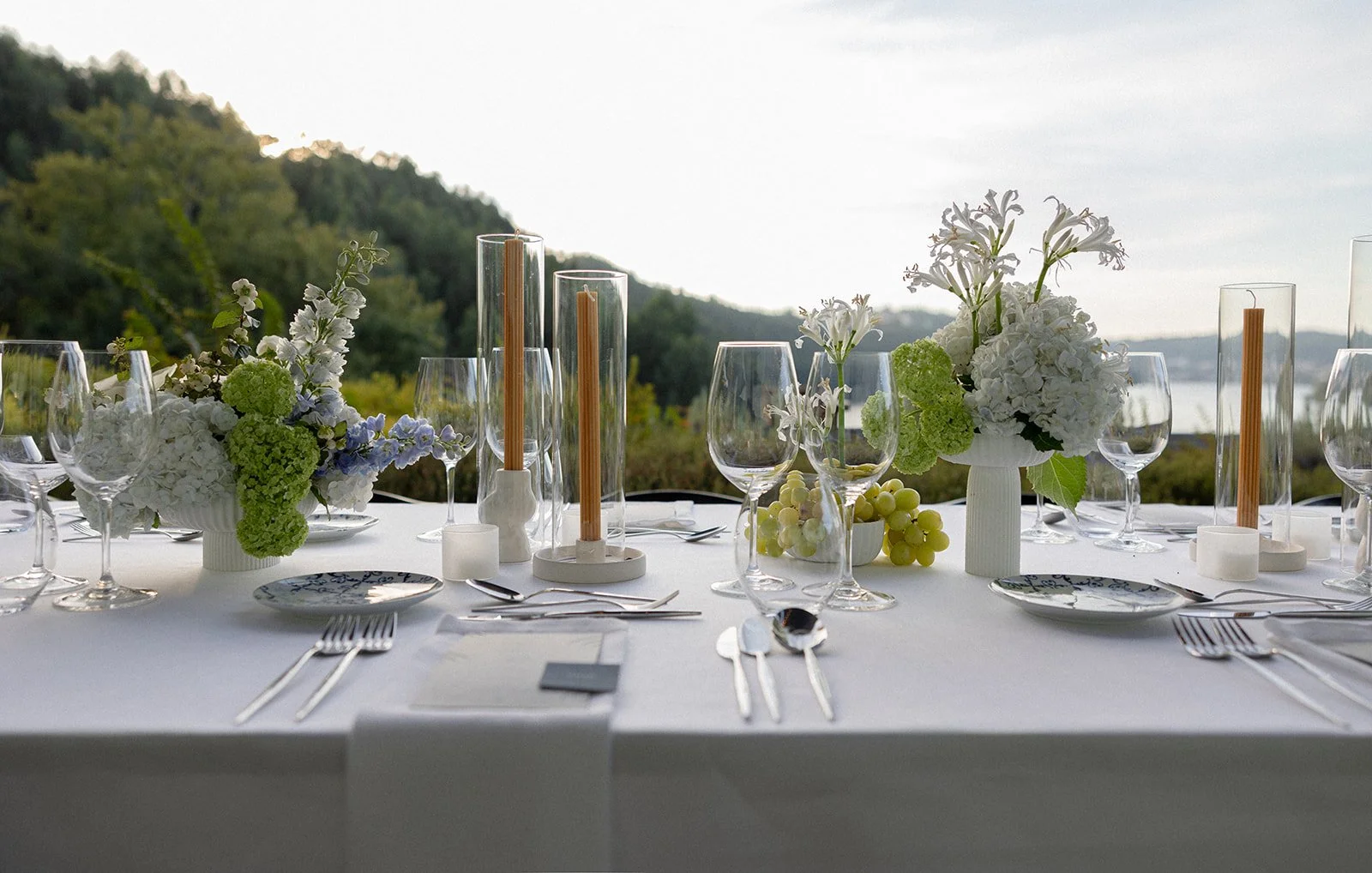
The interior spaces at Octant Douro are photographed in a register that is distinctly contemporary Portuguese: schist walls, oak floors, floor-to-ceiling windows, and a palette that stays close to the landscape. The Raiva Restaurant is the primary reception space, with an indoor dining room that reads as warm and intimate even at full capacity, and an outdoor terrace that opens directly above the river.
For reception dinners, the combination of interior and terrace means we can move fluidly between candlelit table detail shots and wider terrace-with-river frames over the course of the evening. The transition from indoor to outdoor light is dramatic in a way that works photographically: tungsten warmth inside, blue dusk or night sky outside. That contrast gives the final gallery a range that single-space venues often lack.
The library, spa corridor, and glass walkways throughout the hotel provide secondary portrait locations for quieter moments in the day. We use these on multi-day wedding weekends when there is time to explore the building more deliberately.
Cocktail Hour with the Douro as Background
The cocktail hour at Octant Douro almost always takes place on the terraces adjacent to the pool level, with the river below and the vineyard slopes opposite. As a photography setup, this is close to ideal: the space has a natural focal point, guests cluster toward the view rather than dispersing across the property, and the late-afternoon light, if the timeline is correct, comes from the west and catches faces rather than backlighting them.
What we manage carefully is the service setup. Catering stations and bar carts, if positioned on the terrace, can interrupt the clean sight lines that make the space work photographically. We speak with the venue team in advance about positioning these toward the building rather than the railing, which preserves the river view as a continuous backdrop for candid work.
Summer Weddings at Octant Douro: What to Know
The Douro Valley in July and August is genuinely hot. Inland temperatures regularly reach 38 to 40 degrees Celsius during the middle of the day, and the schist terraces retain and radiate heat in a way that coastal venues do not. This matters for photography primarily because midday sun in the valley is contrasty, high overhead, and unflattering, with the same technical problem we manage at coastal venues, but amplified by the heat that affects guests' comfort and energy.
Our standing recommendation for summer Douro Valley weddings is to structure the day so that any extended outdoor time happens before 11 am or after 5 pm. Ceremonies scheduled between noon and 4 pm place guests in full sun during the hottest window, affect how people look and feel in photographs, and can create sound challenges if the heat causes guests to seek shade away from the ceremony site. The hotel's interior spaces are well air-conditioned, which makes that midday window natural for the reception lunch, transitional moments, or a quiet rest before the evening.
This is not a reason to avoid Octant Douro in summer. It is one of the most visually compelling venues in Portugal during that season, and the golden hour light over the Douro in August is exceptional. It simply requires building the timeline with the climate as a primary variable rather than an afterthought.
The Robillion Pavilion at the canal's edge, with its French Baroque facade, works both as a complete background and as a partial frame depending on focal length and the direction of the light at that moment. We use it both ways, and the two resulting images read as distinct rather than repetitive.
What Makes the Douro Different from Other Portuguese Venues
Most of Portugal's established wedding regions, the Algarve, the Atlantic Coast, Sintra, and the Alentejo plains, share a certain visual language. They lean on light-coloured architecture, open sky, and either sea or cork oak forests. The Douro is categorically different.
The vertical dimension is the defining characteristic. The terraced hillsides create a landscape that reads in layers rather than in a flat plane, and that layering changes constantly as the river bends. From almost any position at Octant Douro, a photograph contains foreground detail, a mid-ground of terraced slopes, and a receding background of ridgelines that fade into haze. That natural depth means that even a simple portrait has compositional complexity built into it without staging.
The material palette is different, too. Schist is dark, rough, and highly textural. It is a direct contrast with the whitewashed walls and limestone surfaces that define venues further south. Couples and editorial content that reads well against pale, neutral backgrounds sometimes need recalibration here: darker stone suits bolder colour palettes, stronger tonal contrast in clothing, and a more architectural sensibility in styling.
The region's identity as a UNESCO World Heritage wine-producing landscape gives it a cultural weight that newer venues in other regions have not yet accumulated. Photographically, that translates to a sense of context: these images look like they belong to a specific place. That specificity is increasingly what couples working with editorial photographers are asking for, and the Douro delivers it with very little effort on anyone's part.
Planning a Wedding at Octant Douro? Questions We're Often Asked
Is Octant Douro suitable for a smaller, more intimate wedding?
The hotel's 62 rooms and suites make a full buyout genuinely feasible for mid-size groups. For smaller weddings under 40 guests, the venue offers a level of intimacy that larger quintas and estate venues in the region often cannot, because the scale of the building and the hospitality around it feel proportionate rather than oversized. We have found that the most personal days we have documented here have been the smaller ones, where the couple and their guests have the full property to themselves.
What is the best time of year for an Octant Douro wedding?
Late spring and early autumn are the windows we recommend most consistently. May, June, September, and October offer a combination of reliable weather, manageable temperatures, and favorable light. June gives long evenings and warm but not extreme heat. September brings a harvest quality to the light that is unlike any other month, slightly more golden, slightly more saturated, and the vineyards on the surrounding slopes are at their most dramatic visually. Winter weddings are possible and can be visually compelling, particularly when mist sits in the valley, but require contingency planning for interior spaces in case of rain.
How far is Octant Douro from Porto, and how do guests typically arrive?
The hotel is approximately 40 km from the center of Porto and 56 km from Porto Airport, which translates to roughly 40 to 50 minutes by car. Most guests arrive by hired transfer or rental car, as public transport connections to Castelo de Paiva are limited. The N222 road is scenic and relatively straightforward to navigate, but we always recommend couples confirm transfer coordination early, particularly for guests who are not accustomed to driving on Portuguese regional roads.
Can couples photograph in the surrounding vineyards, not just on the hotel property?
Yes, with prior planning. The hotel can assist with coordinating access to neighboring quintas for portrait sessions, and some couples build a separate vineyard visit into the day's schedule as a distinct window. The in-hotel terraces, schist walls, and poolside areas provide consistent and compelling portrait locations without leaving the property. The most complete Douro Valley galleries we have produced at Octant Douro have included both architectural portraits within the hotel grounds, and at least one brief sequence among the vineyard rows of the surrounding hillsides. You can read more about what to budget for this kind of day in our destination wedding cost guide.
If you are considering Octant Douro and want to talk through what your specific day might look like, the timeline, the portrait windows, and the styling considerations for this particular landscape, we would be glad to hear from you. Our inquiry form is here.
