
WHAT YOU'RE REALLY PAYING FOR IN HIGH-END WEDDING PHOTOGRAPHY
When couples ask us what goes into our pricing, we tell them the honest answer: a lot of invisible labor. Not invisible in a vague sense, but invisible in the way that most of the cost of a great photograph is never in the room with you on your wedding day.
This article is not a case for why high-end wedding photography is worth it. That is a decision only you can make, based on what matters most to you. What we can offer is clarity: a real breakdown of what is inside the number, so you can ask better questions when you talk to any photographer at this level.
The Hours That Never Make the Invoice
The day itself is the most visible part. But for a single wedding, the day represents roughly a third of the total time we put into the work.
Before we ever arrive on the morning of your wedding, we have spent hours in planning calls, reviewing your timeline, studying the venue, and researching light conditions for each location at each time of day. For destination weddings, this often includes a scouting trip or extensive correspondence with local vendors and planners.
On the day, a full wedding means 10 to 14 hours on location. Two photographers, each carrying the full weight of attention that pace demands.
After you leave for your honeymoon, we are in the editing suite. A single wedding generates between 2,000 and 5,000 frames. Savannah, who leads our editing process, culls those frames down to the final delivery set, then spends individual time on each selected image. Color grading alone, done to the standard we hold across all our work, takes 40 to 60 hours per wedding. Total post-production time for a single wedding is typically 80 to 120 hours.
When you add it up, a single high-end wedding engagement represents 200 or more hours of professional time before you receive your gallery. That is a full month of a single person's working hours, dedicated to one day in your life.
The Equipment Behind Every Frame
Professional photography equipment is not a one-time cost. It is an ongoing infrastructure investment that the photographer maintains, updates, and insures year after year.
For a single wedding, we work with multiple camera bodies: at least two per photographer, because equipment failures happen and there is no second chance on a wedding day. Each body is a current-generation full-frame system. Each one costs between 3,000 and 7,000 euros. We carry a range of prime lenses: wide, standard, and telephoto, all at professional aperture speeds. A complete lens kit represents 15,000 to 25,000 euros in glass alone.
Beyond cameras and lenses: off-camera lighting systems for reception coverage, drone systems for aerial perspective, backup storage and redundant drives, battery systems, and the cases needed to transport all of it safely across international borders.
The total equipment cost for a fully outfitted professional photography team runs well above 40,000 euros. Every photographer at this level is running these numbers in the background of every invoice they send you.
The Edit: Where the Largest Investment Lives
The photograph is made in camera. The image is made in the edit. These are two different things, and both require craft.
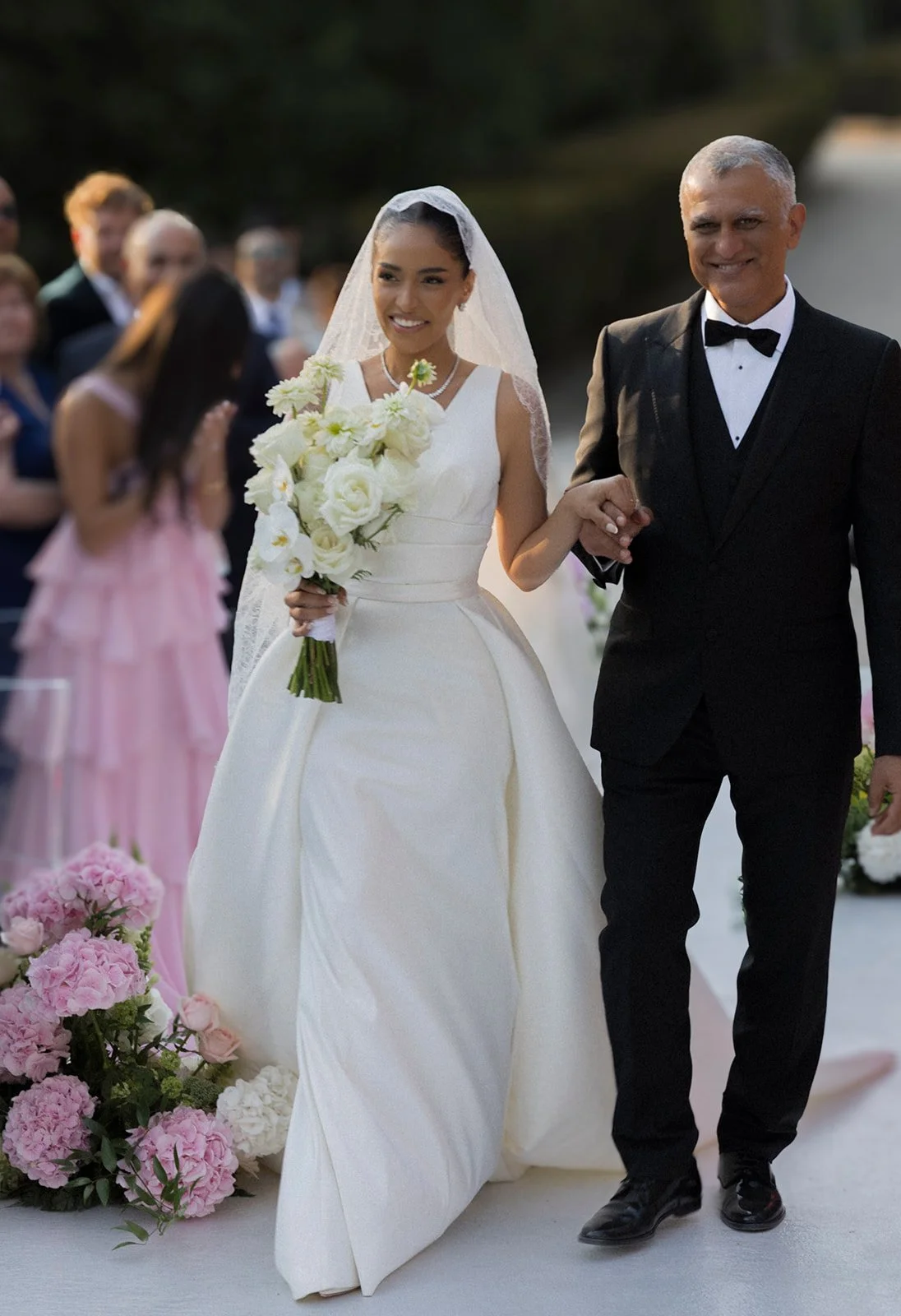
We shoot to a specific aesthetic: film-influenced, light-forward, with restraint in contrast and saturation. Maintaining that consistency across 500 images from a 12-hour day, with shifting light, mixed artificial sources, and changing environments, is the most technically demanding part of what we do.
We do not batch-edit. Every image in your final gallery receives individual attention. Skin tones are adjusted for the specific light source in each frame. Shadows are lifted or held depending on what serves the composition. Color casts from venue lighting are corrected without losing the warmth of the moment. Where retouching is applied, it is done by hand, not by algorithm.
This level of editing is what separates a gallery that looks like your wedding from a gallery that looks like what your wedding felt like.
Business Infrastructure: The Costs You Never See
Professional photography at the high end is a fully licensed, insured, legally structured business. These costs are real, and they are significant.
Professional liability insurance protects both parties if anything goes wrong. Equipment insurance covers replacement costs in the event of theft, damage, or failure. For destination work, travel and health coverage for international shoots adds to that base.
Business licensing, accounting, client management systems, online gallery hosting, and secure cloud backup infrastructure are operational costs that a professional studio carries every year. Legal contracts, drafted and reviewed carefully to protect your interests as well as ours, add to that baseline.
For destination weddings, travel costs are real line items: flights, accommodation, and per diem for two photographers over multiple days. Many studios include travel in their fee; some bill separately. Either way, it is part of the cost of the work.
A reasonable estimate of annual business overhead for a professional destination wedding studio, before a single wedding is photographed, is 30,000 to 50,000 euros per year. Spread across 10 to 15 weddings, that is 2,000 to 5,000 euros in fixed overhead per wedding before any time or equipment is factored in.
Experience as a Compounding Asset
Years in practice are not the same as experience. Experience in photography is the accumulation of specific judgment: the ability to read a room before the moment happens, to position without directing, to know exactly when to step back and when to move in.
It is knowing that the light through a particular window will be gone in six minutes, and making the decision to move your couple there right now instead of finishing the family portraits. It is recognizing when a moment between a father and daughter is about to break, and being in position before it does.
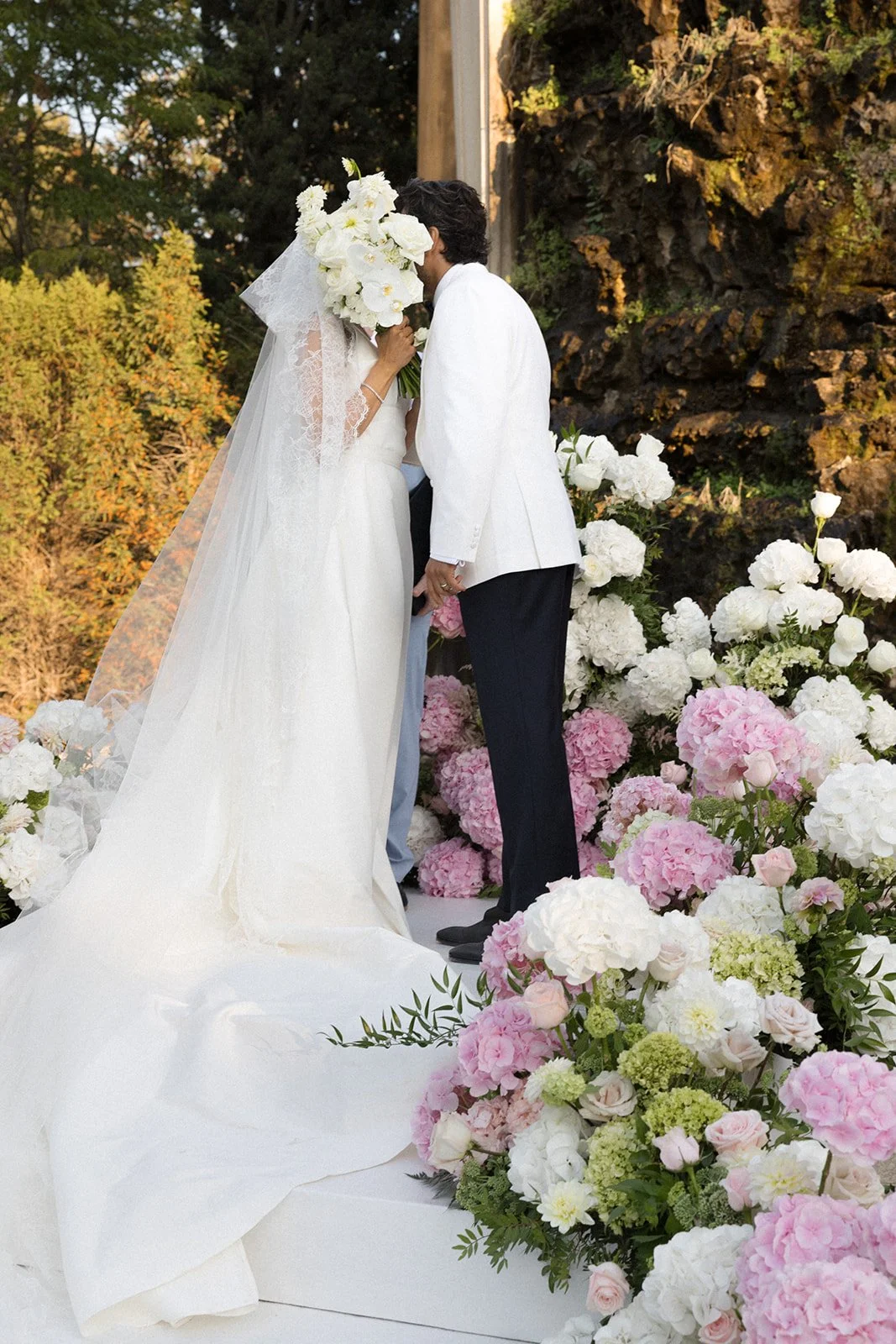
This kind of judgment cannot be taught directly. It is built through thousands of hours in the field, across dozens of countries, in every possible light condition and emotional register. Our work has been featured in Vogue Arabia, British Vogue, Vogue Australia, and Tatler, not because we applied a particular filter, but because editorial directors recognized a consistent point of view developed over years of deliberate work.
When you hire a photographer at the high end, you are hiring a specific way of seeing. That is the one element in this entire breakdown that cannot be replicated or approximated by gear or software.
What the Math Actually Looks Like
Take a destination wedding with a fee of 10,000 euros. Here is a simplified breakdown of where that money goes.
Photographer time represents the largest share. At a professional rate that reflects the skill level being hired, the time investment alone accounts for more than half the fee, even at this price point. Two experienced photographers, 200-plus combined hours per wedding.
Equipment amortization covers the cost of maintaining and replacing professional gear, divided across the year's work.
Business overhead covers insurance, licensing, legal, software, and secure storage, per wedding.
Travel and logistics for destination work vary by location and are built into or billed alongside the fee.
Studio margin is what remains after all costs, which allows the studio to continue operating, investing in equipment, and maintaining the standard of work you are hiring for.
There is no meaningful markup in this structure. The math of professional photography at this level is tight, and studios that charge significantly less are almost always cutting somewhere: in equipment quality, time investment, editing depth, or the number of weddings they take on, which directly affects the attention yours receives.
What to Ask Any Photographer at This Level
If you are speaking with photographers in the high-end range, here are the questions that will tell you the most.
How many weddings do you take per year? Studios that limit their calendar are making a deliberate choice to protect the quality of attention each couple receives. We take a maximum of 10 weddings per year.
Who edits the work? Is post-production handled in-house or outsourced? The edit is half the work, and knowing who does it matters.
What does your backup system look like? Professional studios duplicate files to multiple locations immediately after each wedding. No professional should be relying on a single card or a single drive.
Can you show me a full gallery, not just highlights? A highlight reel is a curated selection. A full gallery shows you how a photographer handles the entire arc of a day, including the quiet moments and the difficult light.
What is your communication process before the wedding? The work before the day matters as much as the day itself.
These are not difficult questions. Any photographer at this level should answer them without hesitation.
If you are in the process of choosing a photographer for your wedding in Portugal or internationally, we are happy to talk through what our work involves and whether it is the right fit for what you are planning. You can reach us at hello@thelopesphotography.com.
