
HOW TO ELOPE IN PORTUGAL: A PRACTICAL GUIDE FOR INTERNATIONAL COUPLE
We are based in the Algarve and photograph elopements and intimate weddings across Portugal year-round. We have been through this process with dozens of couples from the US, UK, Canada, and Australia, and we have seen what works, what gets complicated, and what most guides leave out. This article covers the practical side: what eloping in Portugal actually involves, how the paperwork works, when and where to go, and what a real elopement day looks like when we work together.
If you are still in the early stages of deciding whether Portugal is the right destination, or if you want to explore venue options specifically, our guide to elopement venues in Portugal covers that ground in detail. This article is the companion piece: once you have decided on Portugal, here is everything you need to know before you plan.
What "Eloping in Portugal" Actually Means
The word elopement has expanded considerably in recent years. In practical terms, we define it as a ceremony with two to ten people present: the couple, an officiant if desired, and perhaps a parent or two, a sibling, a best friend. The emphasis is on intimacy, not secrecy. There is no pressure to disappear or hide anything. It is simply a choice to center the day on each other rather than on an event built for a hundred guests.
A micro-wedding sits in a different category: typically 10 to 30 guests, a seated meal, and a more structured day. A destination wedding in the traditional sense means a larger guest list traveling from abroad. All three are valid, and all three are things we photograph in Portugal. But they require different planning, different venues, and different expectations. This guide is specifically for the elopement end of the spectrum.
One thing worth establishing early: Portugal allows symbolic ceremonies for international couples who are already legally married in their home country. This is the most common route for couples who elope here, and it removes almost all of the bureaucratic complexity. We cover that in detail in the next section.
The Paperwork: Symbolic vs. Legal Ceremonies in Portugal
This is where most international couples have questions, and where the answer is simpler than it often appears online.
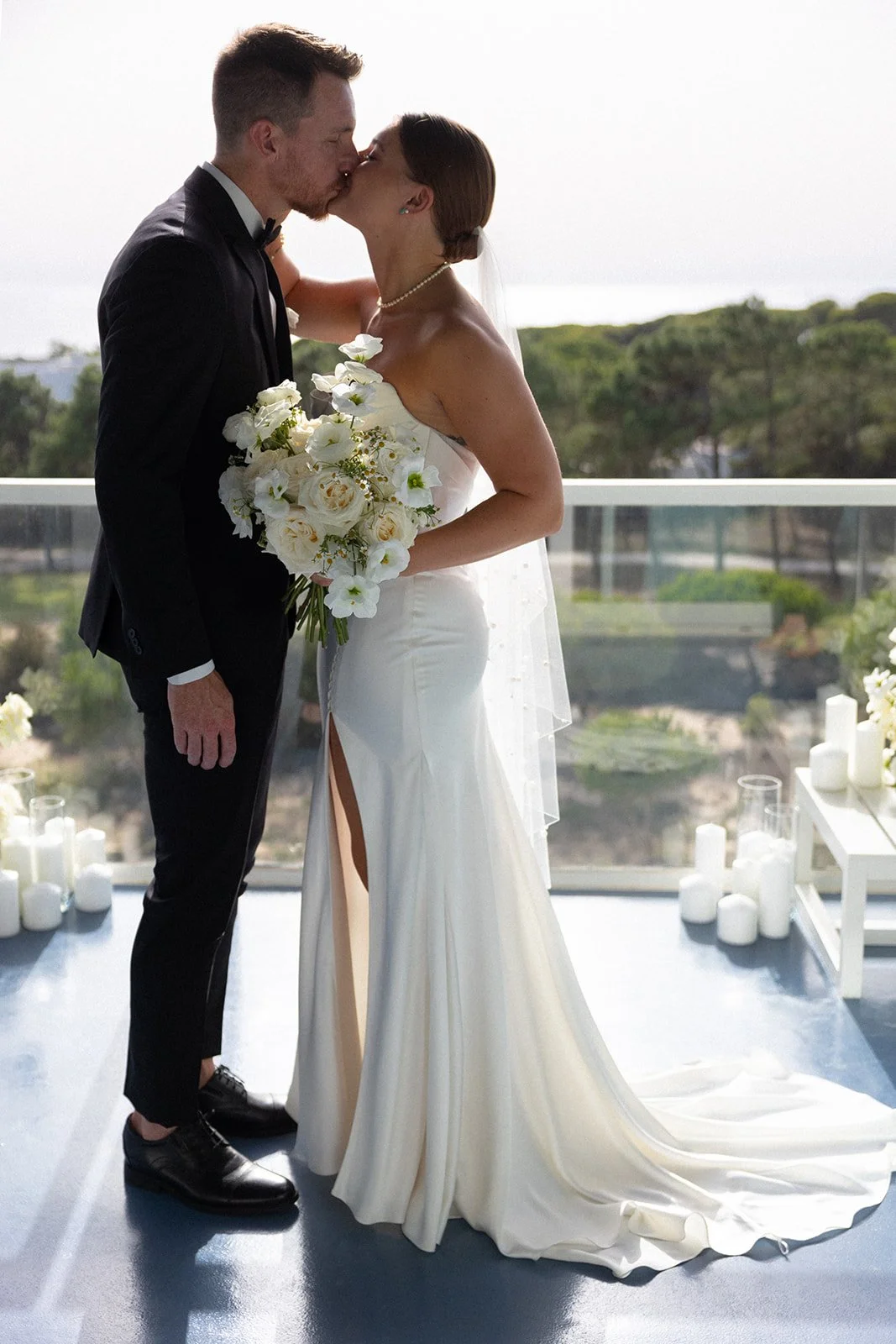
Symbolic ceremony: If you are already legally married in your home country, you can have a symbolic ceremony in Portugal with no local paperwork required at all. You choose an officiant, you write your words, and the ceremony is recognized within your relationship and your memories, but not as a new legal act in Portugal. This is the path the vast majority of international couples take when they elope here. There are no residency requirements, no waiting periods, and no documents to file with Portuguese civil authorities.
Legal civil ceremony in Portugal: It is possible to get legally married in Portugal as a foreign national, but the process requires planning well in advance. You will need to provide certified and apostilled documents (birth certificates, proof of single status, valid passports), have them translated into Portuguese by a certified translator, and submit them to the local civil registry. Processing times vary, and the requirements can differ depending on your nationality. Most couples who want a legally binding ceremony in Portugal begin the process six to nine months before the date.
For most couples eloping in Portugal, the symbolic route is the cleaner, more flexible option. The ceremony feels no less meaningful for the absence of paperwork, and it allows you to focus entirely on the experience rather than the logistics of a foreign legal process. If you want a full breakdown of both paths, we have written a dedicated article on civil vs. symbolic weddings in Portugal for foreign couples.
When to Elope in Portugal
Portugal has a genuine regional variety in climate, which affects timing differently depending on where you plan to be.
The Algarve, where we are based, has the longest reliable season: April through October sees very little rain and consistent warmth, with July and August being the hottest months. Late September and October are often ideal for couples who want golden light without summer crowds.
Lisbon and Sintra are more temperate. Spring (April to June) and early fall (September to October) are the most photogenic months, with dramatic skies possible even in October and November. Winter ceremonies in Sintra have a particular quality of light and atmosphere that works well for the right couple.
The Alentejo plateau is beautiful in spring, when the plains are green, and the wildflowers are out, typically March through May. Summer in the Alentejo is dry and very hot, which limits outdoor ceremonies to early morning or evening. Harvest season in September and early October is another strong window for couples interested in the wine country feel of the region.
The north, including Douro Valley and Porto, is cooler and greener year-round. Spring and fall are ideal; summer is warm without being extreme; winter is wet. The dramatic river landscape of the Douro is most photogenic in October, during the harvest.
We have written more details on this in our article on the best months to get married in Portugal, if you want regional breakdowns by season.
Where to Elope in Portugal
Rather than list individual venues here, we want to describe the three types of setting that define the country's landscape, because the setting you are drawn to will shape everything else.
Coastline and Atlantic cliffs. Portugal's coastline ranges from the dramatic limestone promontories of the Algarve to the wild Atlantic-facing beaches of the west coast. Venues built into this landscape, such as Fortaleza do Guincho near Cascais, offer the specific combination of ocean wind, open sky, and historic architecture that is difficult to find elsewhere in Europe. These settings suit couples who want the outdoor ceremony to feel genuinely elemental.
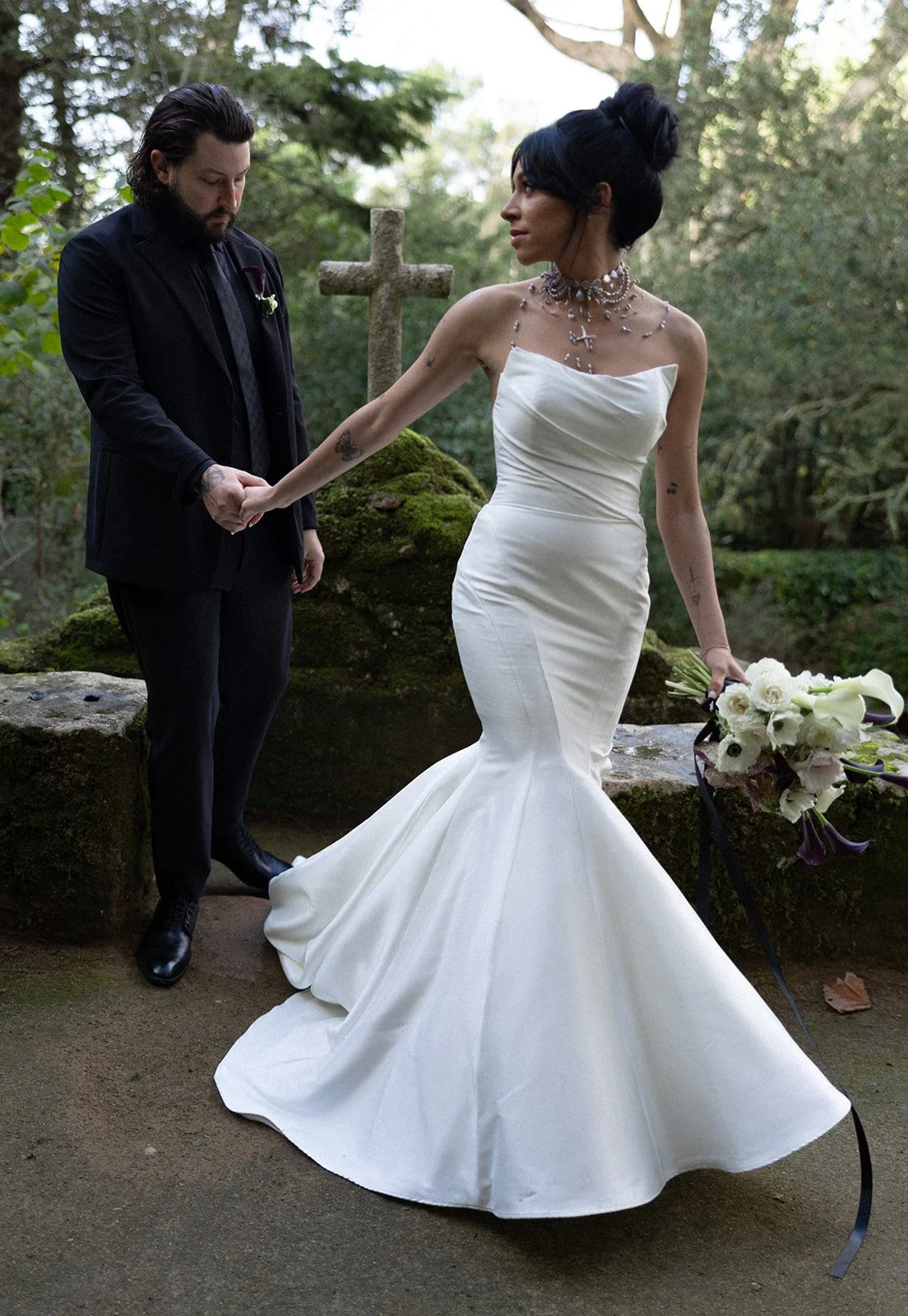
Historic palaces and quintas. Portugal has an unusual density of accessible historic properties, from national palaces to privately owned manor houses with centuries of history behind them. Palácio de Seteais in Sintra and Palácio de Queluz near Lisbon are two of the most architecturally significant, both set within formal gardens and with an interior scale that works well for intimate ceremonies. These spaces suit couples who want the intimacy of a small ceremony within a setting that has genuine weight to it.
Rural herdades and private estates. The Alentejo and parts of the Douro offer something different: wide open land, cork oaks, vine rows, and private properties where an elopement can feel genuinely secluded. These estates often have both indoor and outdoor ceremony spaces, making them well-suited to shoulder-season dates when the weather is less predictable.
A full curated list of venues we recommend, organized by region and type, is in our dedicated elopement venues guide for Portugal.
What an Elopement Day with Us Looks Like
We photograph between six and eight couples a year who choose elopements or deeply intimate weddings, and each one shapes the day differently. There is no single script for how it goes.
A typical elopement with us runs four to eight hours. That window includes getting ready, the ceremony itself, and a longer portrait session, often across two locations. For many couples, the portrait session is the core of the day: an hour or two in late afternoon light, in a landscape that means something, with no audience and no schedule pressure.
We shoot on digital, and for couples who want it, we also offer Super 8 film as a standalone or alongside photography. Super 8 adds a layer to the day that digital does not: the grain, the warmth, the fact that it is physically running through a camera. Some couples choose it specifically because it records the ceremony in a way that photographs alone cannot.
On the logistics side, we have been working in Portugal for years and have a strong network of officiants, planners, and venue contacts. We are not wedding planners ourselves, but we know how a day is put together, and we can help point you toward the right people. For couples who want full planning support, we are happy to refer you to partners we trust.
The investment for an elopement with us starts at €10,000 for photography. Super 8 film is quoted separately. Travel for venues outside of Portugal is included as a flat rate rather than itemized. You can find more details on our services page.

Planning Your Elopement from Abroad
Most couples who elope in Portugal with us are planning from a different country, often a different time zone. The process has been refined enough that distance is rarely an obstacle.
For dates in spring or fall, we recommend starting the conversation twelve to eighteen months in advance. Peak season dates (particularly late September and October in the Algarve and Lisbon regions) book up considerably earlier. If you have a specific venue in mind and a specific date, those two factors together will determine how much lead time you need.
Our first call typically covers the shape of the day: what you are imagining, what matters most, and what you are uncertain about. From there, we help with the parts of the logistics that touch our work directly, and we connect you with other vendors and planners where needed. If your plans change after booking, we handle adjustments as they come. The deposit structure and the flexibility we can offer are something we discuss on that first call.
For a detailed breakdown of how destination wedding timelines work in practice, including what to do and when, our destination wedding timeline guide covers it step by step. And if you are earlier in the process and still deciding whether a destination wedding in Portugal is the right move, our article on how to have a destination wedding in Portugal covers the broader picture.
Planning an Elopement in Portugal? Questions We're Often Asked
Is eloping in Portugal legal for foreign couples?
A symbolic ceremony in Portugal carries no legal status under Portuguese law, but it is entirely legal to hold one. Most international couples choose this route because they are already legally married at home and want a ceremony in Portugal that feels meaningful without the complexity of navigating a foreign civil process. If you want a legally binding marriage in Portugal, that is possible but requires advance paperwork and coordination with the local civil registry.
Do we need to be in Portugal before the elopement to handle paperwork? For a symbolic ceremony, no prior visit is required for legal purposes. Many couples arrive a few days before the date to settle in and see the venue in person, but it is not obligatory. If you are pursuing a legal civil ceremony, the civil registry process may require earlier submission of documents, but this is coordinated in advance by mail or through a local representative rather than requiring a separate trip.
How far in advance should we book our elopement in Portugal? Twelve to eighteen months is a good general guideline. If you have a specific venue and a specific date in mind, particularly in late September or October, earlier is better. Some venues limit the number of events they hold per year, and the most sought-after spaces book quickly. A consultation call costs nothing, and it is the fastest way to understand what is actually available for your date.
Can we elope in Portugal with just the two of us? Yes, and we photograph elopements with only the two of you regularly. You do not need witnesses, guests, or a formal ceremony if you prefer not to have them. Some couples choose a simple exchange of words in a landscape they love, with photographs as the record. That is a complete and real elopement.
How much does an elopement in Portugal cost? Our photography starts at €10,000. Beyond photography, the main costs are the venue, an officiant or celebrant if you want one, any hair and makeup you book, and your travel and accommodation. Portugal is generally more accessible in terms of venue pricing than comparable destinations in France or Italy, and we are happy to give you a realistic picture of what a full day is likely to cost during our first conversation.
If you are drawn to Portugal and want a day that feels genuinely yours, we would love to hear from you. You can reach us through our contact page, and we will get back to you within a few days to find a time to talk.
