
NIGERIAN WEDDING PHOTOGRAPHER IN PORTUGAL: WHAT YOU SHOULD KNOW
Nigerian destination weddings are among the most layered and joyful celebrations we have ever been asked to document. We are The Lopes Photography, a husband-and-wife team based in the Algarve, published in British Vogue, Vogue Australia, and Tatler, and we work with a maximum of ten couples per year. Our collections begin at €10,000. This article is for Nigerian families planning destination weddings in Portugal who want to understand how we work and whether we are the right fit.
Why Nigerian Couples Are Choosing Portugal
Nigeria has one of the most diaspora-active wedding cultures in the world. Families spread across London, Houston, Toronto, and Sydney regularly converge on a single destination to celebrate together, and they do not compromise on scale or quality. Portugal has become an increasingly natural choice for this kind of gathering.
The reasons are both practical and aesthetic. Portugal sits within comfortable flying distance of the United Kingdom and mainland Europe, and connections from the United States and Canada have expanded significantly in recent years. The country is broadly considered safe and welcoming. The climate from April through October is reliable. Most importantly, Portugal offers venues that can accommodate large guest lists without sacrificing elegance.
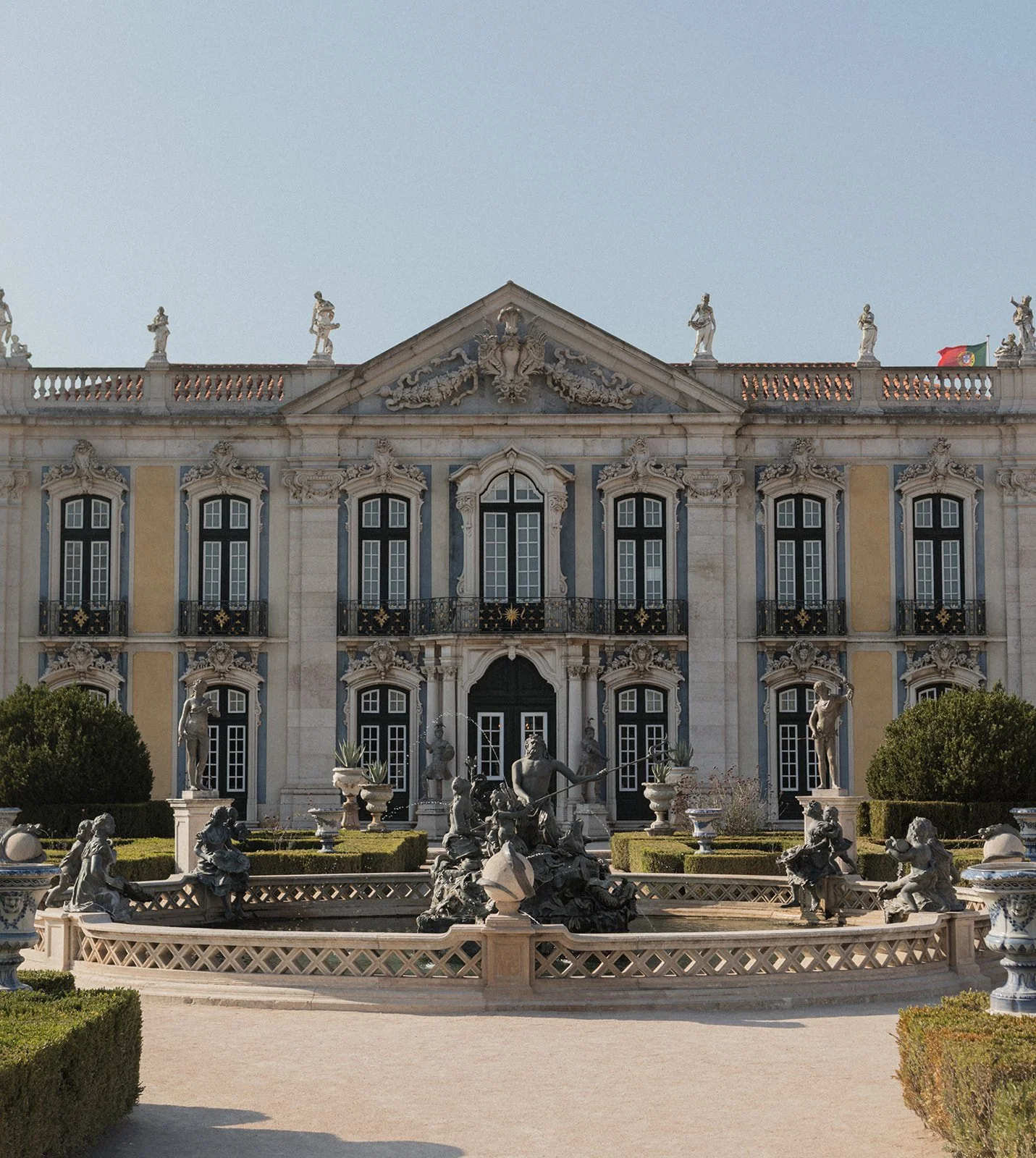
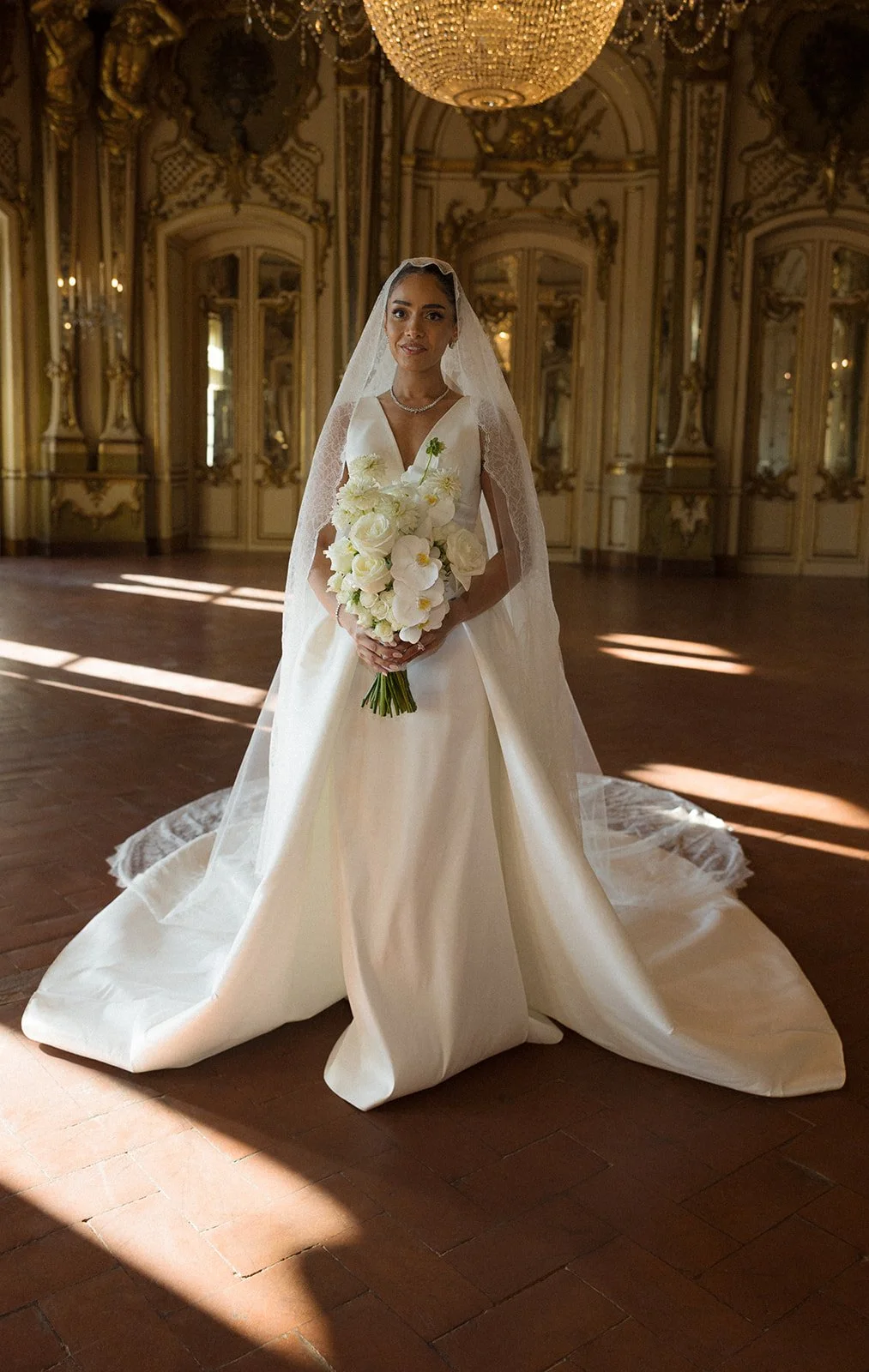
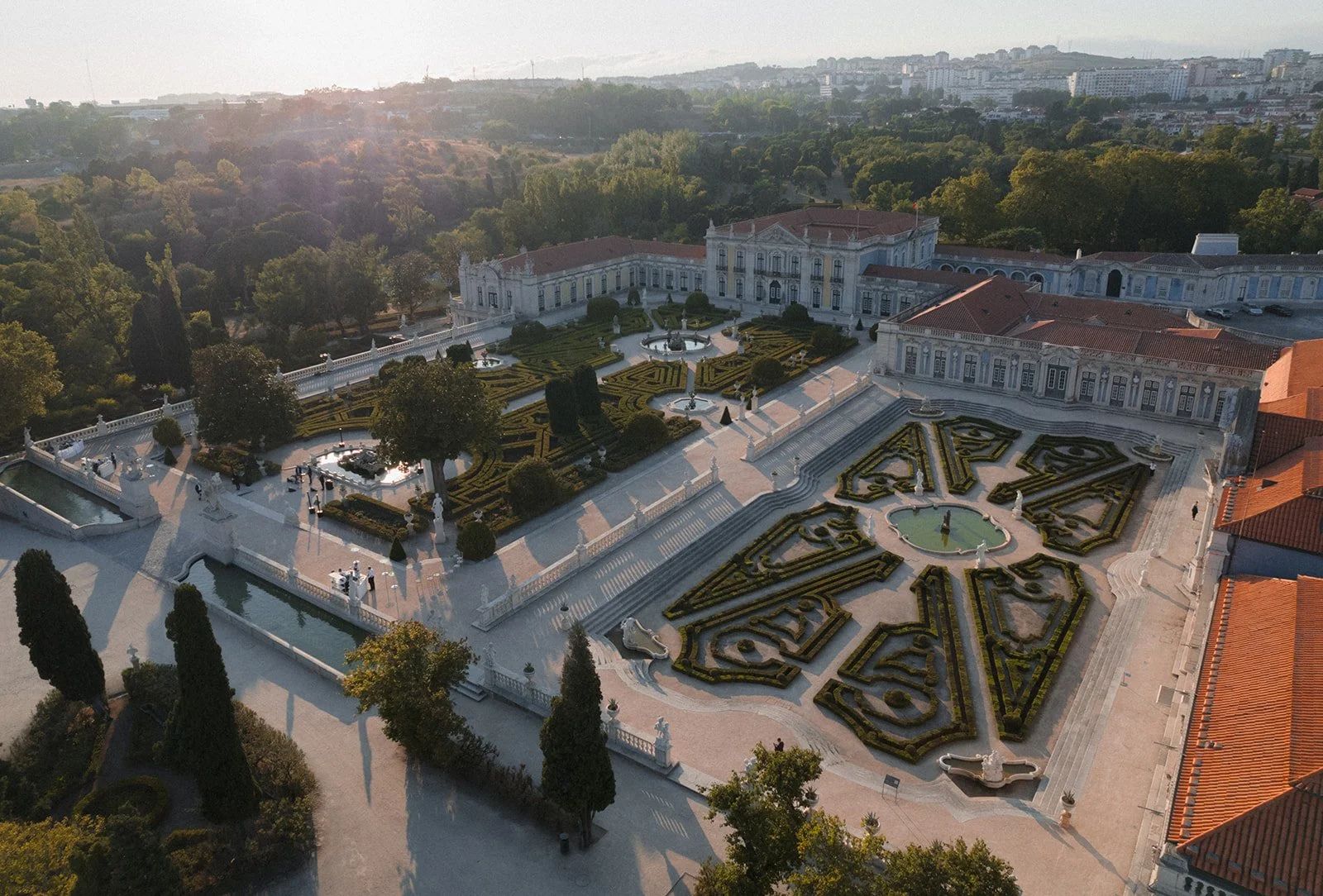
Palácio de Queluz, outside Lisbon, is among the most ambitious wedding venues in Europe. Its formal Baroque gardens, gilded ballrooms, and layered outdoor spaces create the kind of atmosphere that suits celebrations built around ceremony, music, and full presence. Other venues across Portugal, including Convento do Espinheiro near Évora, Quinta de Óbidos north of Lisbon, and Palácio do Freixo in Porto, can accommodate the scale and spirit of a Nigerian destination wedding.
What We Need to Understand About Your Celebration
We document what is actually happening. That means we need to understand what is planned.
A traditional Nigerian wedding and a white wedding are not the same event, and the photography coverage for each is distinct. The traditional ceremony, which may involve Aso-Ebi dress codes, prostration, and family-structured rituals that unfold over several hours, demands a different kind of attention than a civil or symbolic ceremony that follows Western protocol. We want to be in position for all of it.
If you are planning a multi-day celebration, the schedule we agree on should reflect every event you want covered. We do not make assumptions about which moments matter most to a Nigerian family. We ask. We listen. And we structure our coverage around what you tell us, not around a standard Western wedding timeline.
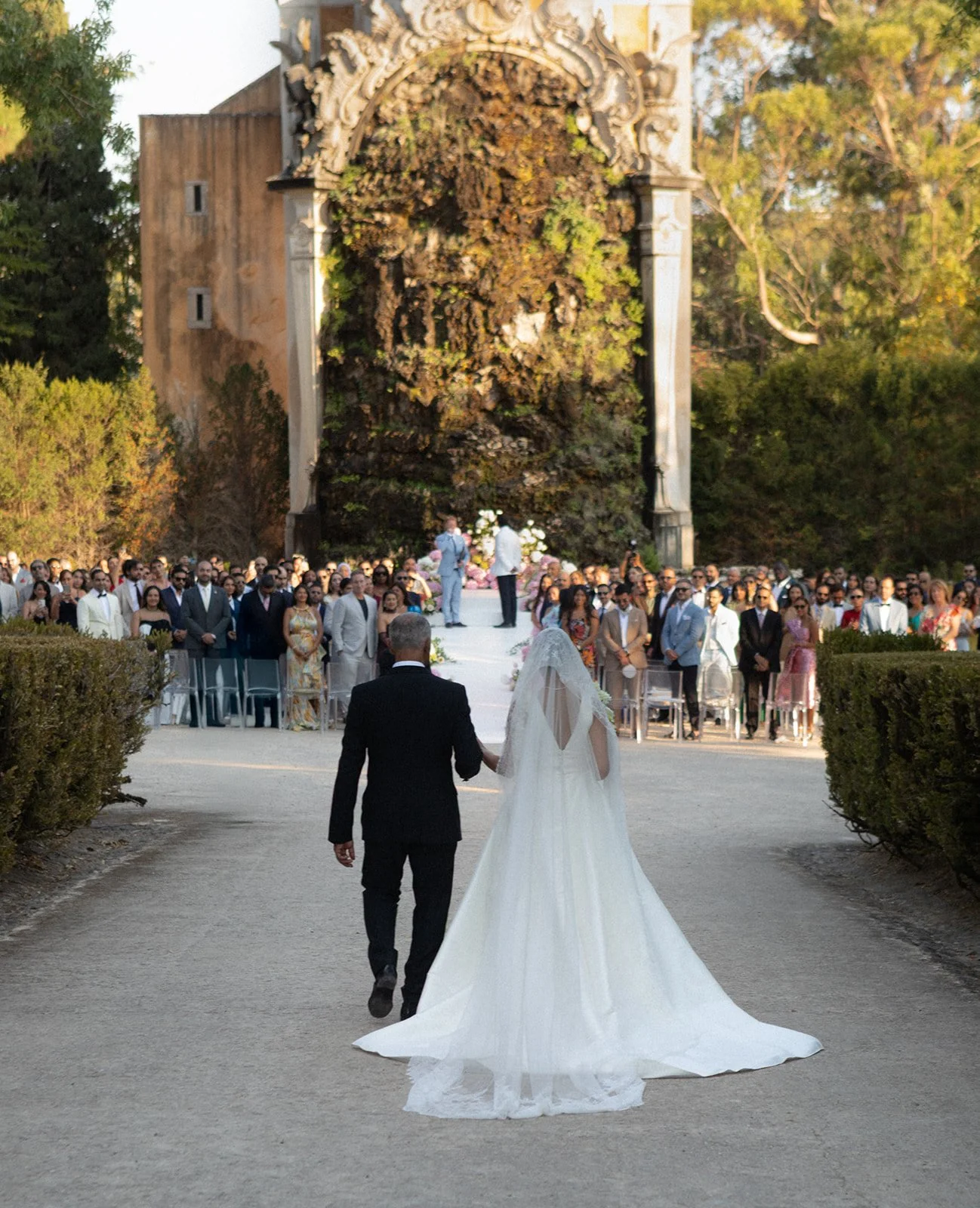
The Aso-Ebi moment, in particular, is one we approach with care. When a large group of guests arrives in coordinated fabric, the visual dimension of the event shifts entirely. We are attentive to those transitions, and we document the texture of the celebration, not just the couple at the center of it.
We will always ask about the sequence of events, the significance of specific rituals, and the family members who should be present in particular photographs. This is not generic preparation. It is the minimum we need to do our job.
What to Look for in a Photographer for a Nigerian Destination Wedding
The most important question is not whether a photographer has shot a Nigerian wedding before. It is whether they are present enough to learn what they need to know about yours.
That said, there are specific things worth asking during an early conversation.
Can they handle sustained, high-energy coverage? A four-day Nigerian celebration is not four separate events. It is a continuous state of joyfulness, movement, dancing, and family. A photographer who is accustomed to the quieter rhythm of a two-hour ceremony and a three-hour reception may not have the stamina or the attentiveness that a multi-day event requires.
Do they work alone or with a second photographer? For events above a certain size, a single photographer will miss things. We work with a second photographer when the guest list or the coverage schedule demands it. This is something to clarify early, before any agreement is signed.
How do they handle low light? Nigerian wedding receptions frequently continue well into the evening. The quality of the photography at that stage of the celebration is not something you should leave to chance. Ask to see examples of nighttime or indoor reception coverage before you make a decision.
Do they have a clear approach to the traditional ceremony? If the photographer has never documented a traditional ceremony before, they need to, at minimum, understand the sequencing and the significance of what is happening. This is not something that can be improvised.
Portugal Venues for Large Nigerian Celebrations
Most of the high-end destination wedding venues in Portugal can accommodate the scale of a Nigerian celebration, but not all of them are equally well-suited to multi-day events or very large guest lists.
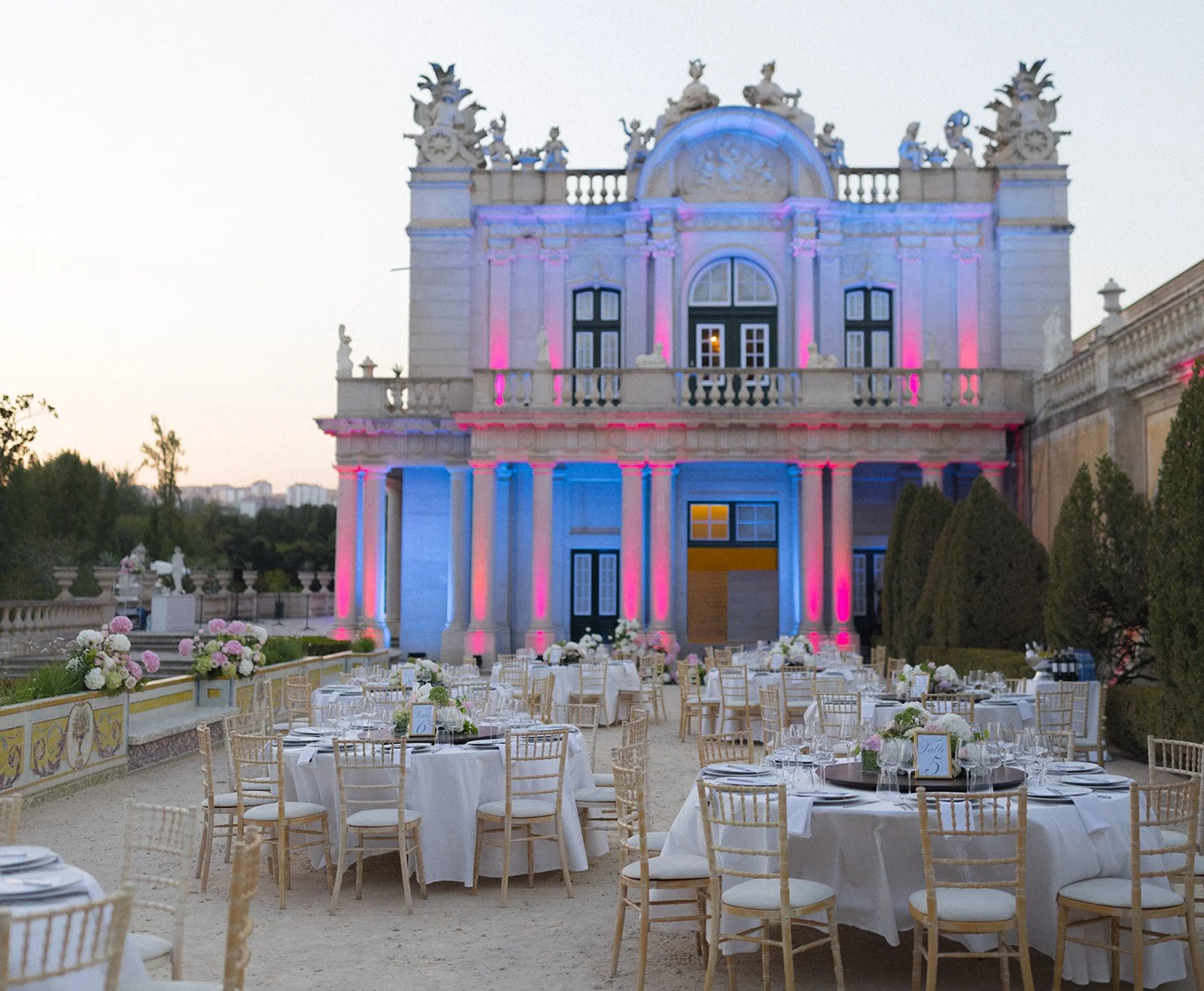
Palácio de Queluz, in the Sintra region, has the outdoor space and indoor grandeur for large guest lists and multi-event formats. Its gardens are extensive enough to accommodate ceremony, cocktail hour, and formal reception separately, across different areas of the estate.
Convento do Espinheiro, near Évora in the Alentejo, is a converted convent with significant on-site accommodation and a formal cloister that provides a striking backdrop for traditional ceremonies. The rural setting also reduces concerns about noise restrictions, which is relevant when celebrations extend past midnight.
Quinta de Óbidos offers an expansive estate format with dedicated event spaces that can transition from daytime ceremony to evening reception without requiring guests to move locations.
Palácio do Freixo, in Porto, is a Baroque palace on the banks of the Douro River. It has the scale and the visual authority that Nigerian destination weddings frequently demand, and it is one of the few venues in northern Portugal that can handle both ceremony and large reception on-site.
For couples who want something more private and exclusive, Portugal has a strong selection of private estate wedding venues that can accommodate extended family stays and give you full control over the space and the schedule across multiple days.
Legal Considerations for Getting Married in Portugal
For foreign nationals, there are two main paths to formalizing a marriage in Portugal: a civil ceremony at a registry office or a Catholic ceremony in a recognized church. Both require documentation, advance notice, and, in most cases, an authorized translation of your documents into Portuguese.
Many international couples choose to hold a symbolic ceremony in Portugal, where the legal elements are handled in their home country before or after the event. This is not a workaround. It is a common and fully legitimate approach that simplifies the paperwork while allowing the wedding to take place at the venue of your choice.
We recommend reading our full overview of legal requirements for getting married in Portugal as a foreigner before making decisions about the structure of your celebration. The difference between a legally binding ceremony and a symbolic ceremony has implications for your documentation, your timeline, and your choice of officiant.
How We Work With Nigerian Families
We are based in the Algarve and work across Portugal year-round. We cover destination weddings from €10,000, and our approach does not change based on the cultural background of the couple.
If you are planning a Nigerian destination wedding in Portugal and you want to speak with us, the process begins with a conversation. We want to understand the shape of your celebration before we make any commitments about coverage. That conversation should happen well in advance of your date, because we limit ourselves to ten weddings per year and those dates fill up.
We take our role in these celebrations seriously. We are not there to impose a visual style. We are there to record what actually happened, in all of its complexity and energy and meaning.
If you have questions before reaching out, the section below addresses the ones we hear most often.
Frequently Asked Questions
Do you have experience photographing Nigerian weddings?
We do not have a Nigerian wedding in our current portfolio, and we will not pretend otherwise. What we do have is extensive experience with multi-day, multi-event destination weddings in Portugal and a genuine interest in understanding your celebration on its own terms. We will ask the right questions before your wedding, not during it.
How much does destination wedding photography cost?
Our collections begin at €10,000. Multi-day Nigerian weddings that span three or four events typically fall in a higher range because of the extended coverage time and, in some cases, a second photographer. We are happy to outline what this looks like in practice during an introductory call.
How far in advance do we need to book?
We work with a maximum of ten couples per year, and the most sought-after dates in Portugal, typically late spring and early autumn, are often reserved twelve to eighteen months in advance. If you have a date in mind, reaching out sooner rather than later is the right approach.
Can you work with our wedding planner in Portugal?
Yes. We are experienced in working within coordinated vendor teams and with international wedding planners who are managing an event in Portugal remotely. We are straightforward to work with logistically and comfortable communicating across time zones throughout the planning process.
Do you travel to other countries for Nigerian celebrations?
We are based in Portugal and work primarily across Europe. If your celebration takes place outside Portugal, we are open to discussing travel coverage. The best way to find out whether we are a good fit for your specific situation is to reach out directly.
