
PLANNING A NIGERIAN TRADITIONAL WEDDING IN PORTUGAL: A COMPLETE GUIDE
Planning a Nigerian traditional wedding in Portugal starts with one decision: which of your family's rites will take place in Portugal, and which will stay at home. We are The Lopes Photography, a husband-and-wife studio based in the Algarve, published in British Vogue, Vogue Arabia, and Tatler, and we photograph ten weddings a year across Portugal and Europe. This guide covers the questions that shape a Nigerian celebration abroad: the order of the rites, the legal side, Aso-Ebi across several countries, guest visas, and the Portuguese vendors you will need.
We want to be clear from the start. We have not yet photographed a Nigerian wedding, and this is an editorial planning guide, not a portfolio. Everything below is based on published sources about Nigerian marriage customs and on our own experience of large, multi-event destination weddings in Portugal.
How Do You Plan a Nigerian Traditional Wedding in Portugal?
You plan a Nigerian traditional wedding in Portugal by working backward from the rites your families consider essential, then matching each one to a day, a space, and a team. A Nigerian wedding is rarely a single event. Yoruba, Igbo, and other traditions each follow their own sequence, and within each tradition every family has its own expectations.
Three decisions come first, in this order:
Which rites happen in Portugal. Some families hold the introduction or the formal family visit at home, then bring the traditional ceremony and the white wedding to Portugal. Others want every step in one place.
How the traditional ceremony relates to the legal marriage. This affects your paperwork, your officiant, and your timeline.
How many guests will travel. Guest count decides your venue shortlist, which is why we cover venues in a separate guide to the best venues in Portugal for Nigerian destination weddings.
Which Rites Travel Well to Portugal?
The traditional ceremony itself travels well to Portugal, because it needs a large room, a host, music, and family, all of which a Portuguese venue can provide. What changes abroad is the preparation around it, since elders, gifts, and fabrics now have to cross borders.
In a Yoruba traditional wedding, the groom and his friends prostrate before the bride's family to show respect, a gesture known as dobale. The bride enters, often dancing, and kneels to greet her parents, the groom's parents, and then the groom. The Eru Iyawo, a list of gifts compiled by the bride's family, is presented, and the bride places the groom's fila, his cap, on his head to show acceptance. The ceremony is usually led by an Alaga, a trained Yoruba praise singer and traditional wedding host, who may be an Alaga Iduro (standing) or Alaga Ijoko (sitting).
In an Igbo traditional marriage, the central event is Igba Nkwu, the wine carrying ceremony. The bride carries a cup of palm wine through the guests to find her groom, sips from it, and offers him the rest. Earlier steps, such as Iku Aka, when the groom's family formally announces its intention, and the bride price negotiation, involve the extended families and often take place at home before the wedding.
Our advice is simple. Write down every rite your families expect, mark which ones need elders who may not travel, and decide early which will happen in Portugal. A list agreed by both families before you contact venues saves months of revision later.
What About the Legal Marriage?
Many international couples in Portugal separate the legal marriage from the celebration. You can marry legally at home before or after the trip and hold the traditional ceremony and a symbolic white wedding in Portugal, or you can complete a civil marriage in Portugal, which requires documents, translations, and advance notice.
For many Nigerian families, the traditional ceremony already carries the cultural weight of the marriage, and the white wedding carries the religious or formal weight. Deciding where the legal step sits is a practical question, not a cultural one. We explain the two routes in our guide to civil vs symbolic weddings in Portugal, and the paperwork in detail in legal requirements to get married in Portugal.
How Do You Organize Aso-Ebi When Guests Live in Different Countries?
Organize Aso-Ebi at least six months before the wedding, and make sure every guest has their finished outfit before they travel. Aso-Ebi, a Yoruba term that combines the words for cloth and family, is the coordinated fabric worn by family, friends, and well-wishers to show solidarity with the couple. For a destination wedding, the challenge is distance: your guests may be in London, Houston, Toronto, and Lagos, and each needs the fabric, a tailor, and time for fittings.
A workable sequence looks like this:
Choose fabric and colors for each group (family, friends, age groups) as soon as the date and venue are fixed.
Send fabric with a clear deadline, together with the dress code for each event if you are holding more than one.
Ask guests to travel with finished outfits in their carry-on bag. Tailoring and alterations abroad, in a language most guests do not speak, add risk in the final days.
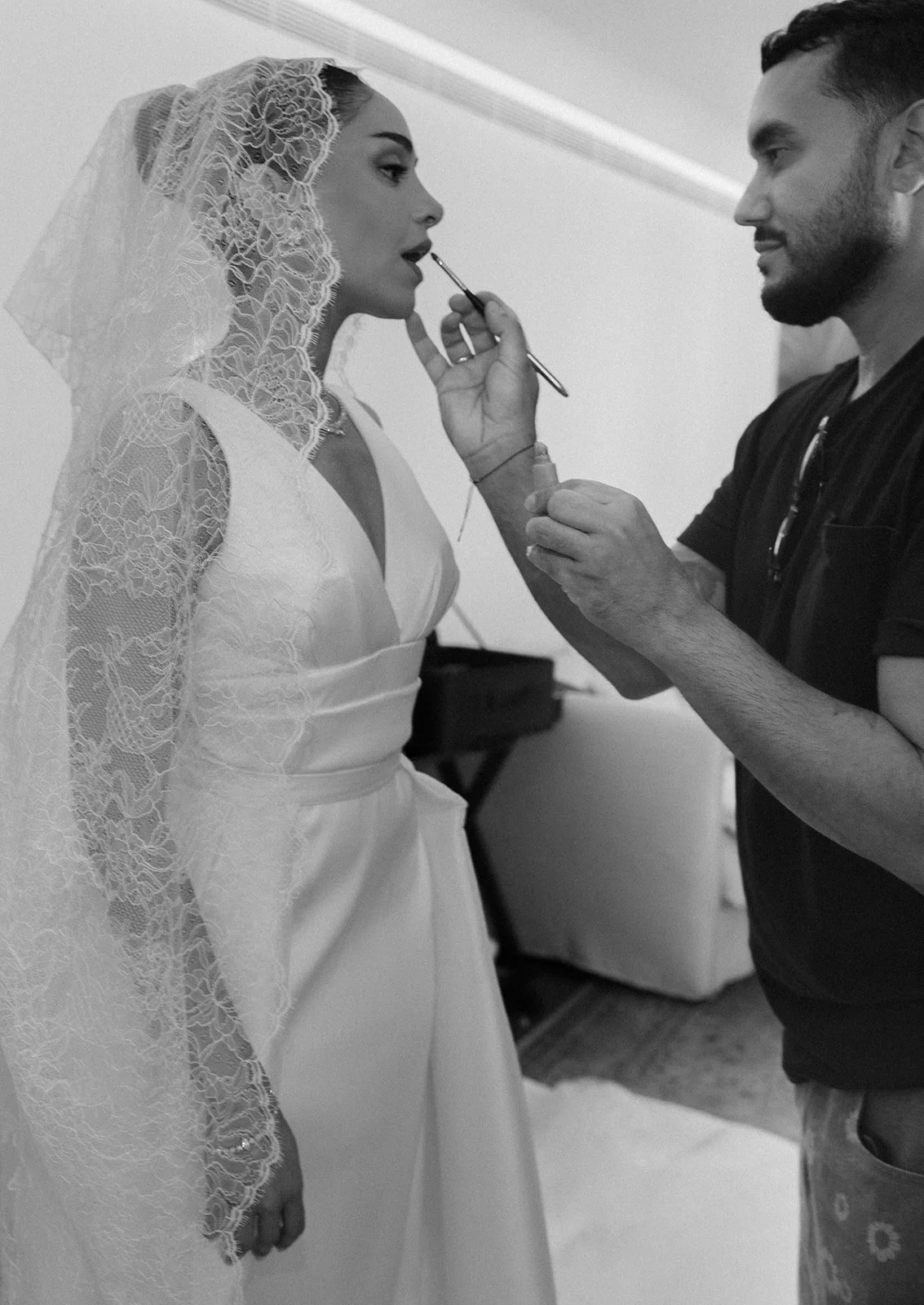
The couple's own outfits need the same care. In a Yoruba wedding, the bride usually wears an iro and buba with a gele head tie, and the groom an agbada with a fila, and both often change outfits during the day. Plan a private changing room at the venue, and confirm whether your gele stylist and makeup artist will travel with you or be booked in Portugal.
What Do Guests From Nigeria Need to Travel to Portugal?
Guests traveling on Nigerian passports need a Schengen visa to enter Portugal. Under the EU rules, a short-stay visa application can be submitted no earlier than six months before the trip and at least 15 days before it, and the standard decision time is 15 calendar days, which can be extended up to 45 days when further examination is needed.
Two practical points follow. First, send save-the-dates early enough that guests can plan an application within that six-month window. Second, share confirmed dates, venue addresses, and hotel details as soon as you have them, because visa applications ask for proof of accommodation. Guests traveling on other passports should check the requirements for their own nationality.
Which Portuguese Vendors Will You Need?
You will need a local planner, a venue that allows your catering choice, a sound and lighting team, and clear agreements on music and finishing times. Portugal has an experienced destination wedding industry, but a Nigerian celebration asks for things a standard European wedding does not.
A planner who coordinates the whole program. A Nigerian wedding often combines a traditional ceremony, a white wedding, and a large reception. A planner based in Portugal manages permits, suppliers, and timings on the ground while you plan from abroad.
Catering. Ask every venue on your shortlist, in writing, whether outside caterers are permitted. Some venues work only with their own kitchen, including Quinta Lago dos Cisnes in Amares, and that decides whether Nigerian dishes can be served by a caterer of your choice.
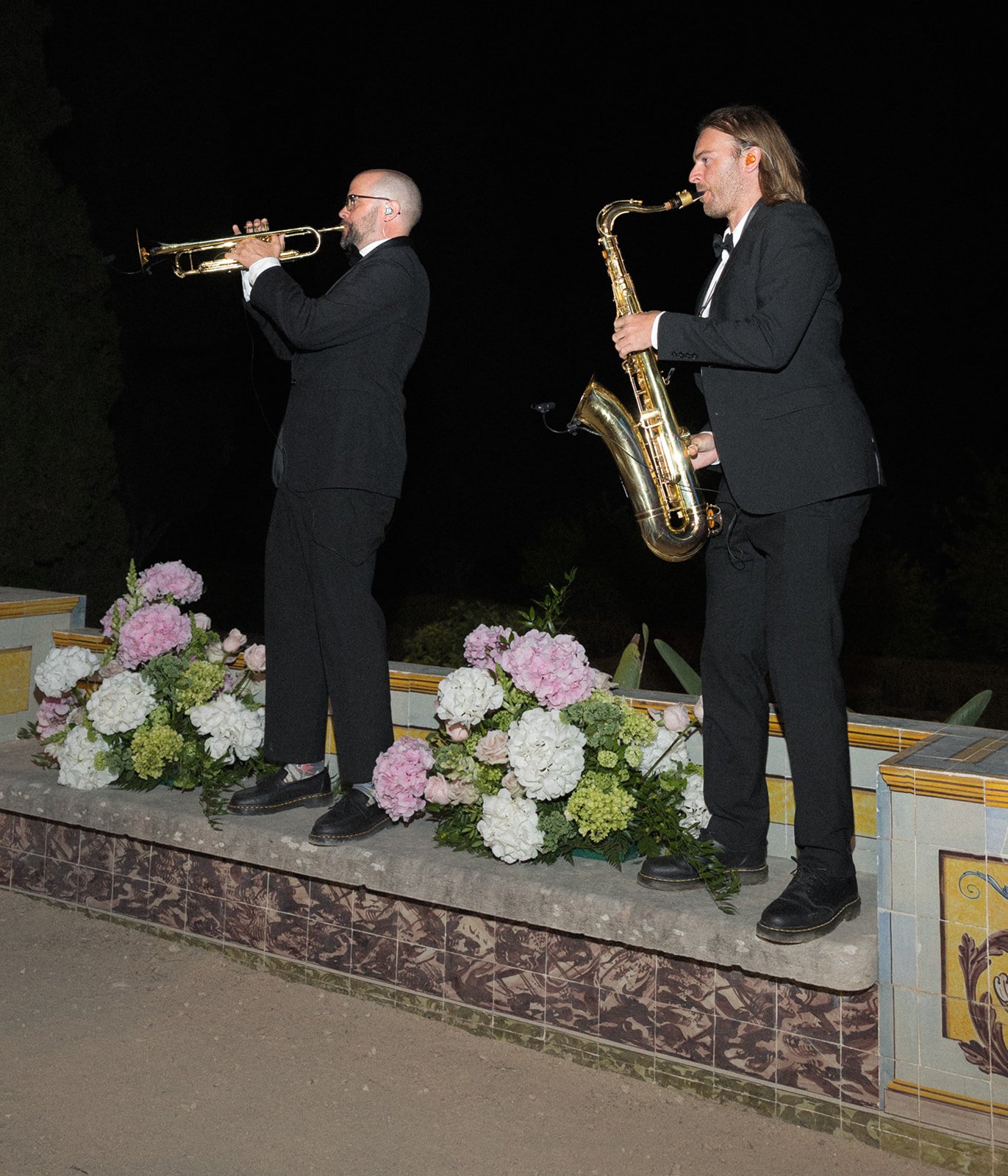
Music and the host. The Alaga or MC, a live band, and a DJ each need stage space, power, and sound checks. If your host is traveling from abroad, include flights and accommodation in the budget.
Finishing times. Ask each venue how late amplified music can run, and get the answer in the contract. Rules differ by venue and municipality, and a reception that ends at midnight feels very different from one that runs until the early morning.
Money spraying. Guests often spray money on the couple as they dance. Assign two trusted people to collect it, and tell your photographers and videographers so they can move with the dancing rather than around it.
A Planning Timeline for a Nigerian Wedding in Portugal
Start twelve to eighteen months ahead. Venues that hold several hundred guests are few, and the most requested Saturdays from May to October are reserved first.
12 to 18 months: agree on the list of rites with both families, set the guest count, book the venue, the planner, and the photographer.
9 to 12 months: book the Alaga or MC, band, DJ, and catering; send save-the-dates with travel guidance.
6 to 9 months: choose and distribute Aso-Ebi fabric; confirm the legal route; guests can begin visa applications once inside the six-month window.
2 to 3 months: confirm the program for each event, the order of rites, and the family photograph list.
Final month: share the running order with every vendor, and confirm who collects gifts and money during the reception.
For weather and light across the year, our guide to the best months to get married in Portugal covers each season.
Frequently Asked Questions
Can we hold a Nigerian traditional ceremony and a white wedding in Portugal on the same weekend?
Yes. Many couples hold the traditional ceremony on one day and the white wedding on another, often at different venues or in different spaces of the same estate. Separate days give each event its own outfits, décor, and running order, and give guests time to change. If both must happen on one day, allow at least three hours between them for outfit changes, room turnovers, and family photographs.
Do guests from Nigeria need a visa to attend a wedding in Portugal?
Yes. Travelers on Nigerian passports need a Schengen visa to enter Portugal. Applications can be submitted no earlier than six months and no later than 15 days before the trip, and the standard decision time is 15 calendar days, extendable to 45 days. Send save-the-dates early and share hotel details quickly, since applications ask for proof of accommodation.
How much does a photographer cost for a Nigerian traditional wedding in Portugal?
Our collections at The Lopes Photography begin at €10,000. A Nigerian wedding with a traditional ceremony, a white wedding, and a large reception usually needs coverage across two or three days and often a second photographer, which places it above our starting collection. We prepare a detailed proposal once we know the number of events, the guest count, and the venues.
How far in advance should we start planning?
Start twelve to eighteen months before the wedding. Venues that hold several hundred guests are few, and Saturdays from May to October are reserved first. Aso-Ebi needs at least six months for fabric, tailoring, and delivery to guests abroad. We photograph only ten weddings a year, so our calendar for the most requested months usually closes more than a year in advance.
What makes The Lopes Photography different for a Nigerian celebration?
We take on ten weddings a year, which gives us time to learn the structure of your celebration before the day. We ask which rites matter, which family members must be photographed together, and how the traditional ceremony will unfold, so we are in position for each moment. Our work has been published in British Vogue, Vogue Arabia, and Tatler.
Planning Your Nigerian Wedding in Portugal With Us
A Nigerian traditional wedding abroad succeeds when every rite has its place, every family member knows the plan, and every vendor understands what the day means. The Lopes Photography is based in the Algarve, published in British Vogue, Vogue Arabia, and Tatler, and we take on ten weddings a year so that each family receives our full attention across every event. You can read more about how we approach these celebrations in our guide for couples looking for a Nigerian wedding photographer in Portugal, or contact us and tell us about your plans.
