
PORTUGAL'S BEST REGIONS FOR MULTI-DAY WEDDING CELEBRATIONS: A COMPLETE GUID

Multi-day destination weddings in Portugal succeed when three conditions align: accommodation that keeps the wedding group together without requiring nightly dispersal, a surrounding landscape that gives the full weekend a coherent identity, and logistics that don't consume the celebration itself.
Portugal delivers on all three, but not everywhere and not in the same way. The country has five genuinely distinct regions where multi-day celebrations work, each with a case that stands on its own and real constraints that determine whether it fits a specific couple and guest list.
We photograph ten destination weddings per year in Portugal, with work published in British Vogue, Vogue Arabia, Vogue Australia Weddings, and Tatler. The perspective here comes from inside those weekends, not from venue brochures. The goal is to give couples a direct answer to a question that most planning resources treat as unanswerable without a site visit.
The Douro Valley: Landscape as the Main Event
The Douro is Portugal's oldest demarcated wine region and its most visually dramatic landscape. Terraced vineyards descend in steep layers toward the river. The light shifts from white to amber across the afternoon. The valley's physical scale gives the surroundings a presence that smaller Portuguese settings cannot replicate, and the working harvest rhythm of September and October adds a dimension to the weekend that no other Portuguese region can offer.
The Douro's core strength for multi-day weddings is the availability of large, self-contained hotel properties within the vineyards themselves. Six Senses Douro Valley, a converted 19th-century manor near Lamego, has 71 suites and a series of event spaces that can accommodate celebrations of up to 250 guests without requiring anyone to leave the estate. The property's spaces are genuinely varied: the wine library terrace works for pre-dinner tastings, the landscaped gardens accommodate outdoor dinners and late-night receptions, and the Vale de Abraão restaurant shifts between a formal dining room, an open kitchen setting, and a broad outdoor terrace. There are no curfew restrictions, which is structurally unusual for Portuguese venues and practically significant for how a wedding weekend breathes.
Octant Douro, near Castelo de Paiva, is a more contemporary property set directly within the vineyard rows, with around 60 rooms and a design approach that foregrounds the working landscape rather than insulating guests from it. We documented Max and Mallory's two-day celebration here in 2024. The property's location within the vineyards means the couple and their guests experienced the harvest season as an immediate physical fact, including the movement of machinery on the slopes and the smell of fermentation from the quinta buildings nearby.
The seasonal window is tighter in the Douro than in any other Portuguese region. Late September through mid-October, when the harvest is underway, is when the landscape is most visually active and when demand for premium dates is highest. Lead times of 12 to 18 months are realistic for these dates. Guests arriving from Lisbon face approximately two hours of driving. From Porto, the journey is closer to 90 minutes. The movement of a guest list of 80 to 150 people from a central arrival point into the valley requires advance coordination and a planner who knows the road infrastructure.
Alentejo Interior: Privacy as a Structural Condition
Interior Alentejo is distinct from the Comporta coast and from the perception most international couples carry when they first encounter the region. This is cork oak and wheat and an immense uninterrupted sky. It is one of the least densely populated regions in Europe. The scale of the landscape makes privacy feel structural rather than manufactured, which is precisely what draws couples who have already dismissed the more accessible alternatives.
São Lourenço do Barrocal, near Monsaraz, is the reference property for multi-day weddings in this part of the Alentejo. The estate covers 780 hectares and has been in the same family for over 200 years. The 57 suites are distributed across a converted farming village, with on-site accommodation for up to 120 guests. The event spaces use the original agricultural buildings: the old olive mill serves as the main dining hall; the winery courtyard, beehive garden, and vegetable garden handle welcome drinks and aperitifs; the open meadows accommodate outdoor dinners under the Alentejo sky. Because the spaces are distinct in character and spread across the estate, a three-day celebration moves guests through genuinely different environments. The estate produces its own wine and runs an organic kitchen garden, which shapes the catering with a site-specific quality that cannot be replicated by bringing in an outside team.
The nearest historic village, Monsaraz, is a walled hilltop settlement 15 minutes from the property. A welcome dinner in Monsaraz, followed by the main celebration at the estate, is a multi-day structure that works naturally with what the surrounding area offers. The nearest significant city is Évora, approximately 90 minutes away. Lisbon is two hours. The estate is rural in the fullest sense: guest transport requires advance coordination, and a planner with regional supplier relationships is essential rather than optional.
Herdade da Malhadinha Nova, further south near Albernoa, operates at a smaller scale suited to guest lists of 30 to 60. A wine estate with its own accommodation, pool, terrace, and a slower pace built around the estate's agricultural rhythm, it suits couples whose priority is intimacy over production.
The Comporta and Melides Corridor: Atlantic Understatement
The Alentejo coast reads differently from the interior. Comporta and the Melides corridor are Atlantic dune and maritime pine, a landscape that developed without the mass tourism infrastructure of the Algarve and that retains an understatement most coastal destinations have lost. International couples who choose this region have typically already dismissed the Algarve as too familiar. What they are looking for is a coastal celebration that doesn't read as a resort wedding.
Sublime Comporta is the anchor property. Seventeen hectares of estate set among cork oak and maritime pine, with outdoor spaces spread across the grounds, a pool area suited to welcome events, and interior spaces that handle the Atlantic weather when necessary. The scale means the welcome dinner, ceremony, reception, and farewell brunch can occupy different parts of the property rather than rotating through the same courtyard. The event team has managed multi-day celebrations for international guest lists consistently, and the logistical fluency shows.
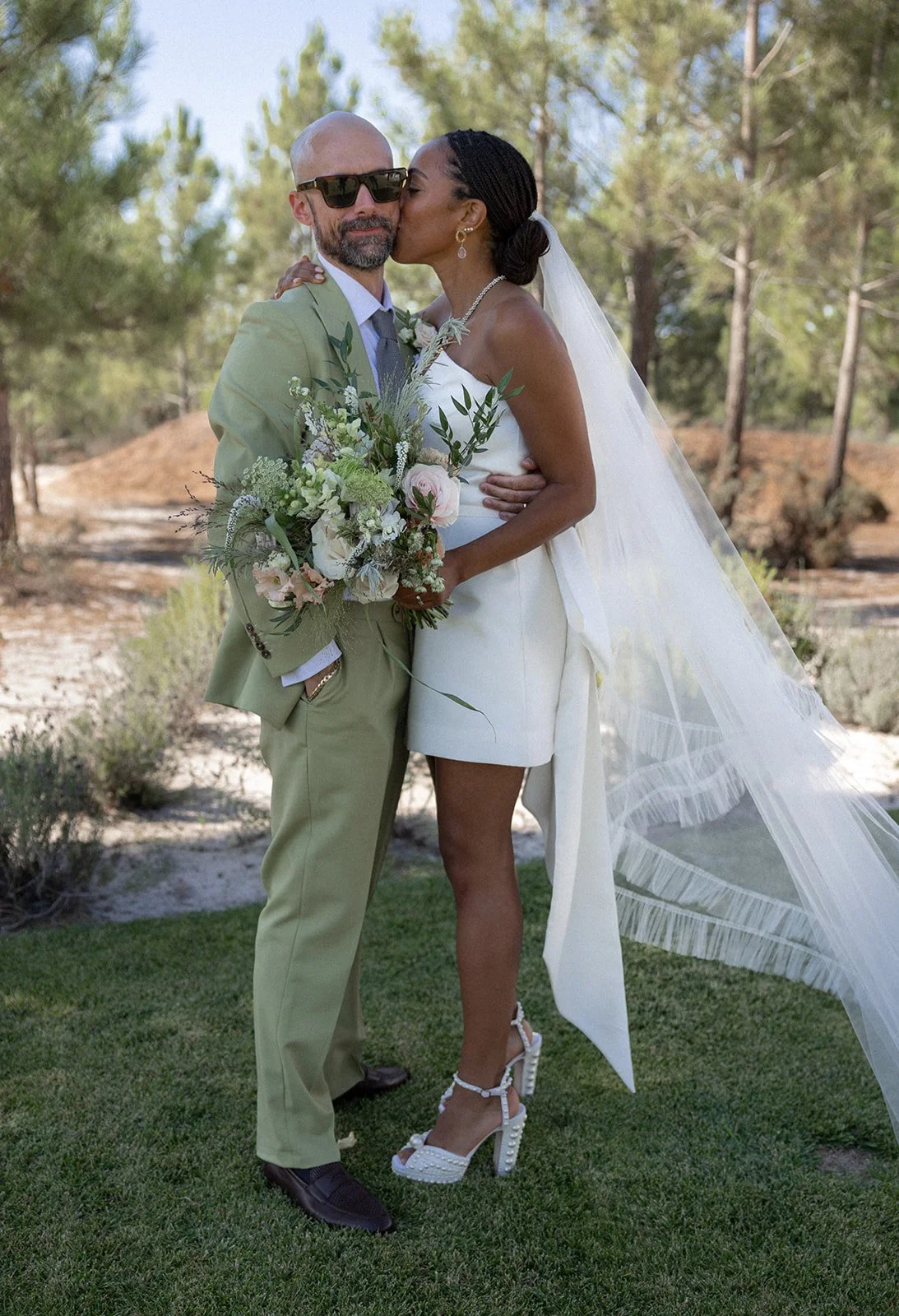
Spatia Comporta, a smaller private estate property within the same corridor, is where we documented Laura and Alex's wedding. The ceremony took place under existing pine trees with no installed structure: the landscape provided the architecture. That low-intervention aesthetic reflects what the Comporta area does at its best. The environment does the work.
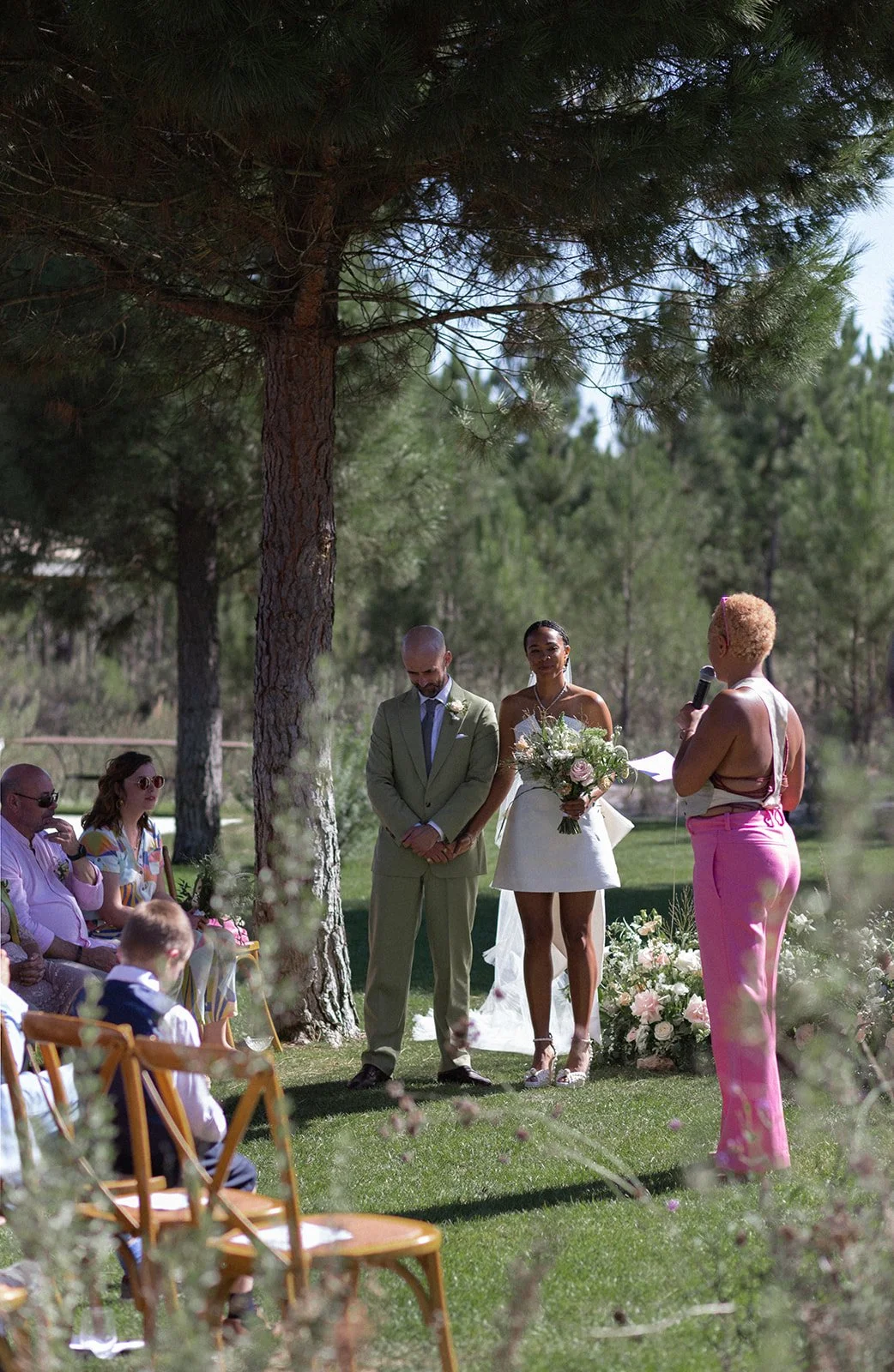
Twenty minutes south, the village of Melides has added a different register to this corridor since 2023. Vermelho Melides, designed by Christian Louboutin and part of Relais & Châteaux, has thirteen rooms and is not suited to a large wedding group. For couples who want a celebration closer to a private house party than a production, it is one of the most editorially distinctive properties in the country: every room individually designed, gardens laid out by French landscape architect Louis Benech, and a dedicated celebrations and weddings program. The adjacent Villa Melides, a few minutes from the hotel, extends the option to full property buyouts for couples who want complete enclosure. Time Magazine named it one of the World's Greatest Places in 2024. The scale limits the guest list to around 30 for a genuine on-site experience. For the right couple, that limitation is precisely the point.
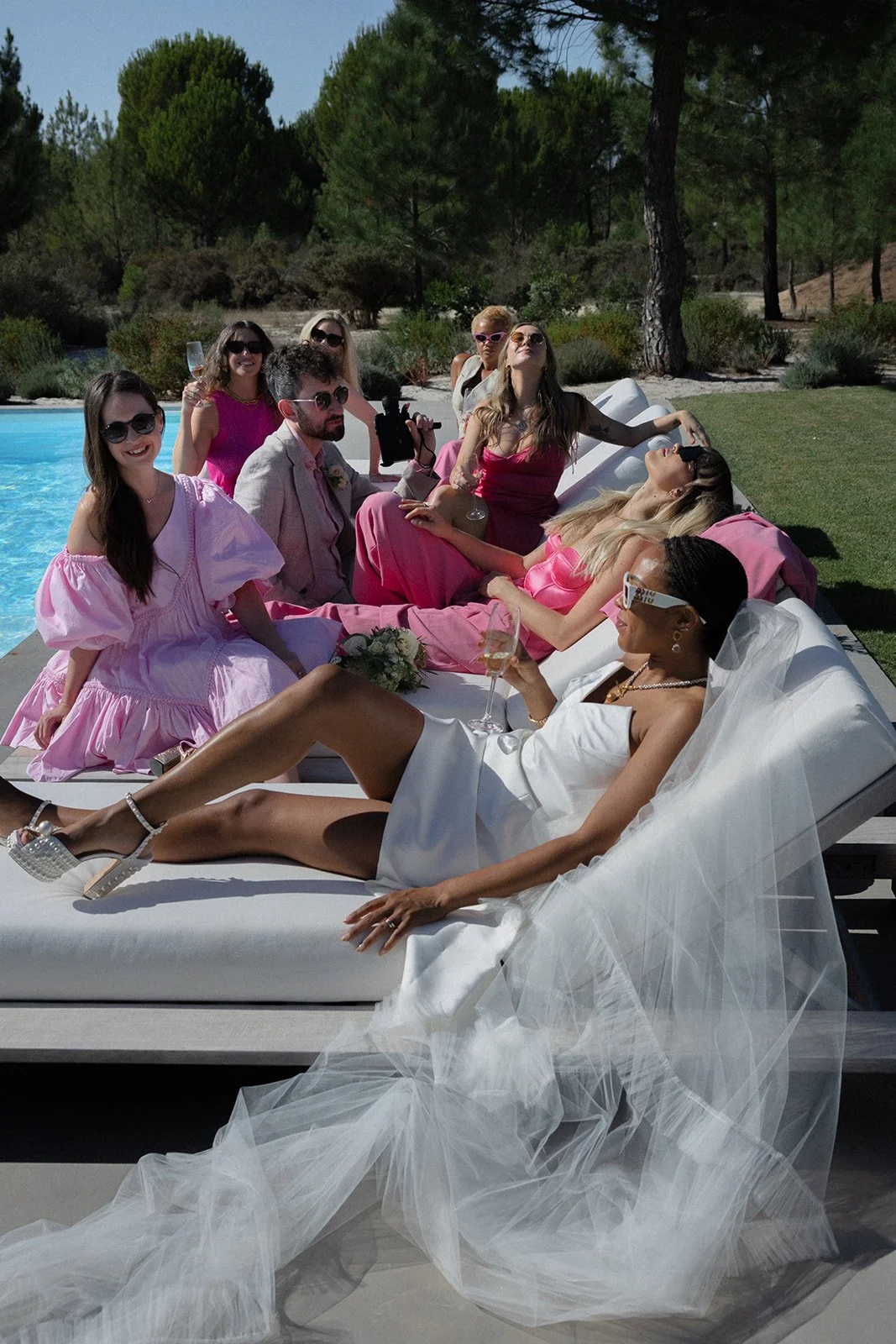
The Comporta and Melides corridor's main constraint is production logistics. The region has fewer purpose-built event suppliers than either Lisbon or the Algarve. Catering, florals, and lighting often require longer supply chains than in more developed areas. For couples who work with an experienced coordinator early, none of this is prohibitive. For couples who expect the venue's in-house team to carry most of the weight, the Algarve is a more straightforward choice.
Northern Portugal: The Case for the Minho
Northern Portugal receives a fraction of the international destination wedding interest of the Douro or the Algarve, and that gap is not justified by what the region actually offers. The Minho landscape, Atlantic-facing, deeply green, built from granite and bounded by the Lima and Minho rivers, is visually unlike anything in the south. The light is softer, more diffuse, and more unpredictable. The architecture is older and less mediated by renovation. For couples whose aesthetic reference runs toward something rawer than the polished luxury of southern Portugal, the north offers a version of the country that remains largely underrepresented in the international destination wedding market.
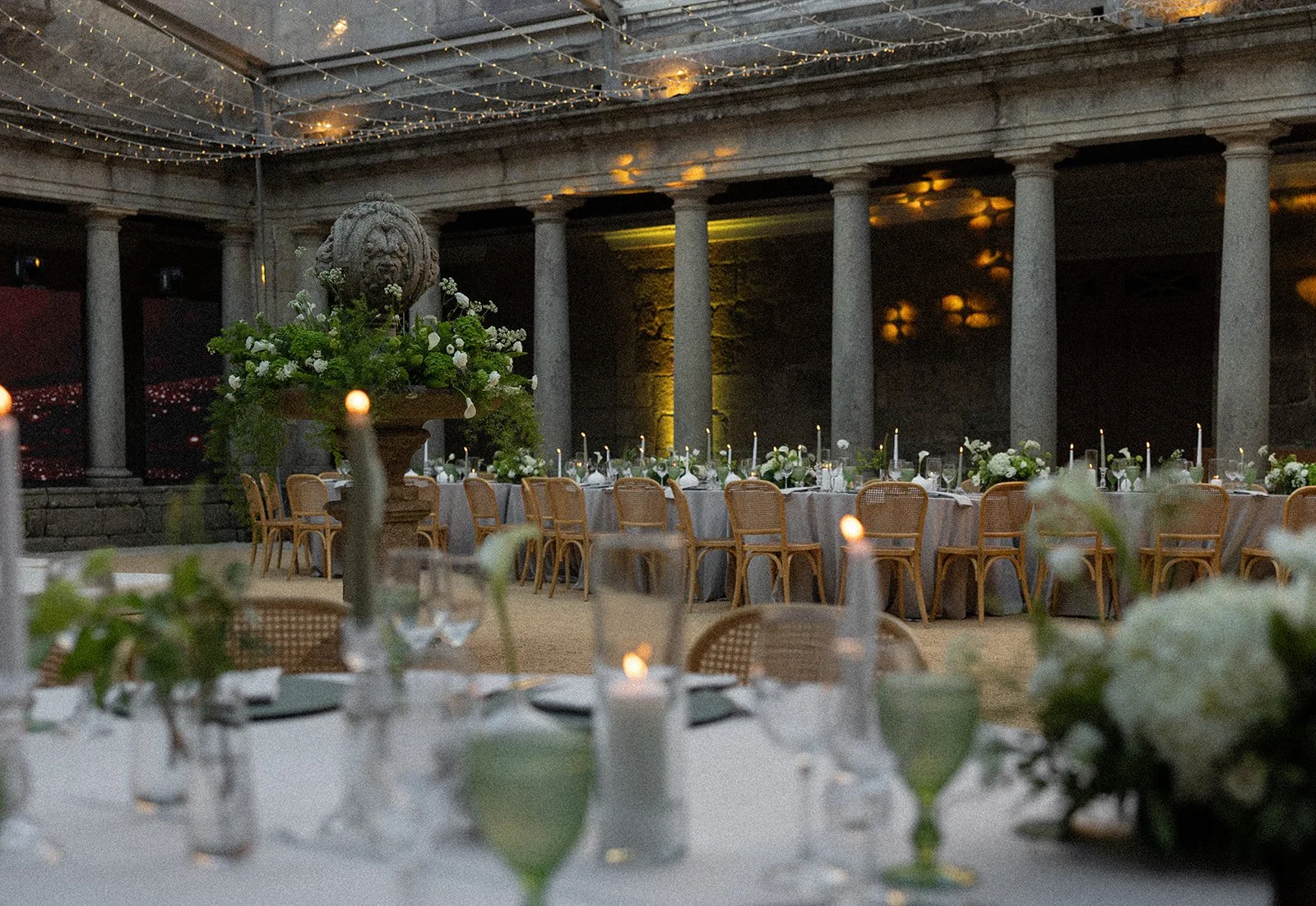
Mosteiro de Landim, near Vila Nova de Famalicão and 25 minutes south of Porto, is a 12th-century monastery listed as a national heritage site and run as an event venue by the family that owns the surrounding wine estate. The cloister accommodates around 250 guests. The two adjoining halls, one with a carved 18th-century ceiling made by the same craftsmen who worked at the Mosteiro de Tibães, host dinner and dancing. The 19th-century gardens, planted with century-old camellias, rhododendrons, and azaleas, accommodate cocktail hours and pre-ceremony events. We documented Celine and Jack's three-day wedding here in 2025, photographed entirely on analog film. The slow, grain-rich quality of that medium reflects something true about what Landim asks of a photographer: the northern light rewards an unhurried approach.
Landim is an event venue, not a hotel. Guests stay in Porto, 30 minutes by car, or in quintas and accommodations within the surrounding area. The logistics of guest movement across three days require advance planning, but have been managed effectively by couples who build transport into the weekend structure from the start. Porto Airport is one of Portugal's best-served international hubs, with direct connections from the UK, North America, and across Europe.
Pousada Mosteiro de Amares, in the Braga countryside, offers a different structure: a 12th-century Cistercian monastery converted into a hotel by architect Eduardo Souto de Moura, with approximately 30 rooms, allowing a significant portion of a small guest list to stay within the monastery itself. The combination of Souto de Moura's interior interventions and a Romanesque cloister gives the property a visual character that has no equivalent elsewhere in Portugal.
The Algarve: The Infrastructure Argument
The Algarve is the most mature destination wedding region in Portugal and the one most international couples encounter first. The event infrastructure here is the most developed in the country: caterers with large-scale experience, venues with dedicated wedding teams, accommodation concentrated enough that guest logistics across a weekend are manageable, and Faro Airport with direct connections from the UK, North America, and across Europe.
The landscape along the western Algarve is genuinely distinct from anything further north. Limestone cliffs drop directly to the Atlantic. The late-afternoon light across the coast road between Lagos and Sagres has a quality that the south-facing exposure and the proximity of the ocean produce together, and that cannot be replicated in an inland setting. For couples whose visual priority is ocean and rock rather than vineyard or forest, the Algarve delivers what no other Portuguese region can.
Vila Vita Parc, on the cliffs above Porches, is the established reference property for high-end multi-day weddings in the region. The resort is part of Relais & Châteaux, has multiple ceremony and reception locations distributed across a cliff-top estate, and includes a private beach accessible from the property. The capacity for larger celebrations, combined with the accommodation range within the resort, makes it one of the few Portuguese properties that can absorb a guest list of 150 or more without requiring guests to disperse into nearby hotels.
The village of Estói, ten kilometers north of Faro and twelve kilometers from the airport, offers the Algarve's only palace hotel. Pousada Palácio de Estói is a 19th-century palace, part of Small Luxury Hotels of the World, combining neo-Baroque and neo-Rococo architecture, with 63 rooms and French-style gardens designed with a clear reference to Versailles. The gardens accommodate ceremonies for up to 170 guests. The palace's interiors, including what are considered the finest decorative plaster ceilings in the Algarve and two historic tea pavilions, give the property an architectural density that the coastal resorts cannot replicate. For couples who want the Algarve but are not drawn to the cliff-top or beach resort format, Estói is the only genuinely palatial option in the region: on-site accommodation keeping the group together, and a location that makes airport logistics frictionless.
The western Algarve, around Sagres and the Costa Vicentina, offers a different version of the region: smaller, more remote, and with a coastal character that is rawer than the developed central coast. Martinhal Sagres, a luxury resort set within the Parque Natural do Sudoeste Alentejano e Costa Vicentina, operates at a smaller scale and suits couples who want the Atlantic without the density of the Algarve's central corridor.
The trade-off the Algarve presents is familiarity. Guests who travel regularly to southern Europe will recognize the setting. For couples who want to bring their group somewhere genuinely unfamiliar, the Douro or Alentejo interior will deliver more in that specific regard. For couples who want logistics to work with the least friction, a large pool of nearby accommodation, the best international flight connections in the country, and an Atlantic coast setting, the Algarve remains the strongest option in Portugal.
How to Choose: A Direct Answer
The right region for a multi-day wedding is the one that answers what matters most to the specific couple, not the one with the highest average review score.
Couples whose priority is visual landscape drama and an immersive wine country setting tend toward the Douro, particularly in the harvest window. The valley's scale is singular in Portugal.
Couples who want privacy as a structural condition rather than a feature tend toward the Alentejo interior. Barrocal and the estates around Monsaraz offer a distance from the outside world that more accessible regions cannot replicate.
Couples who want an understated coastal celebration with genuine editorial character, away from resort infrastructure, tend toward the Comporta and Melides corridor. The scale limits the guest list, and production logistics require advance planning, but the result is consistently among the most visually specific wedding weekends available in Portugal.
Couples drawn to rawer northern light, granite architecture, and a landscape that has not been shaped by tourism tend toward the Minho and northern Portugal. The logistics require more coordination than the south, the infrastructure for international couples is less developed, and the region remains underrepresented in the market. That underrepresentation is a reason to consider it, not a reason to dismiss it.
Couples who want the largest operational safety margin, the best flight connections, and an Atlantic coast setting tend toward the Algarve. The infrastructure advantage is real, and it matters at scale.
None of these regions is interchangeable with the others. The right answer comes from an honest reading of priorities, not from rankings that treat all multi-day weddings as variations on the same event.
For couples exploring venues within each region, our Algarve wedding venues guide and Alentejo wedding venues guide cover specific properties in more detail.
