
ALGARVE ELOPEMENT: LOCATIONS, PERMITS AND WHAT TO EXPECT
The Algarve coast rewards couples who choose intimacy over scale. The south-facing limestone cliffs, the Atlantic sunsets, the relative quiet of May or October.. this region photographs differently from any other part of Portugal, and planning an elopement here requires specific knowledge of locations, permits, and seasonal light. At The Lopes Photography, we photograph ten weddings and elopements per year across Portugal, Italy, and France; our work has been published in British Vogue, Vogue Arabia, Vogue Australia, and Tatler. This guide is based on our direct knowledge of the Algarve coast and is designed to answer the questions couples ask us most.
What an Algarve Elopement Actually Looks Like
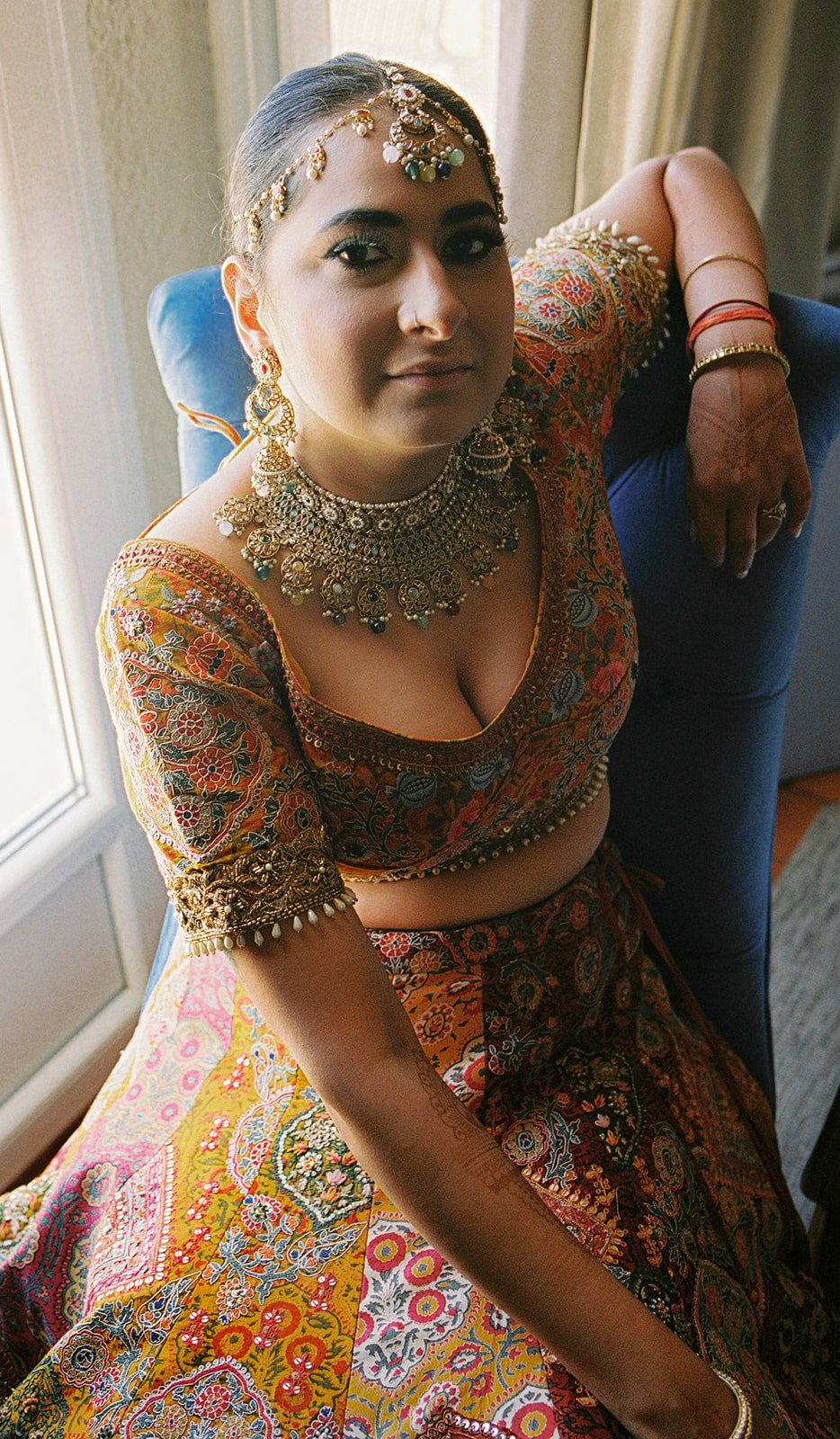
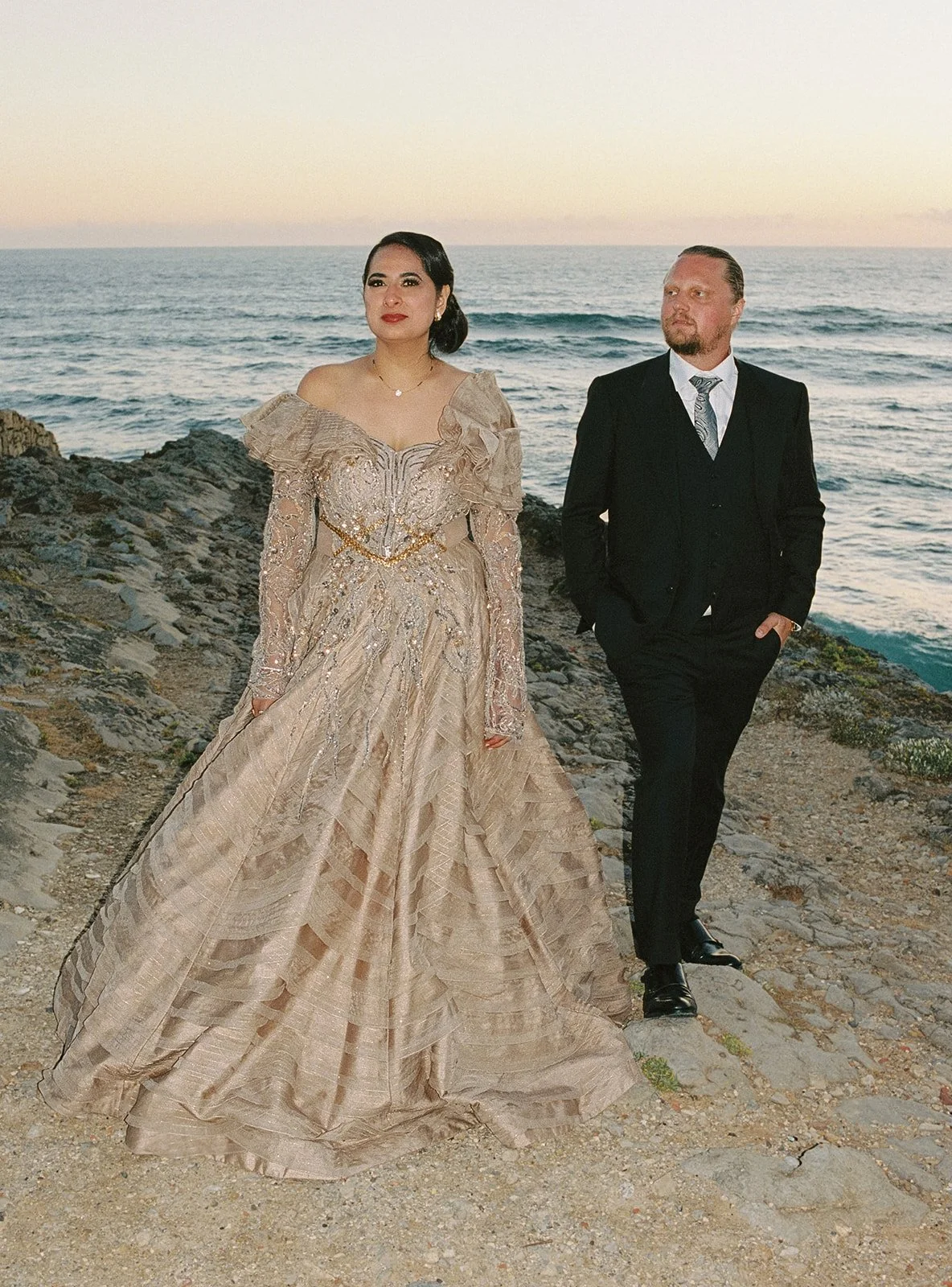
An Algarve elopement is typically a symbolic ceremony for two to twenty people at a clifftop, beach, or private location, lasting two to four hours, with the emphasis entirely on the couple rather than a traditional wedding program. There is no required venue booking, no catering minimum, and no formal guest list to manage. The day centers on the ceremony itself and a portrait session in the surrounding landscape, usually timed to the late-afternoon light window that makes the limestone cliffs read the way couples picture them.
The Algarve's strength as an elopement destination is the variety of locations within a relatively contained geography. You can move from the vertical sea stacks of Ponta da Piedade to a sheltered private cove within thirty minutes. That flexibility matters when you are planning a small ceremony without a dedicated coordinator handling logistics.
If you are considering the broader question of whether an elopement or a destination wedding is the right format for your plans, our Portugal elopement photography guide covers that comparison in detail. For couples who have already decided on the Algarve specifically, what follows is a location-by-location breakdown.
The Best Algarve Locations for an Elopement
The most photographically interesting and logistically accessible elopement locations in the Algarve are Ponta da Piedade near Lagos, Praia da Marinha in the Lagoa municipality, Cabo de São Vicente near Sagres, Praia da Bordeira on the west coast, and Praia da Albandeira near Carvoeiro. Each location has different access conditions, crowd density by season, and photographic character.
Ponta da Piedade, Lagos
Ponta da Piedade offers golden limestone sea stacks and arches on the southern Atlantic coast, reachable via a walking trail from Lagos town center. The site is publicly accessible with no entry fee and no advance booking required. In July and August, peak tourist traffic at this location is significant, and having a ceremony in privacy becomes difficult without an early-morning start. In May, June, September, and October, the same site can feel close to private in the late afternoon. The light enters horizontally from the west from approximately 17:00 in May and 16:00 in September, which creates the warm, directional quality that makes the cliffs read in photographs.
Praia da Marinha, Lagoa
Praia da Marinha is one of the Algarve's most visually distinctive beaches, with layered limestone cliffs, natural rock arches, and water that shifts from turquoise near the shore to deep blue offshore. The beach is reached via a steep staircase, which limits accessibility for large groups but makes it naturally suited to small elopements. The cliff path above the beach offers elevated ceremony positions with full ocean views and less foot traffic than the beach itself.
Cabo de São Vicente, Sagres
The southwest corner of mainland Europe, Cabo de São Vicente sits above vertical sea cliffs at the point where the Atlantic and the Mediterranean maritime routes have intersected for centuries. The lighthouse and headland are a national monument with no private booking system, which means the space is always shared with other visitors. An elopement here works best as an informal symbolic ceremony in the early morning or at dusk in September or October, when the site is at its quietest, and the horizontal light from the west is at its most directional. The wind at the cape is a constant factor in both planning and photography.
Praia da Bordeira, Aljezur
Praia da Bordeira sits within the Parque Natural do Sudoeste Alentejano e Costa Vicentina on the west-facing Atlantic coast. The beach is large, backed by golden dunes, and consistently less visited than the south coast sites, including in summer. For elopements within the Natural Park boundary, it is advisable to contact the park authority (ICNF) at least eight weeks in advance to confirm whether your specific plans require a permit. Photography at natural park beaches without a formal ceremony or commercial activity typically does not require advance authorization, but the rules can shift depending on the exact activity and scale.
Praia da Albandeira, Carvoeiro
A sheltered cove between Portimão and Carvoeiro, Praia da Albandeira is smaller than Marinha and Bordeira, accessible via a coastal walking trail, and naturally framed by limestone cliffs on three sides. The enclosed geometry of the cove creates soft, reflected light in the afternoon that is different in character from the open cliff exposures at Ponta da Piedade or the cape. It is a consistent option for couples who want photographic intimacy without the coordination of an early-morning start.
Permits for an Algarve Elopement
Most public beaches and coastal paths in the Algarve do not require advance permits for a symbolic elopement ceremony. The practical division is between sites within protected natural areas, which may require advance notice or a simple authorization from the park authority, and sites on standard public coastal access, which require no permit for a ceremony of personal nature.
The Parque Natural do Sudoeste Alentejano e Costa Vicentina covers the west coast of the Algarve from Odeceixe south to Burgau. If your chosen location falls within this boundary, contact the ICNF regional office in Faro at minimum eight weeks before your date to confirm requirements. For south-coast locations like Ponta da Piedade, Praia da Marinha, and Praia da Albandeira, no permit is typically required for a symbolic ceremony.
For photography specifically, public beaches are freely accessible. Private hotel terraces, clifftop restaurant grounds, and quinta properties require a venue booking or prior arrangement with the property management.
Legal vs. Symbolic: What Most Couples Choose
Most international couples eloping in the Algarve choose a symbolic ceremony because it requires no Portuguese paperwork, allows full flexibility on location, and can be legally registered in their home country afterward. A symbolic ceremony can take place at any location, can be officiated by any person the couple chooses, and requires no minimum lead time beyond organizing the ceremony components.
A legal civil marriage in the Algarve requires translated and apostilled versions of both parties' birth certificates, valid passports, and any divorce decrees if applicable. The process requires at least two visits to the Civil Registry office (Conservatória do Registo Civil) in the relevant municipality: the first to submit documentation for review, and the second for the ceremony itself. The total process typically takes four to six months from first contact with the registry office, and working with a local legal representative who speaks Portuguese is strongly recommended for foreign nationals.
For couples who choose the symbolic route in Portugal and plan to legalize the marriage in their home country afterward, this is a well-established approach with no legal complications in most jurisdictions. Your local civil authority will typically accept documentation of the symbolic ceremony alongside a standard civil registration at home.
Light and Timing in the Algarve
September and October are the most consistent months for Algarve elopements: tourist density drops significantly after late August, temperatures remain warm at 22 to 27°C, and the light shifts from the harsh overhead quality of high summer to a longer, lower-angled afternoon window.
The Algarve coast faces south and southwest. In July and August, the sun is overhead from approximately 10:00 to 17:30, creating flat, high-contrast conditions that are unfavorable for outdoor portrait photography. The golden-hour window, when the light becomes horizontal and warm, arrives between 19:00 and 21:00 in summer and between 17:30 and 20:00 in September and October. This is the one-hour window that most elopement photography in the Algarve is built around.
May and June offer similar light quality to September and October, with the advantage of slightly longer evening windows. The main drawback is that May in particular can bring occasional days of Atlantic cloud cover, which diffuses the light further and removes the directional quality that makes the cliffs read photographically.
For couples considering July and August specifically: Ponta da Piedade can have several hundred visitors during peak afternoon hours. The practical response is either an early-morning ceremony start (before 8:00) or a shift to a less-trafficked location like Praia da Bordeira or Praia da Albandeira, where peak season crowd density is lower.
Frequently Asked Questions
How much does Algarve elopement photography cost?
Elopement coverage with The Lopes Photography starts from €8,000 for a full-day documentation from preparation through the end of the evening. This includes a portrait session at one or more coastal locations and full delivery of the image collection. Shorter ceremony-only coverage is available depending on our calendar, which we limit to ten weddings and elopements per year.
How far in advance should we book?
Twelve to eighteen months in advance for September and October dates, which are the most requested months in the Algarve. For May and June dates, eight to twelve months is typically sufficient. We keep our calendar intentionally limited, which means availability at short notice is rare rather than common.
What distinguishes The Lopes Photography's approach to elopements?
We photograph a maximum of ten events per year, which means every elopement in our calendar receives the same preparation and location research as a two-hundred-guest wedding. The editorial approach we developed through commissions for British Vogue, Vogue Arabia, Vogue Australia, and Tatler informs how we read light, compose, and document even the smallest ceremonies.
Do we need a local wedding planner for an Algarve elopement?
For a symbolic ceremony at a public beach with no catering or florals, a planner is not required. For elopements that include accommodation coordination, catering, florals, or a legal civil ceremony, a local coordinator who speaks Portuguese will save significant time on permit logistics, supplier communication, and Civil Registry procedures. We can recommend planners with strong local knowledge if that is useful.
Is the Algarve too crowded for an elopement?
At peak locations in July and August, the answer is yes if you plan your ceremony during the afternoon. The practical solution is scheduling in September or October, when the same locations are dramatically quieter, or choosing west-coast locations like Praia da Bordeira that are consistently less visited. Early-morning ceremonies, starting at or before 7:00, are also effective at peak-season south coast sites, with the added benefit of different, softer light conditions.
If you are planning an elopement in the Algarve and want photography that is designed specifically around the conditions of your date and location, we accept a small number of elopements each year within our ten-event calendar. You can find out more about how we work on our Algarve wedding photography page, or reach us directly through our contact page where we ask for a few details about your plans before scheduling a call. Our work is built on preparation, and we prefer to start a conversation early.
