
PLANNING AN INDIAN DESTINATION WEDDING IN PORTUGAL: A COMPLETE GUIDE
Planning an Indian destination wedding in Portugal brings together two of the world's great wedding traditions: the layered, multi-day celebration structure of Indian wedding culture and the architecture, light, and Atlantic coast landscape of Western Europe. For Indian couples based in the US, UK, Canada, or Australia, Portugal has become one of the strongest options in Europe for a destination celebration that accommodates the full scale of an Indian wedding, from the Mehndi ceremony to the final reception.
This guide covers the decisions that matter most when planning an Indian destination wedding in Portugal: the multi-day celebration structure, how to choose the right venue, what vendors to source and from where, the photography considerations that are specific to Indian weddings, and the planning timeline that makes the whole enterprise manageable.
Why Portugal Works for Indian Destination Weddings
Portugal offers a combination of practical and aesthetic advantages that are difficult to match elsewhere in Europe. The climate in the Lisbon region is warm and dry from May through October, with June, September, and October providing the most consistent natural light and the most comfortable outdoor conditions for guests arriving from South Asia, North America, or the UK.
The country's flight connections have improved significantly over the past decade. Lisbon's Humberto Delgado Airport has direct routes to Heathrow, JFK, Toronto, and multiple Gulf hubs, which simplifies logistics for Indian families often traveling from different cities and countries. Most of the major wedding venue regions, like the Lisbon coast, Sintra, and the Alentejo, are within thirty to sixty minutes of the airport.
Portugal also has a strong tradition of hosting large private events across multiple days. Many estates and boutique hotel properties around Lisbon and Cascais were built to function as self-contained communities, with main houses, guest wings, gardens, and outbuildings on a single property. That physical infrastructure is well suited to Indian weddings, where different ceremonies may take place in different spaces on the same grounds across consecutive days.
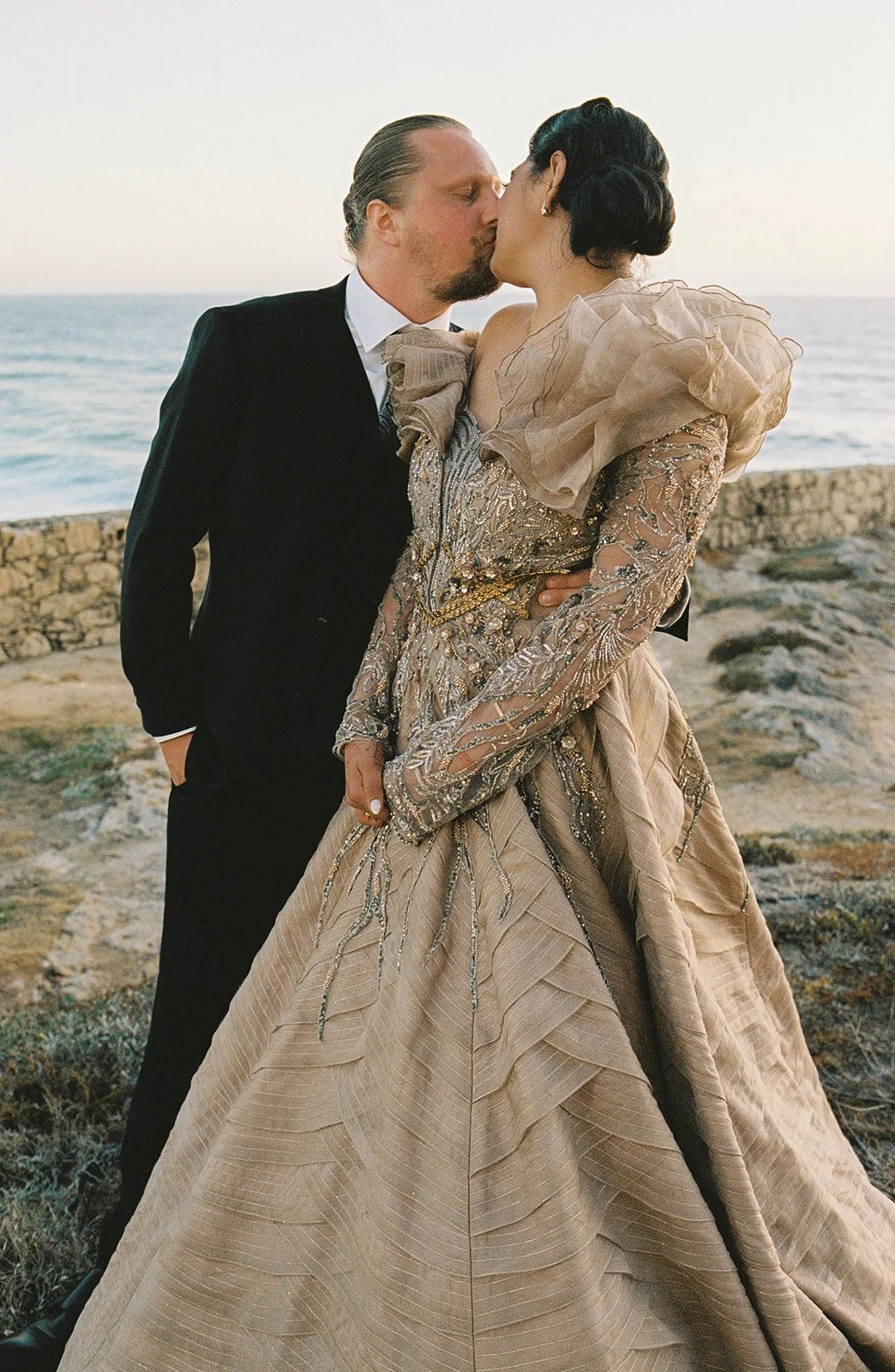
The Ektaryan Indian destination wedding at Fortaleza do Guincho in Cascais is one documented example of this in practice. That celebration included a Mehndi ceremony, a welcome event, and the main wedding across multiple days at a coastal Atlantic venue. Our full editorial coverage of that wedding at Fortaleza do Guincho shows what a multi-day Indian wedding looks like in the Portuguese context.
How Many Days to Plan For
Indian destination weddings in Portugal typically run three to five days. The schedule depends on the number of ceremonies the couple wants to include and the size and origin of the guest group.
A three-day format covers a Mehndi ceremony on the first day, a Sangeet or welcome dinner on the second, and the main wedding ceremony and reception on the third. A five-day format adds a pre-arrival welcome event for guests arriving early and a post-wedding brunch or morning-after gathering to close the celebration.
Our studio's experience with multi-day coverage at Indian weddings confirms what most couples discover once they are in the middle of planning: the Mehndi, the Sangeet, and the main ceremony each have their own visual and emotional arc. Compressing them is possible, but it limits what the photographs can show. Our full article on why multi-day wedding coverage changes the entire experience addresses this in detail.
The Multi-Day Celebration Structure in Portugal
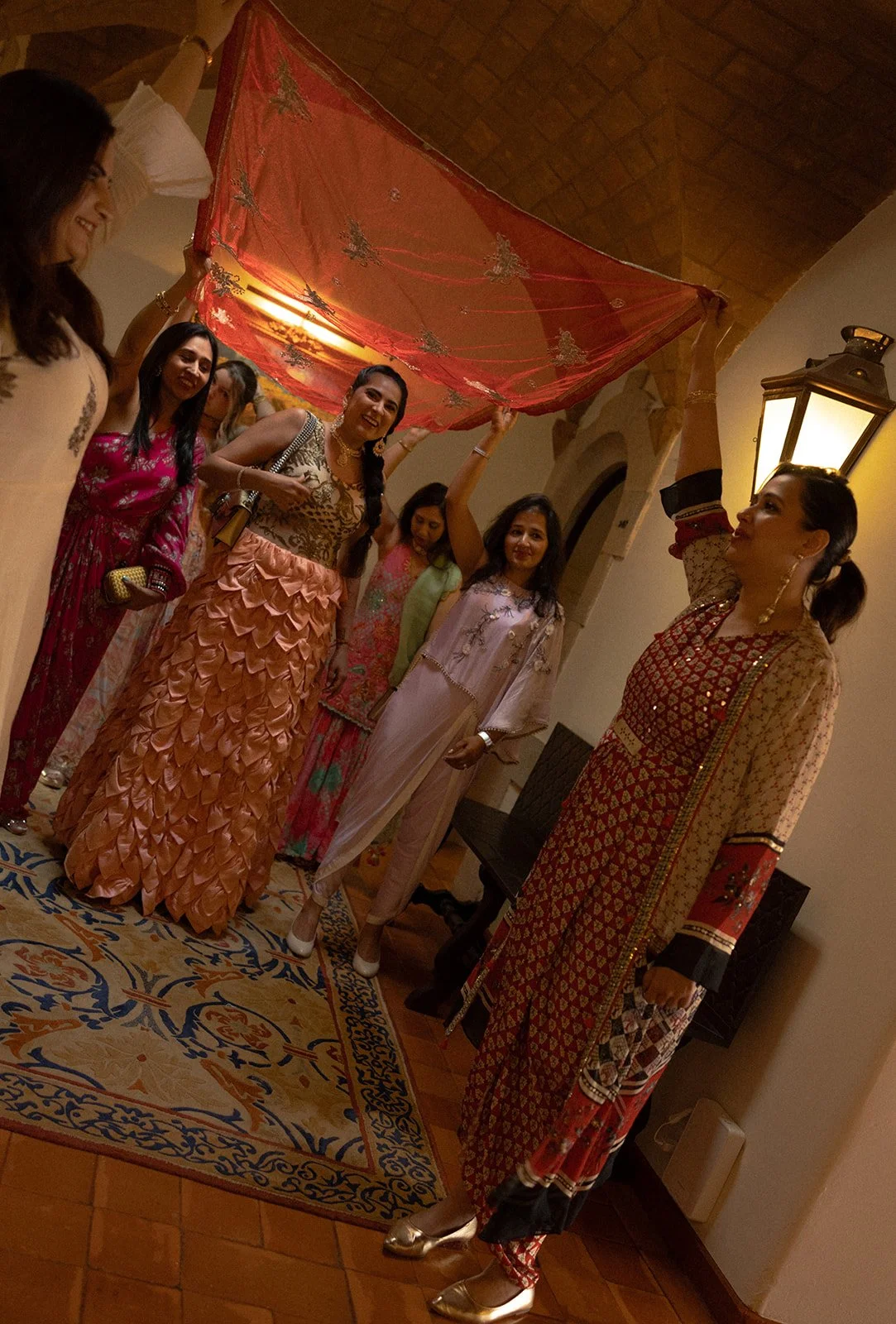
Mehndi ceremony. The Mehndi is typically held one to two days before the main wedding. At Portuguese venues, it takes place in an interior salon, a garden terrace, or an open courtyard, depending on the time of year and the time of day. The ceremony requires good natural light, comfortable seating for the bride and guests, and enough space for the mehndi artists to work. Many of the older estate properties and palaces in the Lisbon and Cascais area have interior courtyards and glazed salons that work well for this format without requiring significant additional decoration.
Sangeet. The Sangeet is an evening celebration with music, dance performances, and dinner. At Portuguese venues, this is typically staged in a ballroom, a garden with a temporary structure, or an outdoor terrace, depending on the season. Acoustics and production logistics are the primary practical considerations, along with confirming that local noise ordinances allow the amplification levels needed for a Sangeet.
Welcome event. A pre-wedding welcome event gives guests arriving from different countries a first shared experience before the main ceremonies begin. This ranges from a formal cocktail dinner to a relaxed poolside afternoon with light catering. Many venues on the Lisbon coast and in Sintra have pool terraces and garden spaces that work naturally for this format.
Main ceremony and reception. The main ceremony can be a Hindu ceremony, a civil ceremony, or a symbolic ceremony, depending on the couple's religion, the legal requirements they choose to meet in Portugal, and the officiants they arrange. For couples who want to understand the legal process for marrying in Portugal as foreign nationals, our full guide on legal requirements to get married in Portugal as a foreigner covers that in detail.
Choosing a Venue for an Indian Wedding in Portugal

The primary criterion for an Indian destination wedding venue in Portugal is accommodation capacity. Because the guest group is typically international and multi-generational, having enough bedrooms on-site or within a short transfer avoids the logistical complexity of coordinating guest movement across multiple events over consecutive days.
Properties with a main house and a guest annex or secondary building work particularly well for Indian weddings. They allow the immediate family and closest guests to be on the same grounds while providing overflow accommodation within the same booking.
The second criterion is flexibility in catering and production. Most Indian destination weddings in Portugal involve a catering team that supplements the venue's existing kitchen with Indian dishes. This requires a venue that allows external caterers to share kitchen facilities, at minimum the preparation and storage areas, and that has the infrastructure for a larger catering operation than a standard venue wedding.
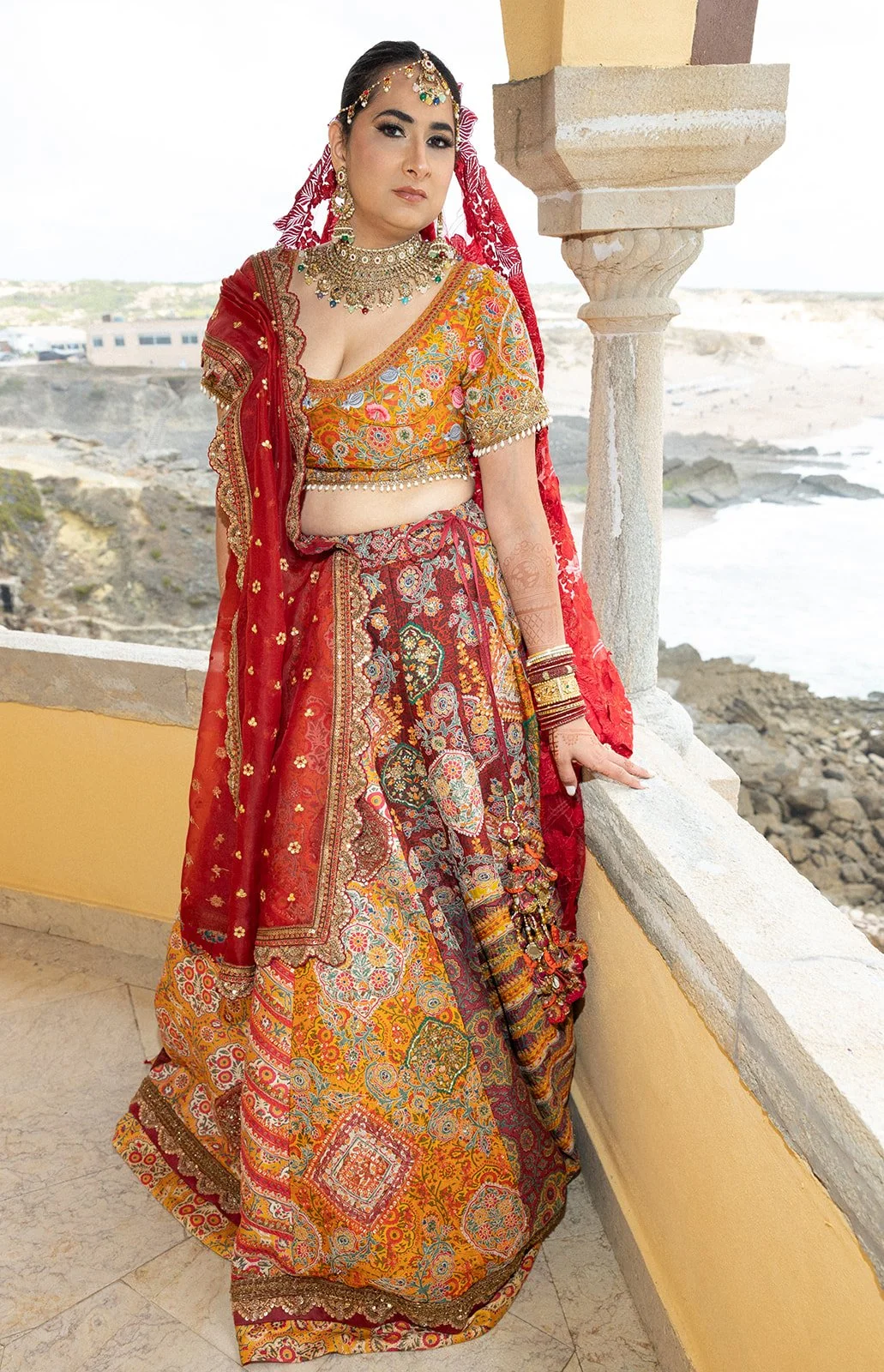
The third criterion is light. Indian wedding attire, particularly the embroidery, jewelry, and textile details of a bridal lehenga, photographs best in warm, directional light. Venues with open-sky access for ceremony setups and interior spaces with large windows or south-facing terraces give photographers the best conditions across the full multi-day schedule.
Our article on finding the right Indian destination wedding photographer in Portugal covers additional venue considerations from a photography perspective, including what we look for when evaluating a property for an Indian wedding.
What Vendors You Will Need to Source
An Indian destination wedding in Portugal requires vendors across two categories: those who can be sourced locally within Portugal and those who will need to travel.
Mehndi artists. Experienced bridal mehndi artists are available in Portugal, with the largest concentration in Lisbon. For a large Indian wedding, many couples bring one or more mehndi artists from the UK or from India who are already familiar with the family's preferences and with the scale and intricacy of Indian bridal mehndi. Travel and accommodation costs for traveling artists need to be factored into the vendor budget early in the planning process.
Choreographer. If the Sangeet includes organized dance performances, many couples work with a choreographer based in the UK or India who travels to Portugal for the event. This person typically arrives three to five days before the Sangeet for rehearsals.
Indian catering. The most common approach for Indian catering at Portuguese venues is to engage a UK-based Indian catering company that specializes in destination wedding catering and has experience operating in European venue kitchens. This approach ensures the food quality matches expectations while working within Portuguese kitchen infrastructure and food safety regulations.
DJ and sound production. A DJ experienced in Bollywood, Punjabi, and contemporary South Asian music is essential for the Sangeet and reception. The UK has a significant pool of South Asian wedding DJs who regularly work at destination events across Europe. This is typically the vendor category in which bringing someone you already know produces the most reliable result.
Wedding planner. For Indian destination weddings specifically, working with a planner who has direct experience coordinating multi-day Indian events in Portugal is the highest-value investment in the planning process. The coordination of five or more vendors across different countries, the translation of event logistics across cultural and language contexts, and the management of a complex guest schedule across multiple days is the kind of work that benefits most from specialized experience.
Photography at Indian Destination Weddings in Portugal
Indian destination weddings generate more photographic material per day than almost any other type of event. The Mehndi, the Sangeet, the welcome event, the getting-ready sequence, the ceremony, and the reception each have distinct visual moments that require dedicated coverage. Multi-day photography is the standard for Indian destination weddings, not an upgrade.
At The Lopes Photography, we document the complete arc of Indian destination weddings in Portugal, from the mehndi artists working and the bridal details to the ceremony and the late-evening dancing. We are published in British Vogue, Vogue Arabia, and Tatler, and we photograph a maximum of ten weddings per year. Our coverage of Indian destination weddings begins at €10,000.
The visual contrast between Portuguese architecture and South Asian wedding attire is one of the strongest aesthetic combinations in European destination wedding photography. The pale stone walls, terracotta tile floors, and Atlantic light of venues on the Lisbon coast produce a backdrop that is distinctly Portuguese and reads very differently from an Indian palace venue, while the warm tones of that light complement the embroidery, metallics, and jewel colors of Indian wedding attire in a way that is consistently striking.

Planning Timeline for an Indian Destination Wedding in Portugal
Planning an Indian destination wedding in Portugal requires more lead time than a domestic wedding. Twenty-four months is the minimum realistic planning horizon for a large multi-day Indian wedding at a sought-after venue. Eighteen months is workable if the venue and photographer are secured within the first ninety days.
The two decisions with the longest lead times are the venue and the photographer. Both have limited availability, and both decisions drive most of the other planning choices. Venue selection determines catering access, accommodation capacity, ceremony location options, and production constraints. The photographer determines whether the visual record of the event matches the scale of investment in the celebration.
A workable sequence for most couples: secure the venue and photographer first, then the wedding planner, then begin sourcing traveling vendors eighteen months out. Begin guest communication fifteen months out so that international families can coordinate travel arrangements. For guests traveling from India directly, Schengen visa applications require coordination and lead time. Indian nationals holding Indian passports require a Schengen visa to enter Portugal and the wider Schengen area, which allows stays of up to ninety days within any one-hundred-and-eighty-day period. Building in twelve months of advance notice for Indian guests to begin their visa process is a conservative but appropriate standard for a large group.
At nine months out, the focus shifts to the detailed run-of-show: the sequence of events across each day, ceremony logistics, sound production requirements, and kitchen access coordination. At six months out, final vendor confirmations and on-site logistics visits should be complete. At three months out, coordination calls with all traveling vendors and a final venue walkthrough close out the major planning decisions.
For additional planning questions about destination weddings in Portugal, our comprehensive FAQ on destination weddings in Portugal covers the most common questions about logistics, legality, and the planning process.
Frequently Asked Questions
How far in advance should I start planning an Indian destination wedding in Portugal?
Twenty-four months is the recommended lead time for a large multi-day Indian destination wedding in Portugal. The venue and photographer have the longest booking horizons and should be secured first, ideally twenty to twenty-four months before the event. Eighteen months is workable if those two commitments are made in the first ninety days of planning. Beyond those two anchors, traveling vendors like the mehndi artists, Indian caterers, and DJ can typically be confirmed eighteen months out.
How much does The Lopes Photography charge for Indian destination weddings?
Coverage for Indian destination weddings at The Lopes Photography begins at €10,000 and typically spans multiple days to cover the Mehndi, Sangeet, and main wedding. We photograph a maximum of ten weddings per year and are published in British Vogue, Vogue Arabia, and Tatler. Couples interested in discussing coverage for their specific event can reach us through the contact form on our website.
Can Indian couples legally get married in Portugal?
Yes. Foreign couples can legally marry in Portugal through a civil ceremony at the local civil registry office. The process requires notarized documents from both partners confirming their legal capacity to marry, translated into Portuguese where necessary. Our full guide on legal requirements to get married in Portugal as a foreigner covers the documentation and process in detail. Many Indian couples in Portugal also hold a legal ceremony in their home country separately and use the Portuguese ceremony as a symbolic celebration with full Indian wedding ceremonies.
Do Portuguese venues accommodate the full multi-day Indian wedding format?
Larger private estate venues and boutique hotel properties in the Lisbon region and Sintra area can accommodate a full multi-day Indian wedding format, including Mehndi, Sangeet, and main ceremony across consecutive days. The most important criteria to confirm directly with each venue are: permission for extended event programming across multiple days, access to kitchen facilities for external Indian catering, and accommodation capacity on-site or within a short transfer. Confirming these terms before contracting is essential.
Do Indian guests need visas to attend a wedding in Portugal?
Indian nationals holding Indian passports require a Schengen visa to enter Portugal. The Schengen visa allows stays of up to ninety days within any one-hundred-and-eighty-day period, which covers the attendance requirements of most wedding guests. For large guest groups with members traveling from India, communicating the visa requirement and recommended timeline at least twelve to fifteen months before the event is strongly recommended.
What makes photographing an Indian wedding in Portugal visually distinctive?
The combination of South Asian wedding attire and Portuguese architecture produces a contrast that is specific to this destination. The warm Atlantic light, pale limestone and azulejo tile interiors, and open coastal landscapes of venues in the Lisbon and Cascais area create a setting that reads distinctly Portuguese while complementing the embroidery, metallics, and jewel tones of Indian wedding attire. The result is a visual register that is neither generically European nor interchangeable with Indian venue photography. Our editorial story of the wedding of Ekta & Ryan, an Indian destination wedding at Fortaleza do Guincho, shows this in practice.
