
PORTUGAL WEDDING REGIONS RANKED BY EXPERIENCE, NOT POPULARITY
After photographing weddings across Portugal for over a decade, with work published in British Vogue, Vogue Arabia, and Tatler, we have watched couples make the same mistake in the same order: they pick a venue before they pick a region. The venue matters, but the region determines the light, the rhythm, the logistical pressure on guests, and what every photograph actually looks like. This ranks Portugal's main wedding regions by the quality of experience they produce, not by how often they appear in searches.
Why Region Comes Before Venue
Most destination couples spend months comparing specific venues and very little time thinking about the landscape those venues sit in. That is the wrong sequence. A venue that photographs beautifully in one region can be logistically miserable in another. And the reverse is equally true: a less formal property in a landscape with exceptional light will produce better images, and a better wedding day, than a technically prestigious venue surrounded by heavy tourist infrastructure.
Portugal has five regions that matter for destination weddings. None of them are interchangeable.
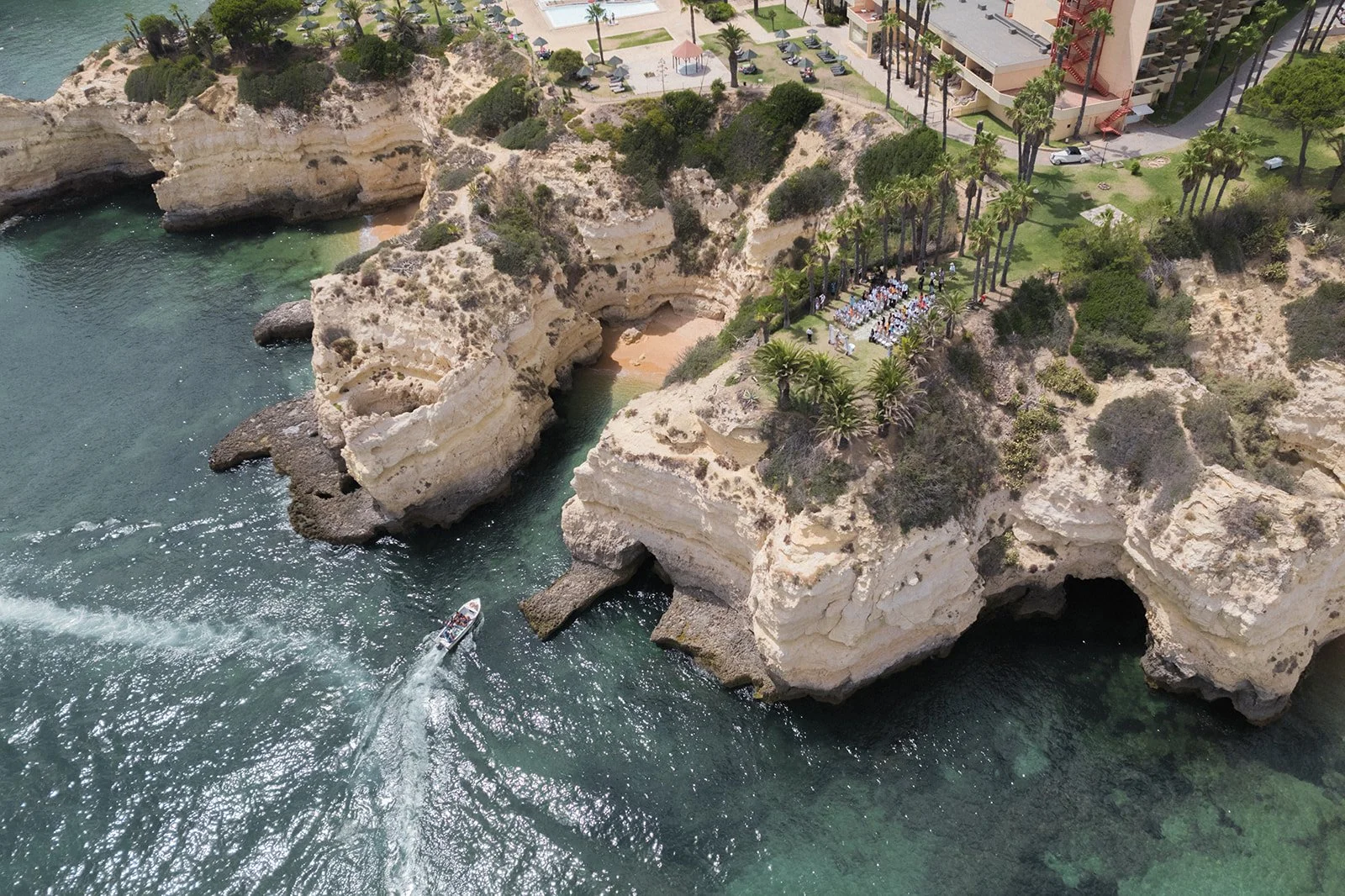
The Algarve: The Right Choice in the Right Season
The Algarve is where most international couples begin their research, and for good reason. The Atlantic light here has a specific character: it stays warm and directional longer into the evening than almost anywhere else in continental Europe, which is why golden hour in the western Algarve can stretch from 7 pm well past 9 pm in midsummer. Venues along the Atlantic cliffs, including the Fortaleza do Guincho near Cascais and properties in the western Algarve such as Vila Vita Parc in Porches and Bela Vista Hotel in Portimão, offer a level of coastal setting that is difficult to replicate.
The complication is timing. From late June through August, the Algarve is the most congested region in the country. The EN125 corridor moves slowly, the airport at Faro operates at capacity, and the venues that sit in genuinely beautiful landscapes are surrounded by high tourist volume. Couples who choose the Algarve in late September or early October consistently report a different experience: the same extraordinary light, quieter roads, more attentive service, and landscapes that no longer need to compete with crowds. If you want the Algarve experience, the shoulder-season version is substantially better than the peak-season version.
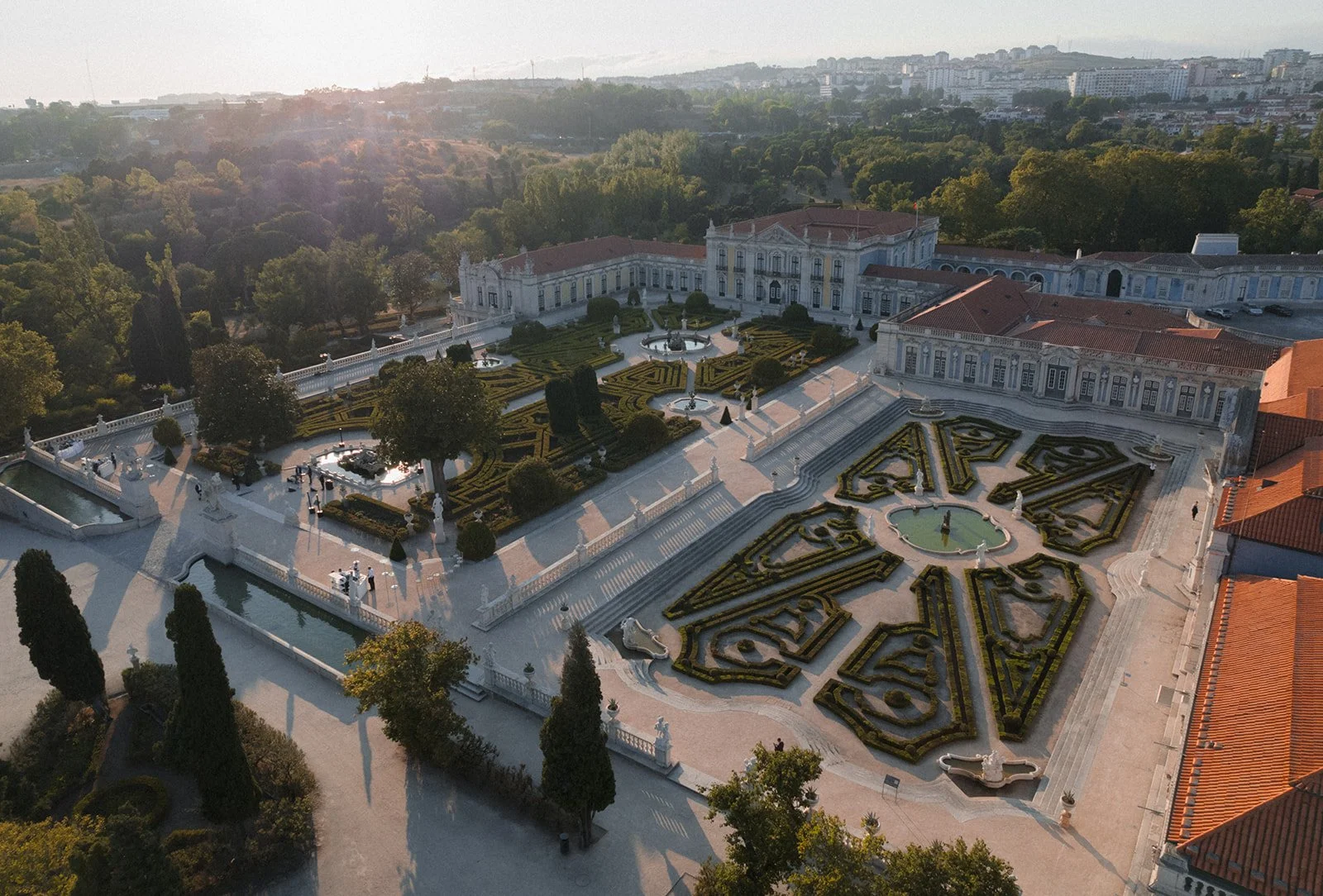
Sintra and Lisbon: Palace Settings With Real Logistical Weight
Sintra is the most theatrically dramatic region in Portugal. The combination of Manueline and Romantic architecture, Atlantic fog rolling in from the coast, and dense forested hillsides produces a setting that no other wedding destination in Europe replicates. Palácio de Queluz, Palácio de Seteais, and the Ritz-Carlton Penha Longa Resort sit within a thirty-minute radius of Lisbon and represent three genuinely distinct registers: eighteenth-century Rococo grandeur, Regency-era classicism, and contemporary resort luxury, respectively.
That theatrical quality comes with logistical constraints that couples often underestimate. The roads into the Serra de Sintra are narrow and heavily trafficked on summer weekends. Parking near the palaces is limited. The tourism footprint around Sintra town is substantial, meaning that ceremony timing is more consequential here than anywhere else in the country. Couples who schedule ceremonies in late afternoon consistently describe a more composed, less crowded day than those who begin at midday. Lisbon itself works best as a base for guests and a welcome dinner location rather than as a primary wedding venue.
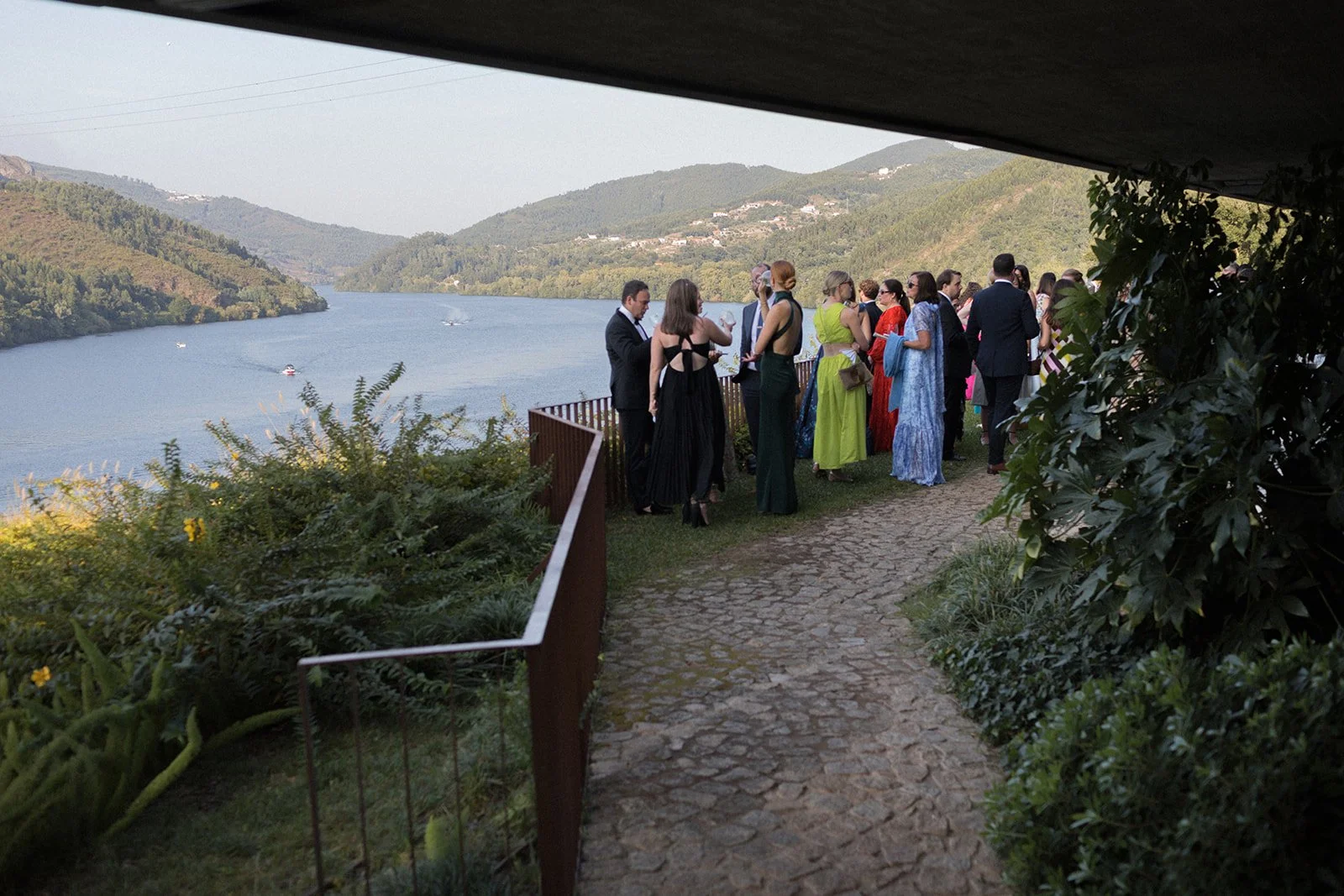
The Douro Valley: Portugal's Most Cinematic Region
The Douro Valley is not where most couples look first, which is precisely why it consistently produces the strongest emotional response. The landscape is visually unlike anything else in Western Europe: terraced vineyards descending in layered bands to a wide, slow river, framed by schist-stone villages that have existed in roughly the same form for centuries. In September and October, when the harvest brings color to the vineyards and the light over the valley runs amber from 5 pm onward, the Douro provides a backdrop that requires almost nothing from a photographer other than positioning.
Venues range from the design-focused simplicity of Octant Douro in Foz Côa to the agricultural grandeur of Quinta da Pacheca in Cambres, where guests sleep in wine barrels converted into suite accommodations, to the Six Senses Douro Valley near Sabrosa, which combines wellness infrastructure with a standard of material finish that no other wedding venue in the region currently matches. The Douro is also, almost by definition, a multi-day region: the logistics of bringing guests in from Porto, the density of the landscape, and the natural pace of the valley all push toward longer celebrations that make fuller use of what the region offers.
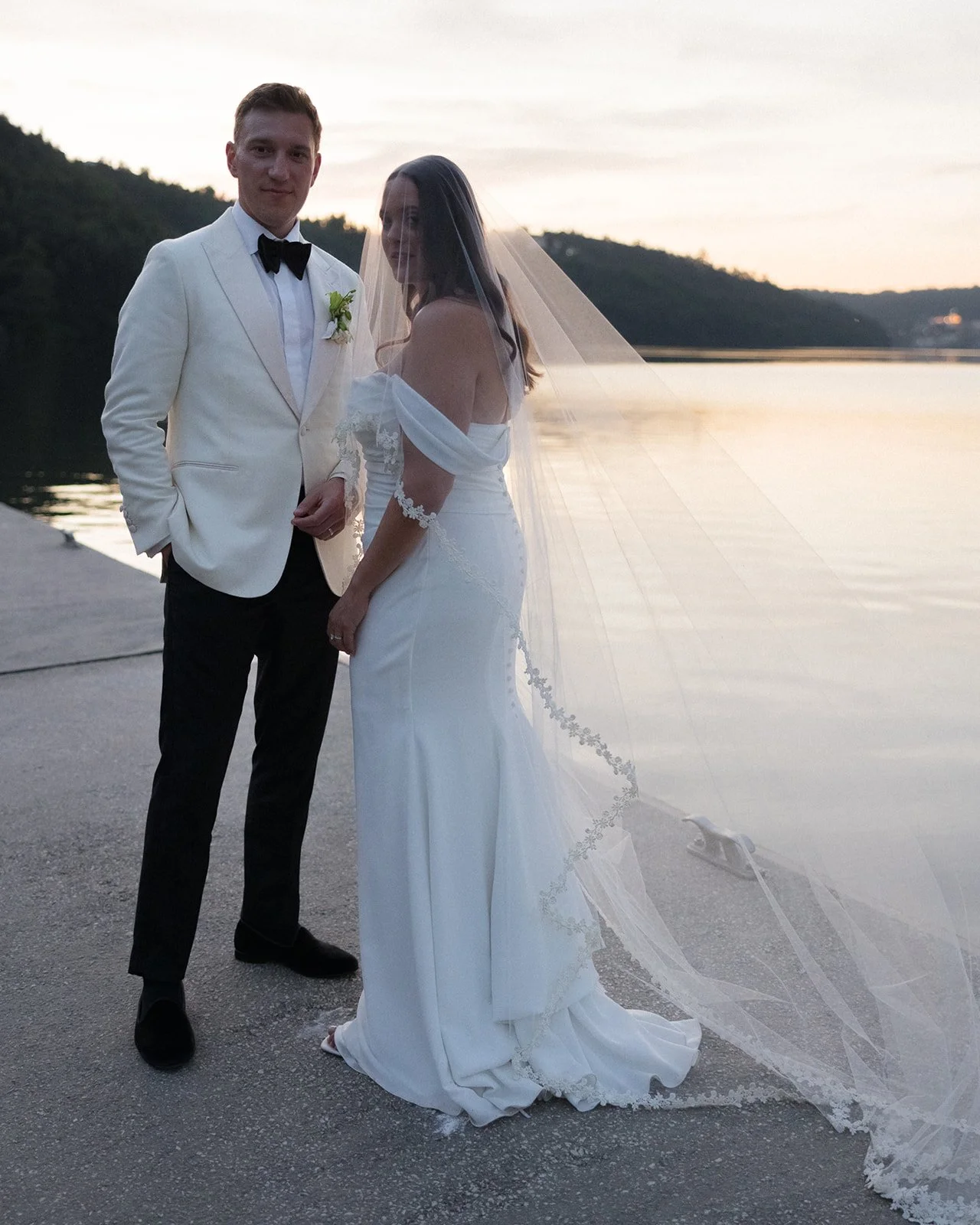
Comporta and the Atlantic Coast: Minimalism as Architecture
Comporta sits two hours south of Lisbon on a peninsula between the Sado estuary and the Atlantic. It does not look like the rest of Portugal. The landscape is flat, defined by rice paddies, maritime pine forests, and wide Atlantic beaches that stretch without interruption. The architectural vernacular is low-slung, timber-framed, and white-washed, shaped by decades of discreet Portuguese modernism rather than by tourism infrastructure.
Venues here, including private estate properties in the Herdade da Comporta territory, operate at a level of seclusion that palace venues in Sintra cannot offer by definition: there is no tourist infrastructure around them, no adjacent town with foot traffic, no competing event on the other side of a wall. A wedding in Comporta feels genuinely isolated in a way that reads as intentional luxury rather than as remoteness. The light is wide and Atlantic: diffuse, with very little of the haze that builds along the Algarve coast through summer. June through early July and September through October produce consistent conditions for outdoor photography.
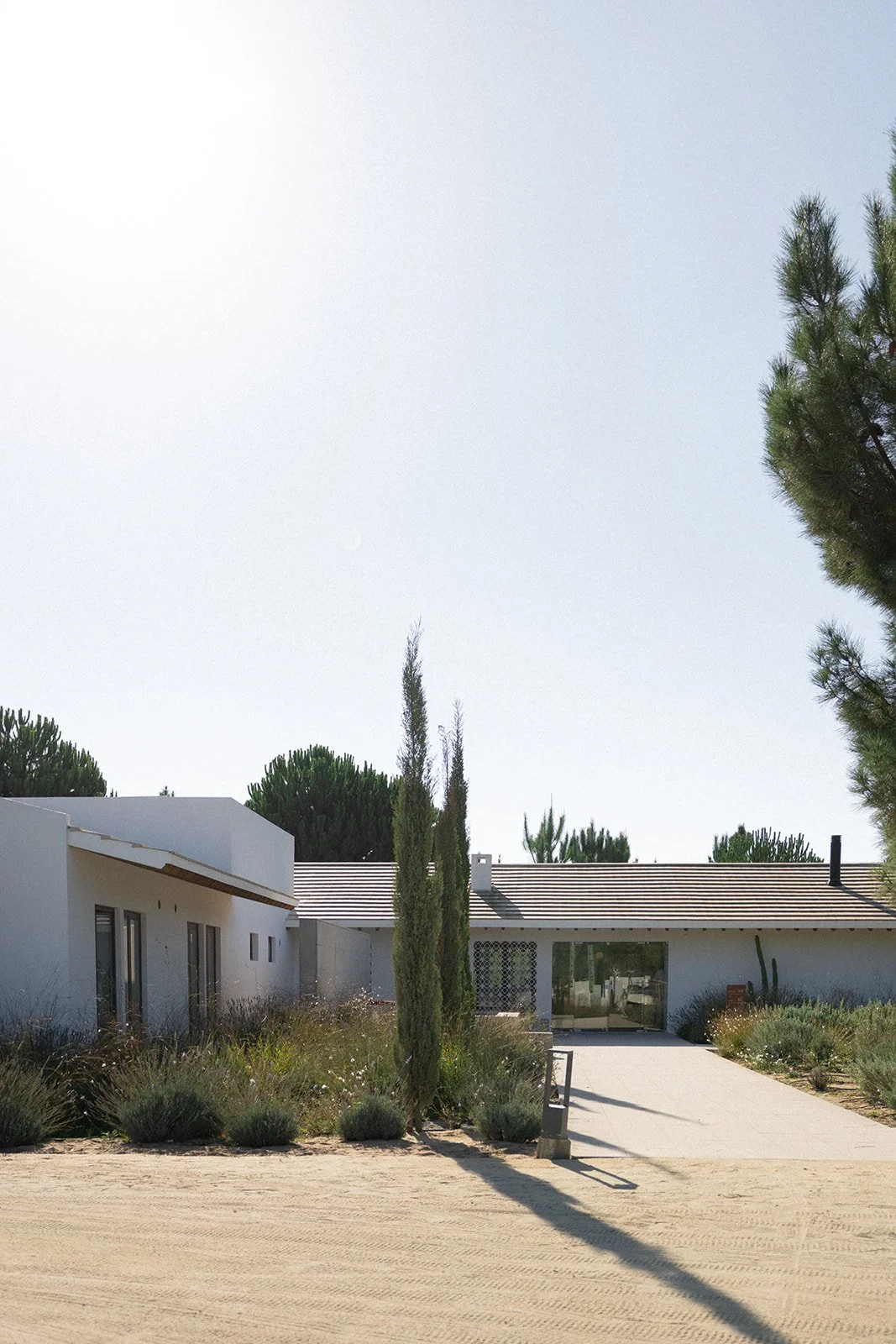
We have photographed two very different Comporta weddings ourselves: Laura and Alex's celebration at Spatia, set within the pine forest, and Andrea and Nick's beach ceremony at a private villa on the dunes. See the full galleries: Laura and Alex at Spatia Comporta and Andrea and Nick's private villa wedding in Comporta.
Northern Portugal: The Region Most Couples Have Not Found Yet
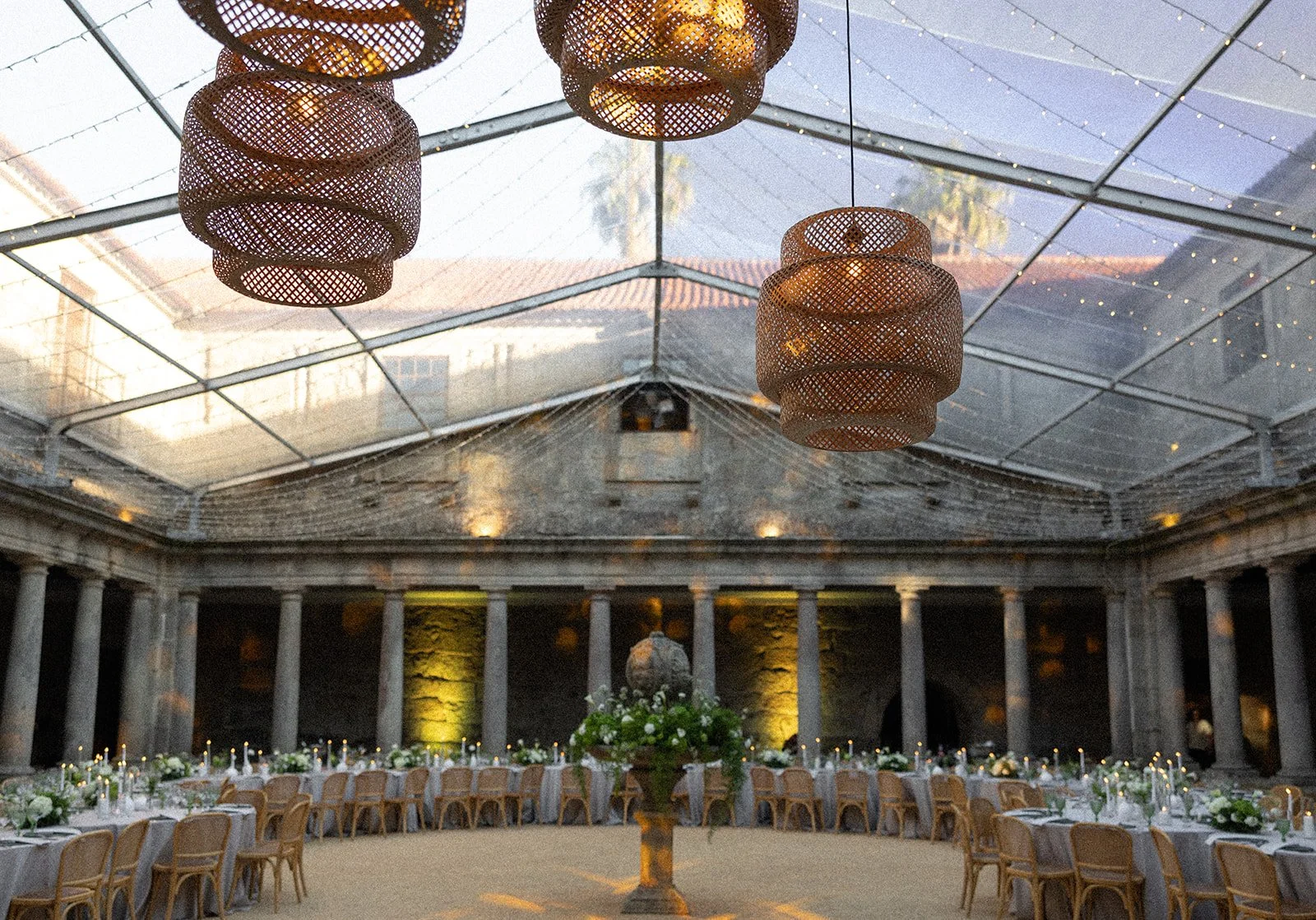
Northern Portugal, specifically the corridor from Porto through Braga, Guimarães, and the Minho valley, is where the experience most consistently exceeds expectations. The architecture is older and more layered than anywhere in the south: granite monasteries, baroque churches, quintas with azulejo-covered facades. The Mosteiro de Landim in Vila Nova de Famalicão hosts ceremonies in a thirteenth-century cloister and receptions in a covered colonnade with no equivalent setting in any other Portuguese wedding region. Other venues including the Palácio do Freixo in Porto, the Pousada Mosteiro de Guimarães, and a range of estate properties in the Lima Valley share a common quality: they feel historically real rather than decoratively historic. The stones are worn.
The north is also Portugal's greenest and most temperate region. It receives more rainfall than the south, which keeps the landscape lush through months when the Alentejo and Algarve turn dry. June weddings in the north look substantially different from June weddings in the south: deeper greens, cooler tones, and a soft overcast light that is particularly favorable for portrait work. For couples looking for a destination that most of their international guests have not already been to, the north is where to look.
Frequently Asked Questions About Portugal Wedding Regions
Which region in Portugal has the best light for wedding photography?
The Douro Valley in September and October produces the most consistently cinematic light in Portugal. The terraced vineyards reflect warm afternoon light across the valley from around 5 pm onward, and the golden hour there can extend well past 8 pm in early autumn. The Algarve has exceptional Atlantic light as well, but the Douro Valley's landscape amplifies it in a way that is unique to the region.
Is the Algarve still worth choosing for a destination wedding?
Yes, but timing matters more than venue. The Algarve in late September or October is a substantially better experience than the Algarve in July or August. The light is the same, the venues are the same, and the logistical pressure from tourist traffic is significantly reduced. Couples who book Algarve weddings in shoulder season consistently report a more composed day than those who marry at peak summer.
What makes northern Portugal different from the south for weddings?
Northern Portugal has older and more historically layered architecture than any other region in the country, including granite monasteries, baroque estates, and medieval cloisters that feel genuinely worn rather than decoratively restored. The landscape is also greener and cooler, which produces a different visual character, particularly in June when the south is already dry. The region is also significantly less familiar to international guests, which adds to the sense of discovery.
How far in advance do we need to book a wedding venue in Portugal?
For peak season dates, specifically late May through mid-June and late September through October, the most sought-after venues in Portugal require twelve to eighteen months of lead time. Venues in the Douro Valley and northern Portugal tend to book out more quickly than the general perception would suggest, because fewer couples are looking at them and the venues have fewer events per year. If you have a specific date in mind, the honest answer is to contact venues as early as possible.
Can destination wedding guests fly directly into all Portuguese wedding regions?
Porto airport serves the north and the Douro Valley. Lisbon airport serves Sintra, Comporta, and the Alentejo. Faro airport serves the Algarve. The Douro Valley is approximately two hours from Porto by road. Comporta is approximately two hours from Lisbon. Guest logistics are most straightforward in the Algarve and Sintra region, and most complex in the northern Portugal interior, though the added travel time is typically considered worthwhile by couples who choose venues there.
Among these five regions, the one that most consistently surprises couples in the right direction is the Douro Valley, followed closely by the north. The Algarve in shoulder season remains the safest choice for couples who need predictable weather and guest logistics. Sintra is for couples who want maximum visual theater and can plan around its constraints. Comporta is for couples who want genuine privacy and a landscape unlike anything else.
We photograph between eight and ten weddings per year across all five regions, with work published in British Vogue, Vogue Arabia, and Tatler. If you are deciding where in Portugal to get married and want a conversation grounded in direct experience of each region, the contact page is the right place to start.
For more on specific venues, we have written about Algarve wedding venues, Alentejo wedding venues, and multi-day wedding celebrations by region. Our full approach to Portugal wedding photography is also available.
